
OpenAI launches ‘ChatGPT Translate’ for web: Can it take on Google Translate?
OpenAI introduces an interactive translation tool called "ChatGPT Translate" to rival Google Translate. Here's how they compare.
- Jan 16, 2026,
- Updated Jan 16, 2026 2:21 PM IST
OpenAI has rolled out a standalone web translation service called ChatGPT Translate, stepping up competition with Alphabet Inc.’s Google Translate and marking the company’s latest push to expand beyond its flagship chatbot interface.
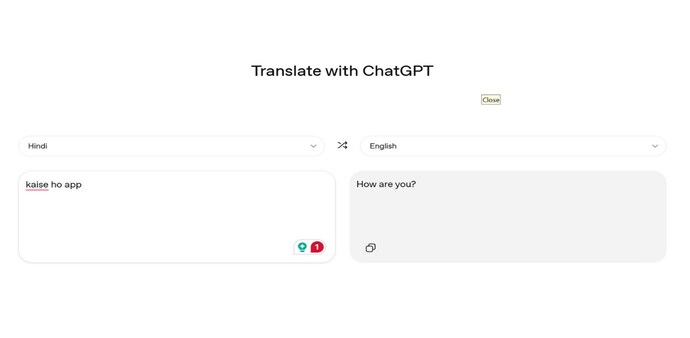
The new tool features a familiar dual-pane layout similar to Google Translate and supports text, voice and image translation across more than 50 languages, including Indian languages such as Hindi, Marathi, Tamil and Telugu. It also offers automatic language detection and allows users to rewrite translations in different tones, including business-formal, casual and region-specific phrasing.
Until now, users had been relying on ChatGPT’s main chatbot interface for translations. The launch of a dedicated translation website signals OpenAI’s intent to position ChatGPT as a direct alternative to mainstream consumer productivity tools.
Unlike Google Translate, however, ChatGPT Translate is currently limited to web access and requires an active internet connection. There is no mobile app or offline mode, restricting its reach among users who rely on translation tools on the go.
Google Translate, by contrast, is available across web and mobile platforms, supports offline usage and offers translations in more than 200 languages. While Google’s service focuses on fast, functional translation, it lacks the interactive tone-rewriting features that OpenAI is promoting as a key differentiator.
Google responds with TranslateGemma
The launch comes amid intensifying competition in artificial intelligence-powered language services. Just hours after OpenAI unveiled ChatGPT Translate, Google introduced TranslateGemma, a suite of open-source AI translation models designed for faster and more efficient deployment across devices.
Built on the company’s latest Gemma 3 architecture, the models support translation across 55 languages and are designed to run on everything from smartphones to cloud servers.
The models are available in three versions: a lightweight 4-billion-parameter model for mobile use, a 12-billion-parameter version aimed at consumer laptops, and a 27-billion-parameter model designed for cloud servers and high-end AI hardware such as Nvidia’s H100 GPUs and Google’s TPUs.
For Unparalleled coverage of India's Businesses and Economy – Subscribe to Business Today Magazine
OpenAI has rolled out a standalone web translation service called ChatGPT Translate, stepping up competition with Alphabet Inc.’s Google Translate and marking the company’s latest push to expand beyond its flagship chatbot interface.
The new tool features a familiar dual-pane layout similar to Google Translate and supports text, voice and image translation across more than 50 languages, including Indian languages such as Hindi, Marathi, Tamil and Telugu. It also offers automatic language detection and allows users to rewrite translations in different tones, including business-formal, casual and region-specific phrasing.
Until now, users had been relying on ChatGPT’s main chatbot interface for translations. The launch of a dedicated translation website signals OpenAI’s intent to position ChatGPT as a direct alternative to mainstream consumer productivity tools.
Unlike Google Translate, however, ChatGPT Translate is currently limited to web access and requires an active internet connection. There is no mobile app or offline mode, restricting its reach among users who rely on translation tools on the go.
Google Translate, by contrast, is available across web and mobile platforms, supports offline usage and offers translations in more than 200 languages. While Google’s service focuses on fast, functional translation, it lacks the interactive tone-rewriting features that OpenAI is promoting as a key differentiator.
Google responds with TranslateGemma
The launch comes amid intensifying competition in artificial intelligence-powered language services. Just hours after OpenAI unveiled ChatGPT Translate, Google introduced TranslateGemma, a suite of open-source AI translation models designed for faster and more efficient deployment across devices.
Built on the company’s latest Gemma 3 architecture, the models support translation across 55 languages and are designed to run on everything from smartphones to cloud servers.
The models are available in three versions: a lightweight 4-billion-parameter model for mobile use, a 12-billion-parameter version aimed at consumer laptops, and a 27-billion-parameter model designed for cloud servers and high-end AI hardware such as Nvidia’s H100 GPUs and Google’s TPUs.
For Unparalleled coverage of India's Businesses and Economy – Subscribe to Business Today Magazine