
Paint, pose and disappear: What is Meccha Chameleon, Instagram’s viral new hide-and-seek game?
The indie multiplayer game combines hide-and-seek with digital painting. Instead of transforming into a chair, box or other object, players must manually paint their characters to match walls, floors, furniture and artwork around them
- Jun 25, 2026,
- Updated Jun 25, 2026 9:05 AM IST
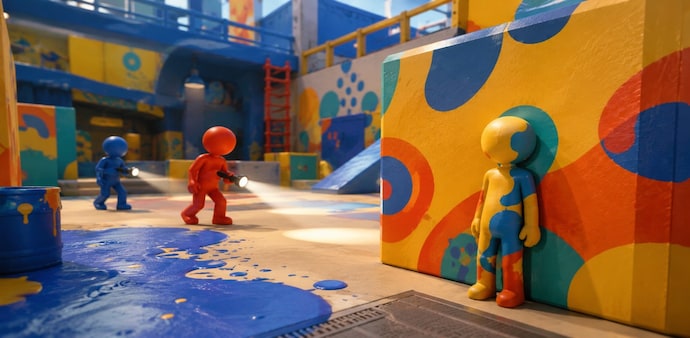
A plain white character stands against a patterned wall. Within seconds, the player paints its body green, adds dark lines to match the wallpaper and freezes in position. Hunters rush past without noticing,even though the character is directly in front of them.
That simple act of hiding in plain sight has turned Meccha Chameleon into one of the biggest gaming sensations on Instagram and Steam.
The indie multiplayer game combines hide-and-seek with digital painting. Instead of transforming into a chair, box or other object, players must manually paint their characters to match walls, floors, furniture and artwork around them.
Released on Steam in early June, the game sold seven million copies within its first two weeks. Its popularity has been driven by short clips showing clever disguises, disastrous paint jobs and hunters walking past players who are visible but almost perfectly camouflaged.
How does Meccha Chameleon work?
Players are divided into two groups: hunters and hiders.
The hunters carry firearms and have a limited amount of time to locate and eliminate the hidden players. The hiders begin as plain, featureless characters and use an in-game painting tool to camouflage themselves against their surroundings.
Players can select colours, copy shades from nearby objects and paint different sections of their bodies. They can also change poses to match the shapes and patterns around them.
The controls are easy to understand, but creating a convincing disguise requires speed and precision. Matches impose strict time limits, and the game does not offer an undo option, meaning a badly placed colour or brushstroke can ruin an otherwise effective disguise.
Hiders may continue painting and moving after the hunting phase begins, allowing them to improve their camouflage or escape when discovered.
Hiding out of sight will not help players win
Meccha Chameleon differs from conventional hide-and-seek games because simply finding an isolated corner is not enough.
Players earn points when they remain within a hunter’s direct line of sight without being detected. The mechanic encourages them to hide against walls, boxes, paintings and other highly visible surfaces rather than disappear into remote sections of the map.
The most rewarding hiding spots are therefore often the riskiest.
Players can also whistle or taunt hunters to draw them closer, increasing the opportunity to score points while raising the risk of being discovered. This creates tense moments in which a hunter may stand only a few feet from a painted character without recognising it.
Why is the game going viral?
The painting mechanic makes every round different and produces clips that are easy to understand, even for people who have never played the game.
Some players carefully recreate wood grain, brick patterns and wallpaper designs across their characters. Others deliberately use terrible disguises, creating comic moments when hunters somehow fail to notice them.
The freedom to paint has also turned the game into an unexpected platform for digital art.
Videos circulating on Instagram show players blending into artwork displayed on custom museum maps. Some have painted their characters to become part of recreations of famous works, including Leonardo da Vinci’s Mona Lisa.
The contrast between highly skilled camouflage and chaotic amateur attempts has helped the game generate a steady stream of viral videos.
Why the formula works
Meccha Chameleon succeeds because its rules can be understood almost instantly: paint the character, match the surroundings and hope the hunters fail to notice.
But beneath that simple premise is a risk-and-reward system that pushes players into visible locations and rewards creativity rather than passive hiding.
It can be a painting challenge, a competitive hide-and-seek match or a comedy game depending on who is playing.
That flexibility has made it ideal for Instagram reels and livestreams. A perfect disguise produces suspense. A terrible one creates comedy. In both cases, the result is a clip people want to share.
A massive Steam debut
Meccha Chameleon was developed and published by lemorion_1224, reportedly with only a small development team behind it.
The game crossed two million sales within days of release and reached seven million in less than two weeks.
Its Steam player count followed a similar trajectory. After recording a peak of just over 20,000 concurrent users on its first day, it climbed to an all-time high of more than 340,000 players on June 21, according to IGN India.
The figure placed the low-cost indie title alongside some of the most-played games on Steam and ahead of several established multiplayer releases at the time.
Clever concept, rough execution
Meccha Chameleon’s popularity does not mean it is technically polished.
Players have reported matches freezing in lobbies, characters falling outside maps and hiders entering sections of level geometry that should not be accessible. The painting controls can also feel imprecise, particularly when players are attempting detailed camouflage under time pressure.
Some hunters have appeared unusually quick at locating hidden characters, prompting concerns among players about possible cheating.
The game’s visuals and movement are also relatively basic compared with large studio releases. Its appeal comes less from technical refinement and more from the strength of its central idea.
The roughness can even add to the humour. Failed disguises, strange character movements and glitches often become part of the entertainment rather than immediately driving players away.
However, the developer has continued releasing updates as the game’s audience grows.
For Unparalleled coverage of India's Businesses and Economy – Subscribe to Business Today Magazine
A plain white character stands against a patterned wall. Within seconds, the player paints its body green, adds dark lines to match the wallpaper and freezes in position. Hunters rush past without noticing,even though the character is directly in front of them.
That simple act of hiding in plain sight has turned Meccha Chameleon into one of the biggest gaming sensations on Instagram and Steam.
The indie multiplayer game combines hide-and-seek with digital painting. Instead of transforming into a chair, box or other object, players must manually paint their characters to match walls, floors, furniture and artwork around them.
Released on Steam in early June, the game sold seven million copies within its first two weeks. Its popularity has been driven by short clips showing clever disguises, disastrous paint jobs and hunters walking past players who are visible but almost perfectly camouflaged.
How does Meccha Chameleon work?
Players are divided into two groups: hunters and hiders.
The hunters carry firearms and have a limited amount of time to locate and eliminate the hidden players. The hiders begin as plain, featureless characters and use an in-game painting tool to camouflage themselves against their surroundings.
Players can select colours, copy shades from nearby objects and paint different sections of their bodies. They can also change poses to match the shapes and patterns around them.
The controls are easy to understand, but creating a convincing disguise requires speed and precision. Matches impose strict time limits, and the game does not offer an undo option, meaning a badly placed colour or brushstroke can ruin an otherwise effective disguise.
Hiders may continue painting and moving after the hunting phase begins, allowing them to improve their camouflage or escape when discovered.
Hiding out of sight will not help players win
Meccha Chameleon differs from conventional hide-and-seek games because simply finding an isolated corner is not enough.
Players earn points when they remain within a hunter’s direct line of sight without being detected. The mechanic encourages them to hide against walls, boxes, paintings and other highly visible surfaces rather than disappear into remote sections of the map.
The most rewarding hiding spots are therefore often the riskiest.
Players can also whistle or taunt hunters to draw them closer, increasing the opportunity to score points while raising the risk of being discovered. This creates tense moments in which a hunter may stand only a few feet from a painted character without recognising it.
Why is the game going viral?
The painting mechanic makes every round different and produces clips that are easy to understand, even for people who have never played the game.
Some players carefully recreate wood grain, brick patterns and wallpaper designs across their characters. Others deliberately use terrible disguises, creating comic moments when hunters somehow fail to notice them.
The freedom to paint has also turned the game into an unexpected platform for digital art.
Videos circulating on Instagram show players blending into artwork displayed on custom museum maps. Some have painted their characters to become part of recreations of famous works, including Leonardo da Vinci’s Mona Lisa.
The contrast between highly skilled camouflage and chaotic amateur attempts has helped the game generate a steady stream of viral videos.
Why the formula works
Meccha Chameleon succeeds because its rules can be understood almost instantly: paint the character, match the surroundings and hope the hunters fail to notice.
But beneath that simple premise is a risk-and-reward system that pushes players into visible locations and rewards creativity rather than passive hiding.
It can be a painting challenge, a competitive hide-and-seek match or a comedy game depending on who is playing.
That flexibility has made it ideal for Instagram reels and livestreams. A perfect disguise produces suspense. A terrible one creates comedy. In both cases, the result is a clip people want to share.
A massive Steam debut
Meccha Chameleon was developed and published by lemorion_1224, reportedly with only a small development team behind it.
The game crossed two million sales within days of release and reached seven million in less than two weeks.
Its Steam player count followed a similar trajectory. After recording a peak of just over 20,000 concurrent users on its first day, it climbed to an all-time high of more than 340,000 players on June 21, according to IGN India.
The figure placed the low-cost indie title alongside some of the most-played games on Steam and ahead of several established multiplayer releases at the time.
Clever concept, rough execution
Meccha Chameleon’s popularity does not mean it is technically polished.
Players have reported matches freezing in lobbies, characters falling outside maps and hiders entering sections of level geometry that should not be accessible. The painting controls can also feel imprecise, particularly when players are attempting detailed camouflage under time pressure.
Some hunters have appeared unusually quick at locating hidden characters, prompting concerns among players about possible cheating.
The game’s visuals and movement are also relatively basic compared with large studio releases. Its appeal comes less from technical refinement and more from the strength of its central idea.
The roughness can even add to the humour. Failed disguises, strange character movements and glitches often become part of the entertainment rather than immediately driving players away.
However, the developer has continued releasing updates as the game’s audience grows.
For Unparalleled coverage of India's Businesses and Economy – Subscribe to Business Today Magazine