
The next big thing in India’s start-up boom? Faith tech, says AppsforBharat CEO
AppsforBharat’s Sri Mandir is digitising devotion by partnering with temples to offer virtual darshan, pooja bookings, and AI-powered spiritual guidance. With 3.5 million monthly users and $50 million in funding, CEO Prashant Sachan believes faith tech could eclipse food delivery in India’s $65 billion religious market.
- Jul 7, 2025,
- Updated Jul 7, 2025 9:55 PM IST
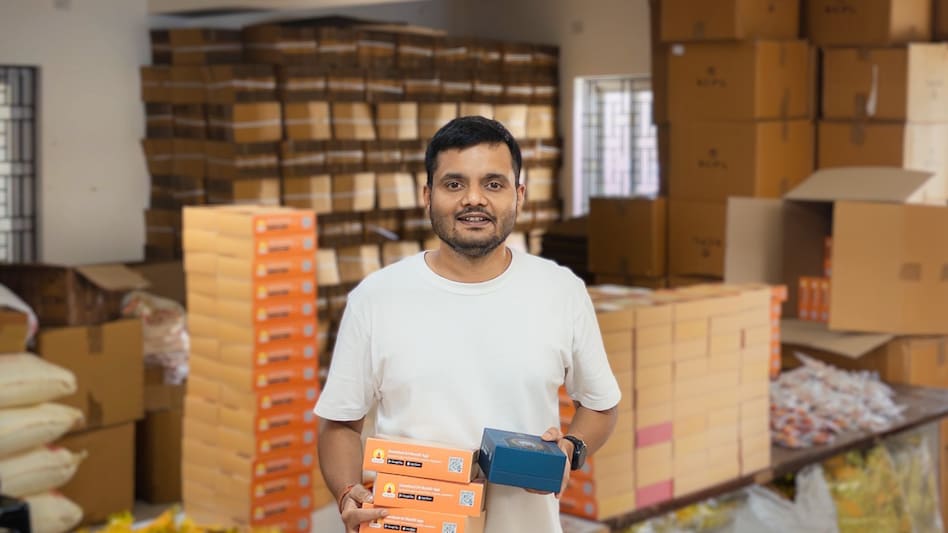
“Faith tech can be bigger than food delivery,” declares Prashant Sachan, founder and CEO of AppsforBharat, as he charts an ambitious roadmap for his faith-tech start-up.
AppsforBharat, which recently raised its Series C funding led by Susquehanna Asia Venture Capital, operates Sri Mandir—a platform aimed at helping devotees engage digitally with temples across India. Unlike many devotional apps crowding the internet, Sri Mandir seeks to stand out through transparent processes and partnerships with culturally significant temples that enable virtual interactions, or darshan, for users.
The inspiration to build the platform, says Sachan, stems from India’s sheer scale and untapped spiritual market. “There is a market for fashion, grocery, ride-hailing, payments, etc., but no one absolutely touched the devotional and spiritual market, and that was my moment to start working on this,” he tells Business Today.
The market potential, by all estimates, is vast. India is home to roughly 3.5 million temples, but Sri Mandir currently has only 70 temples onboarded, a number Sachan hopes to expand to 10,000. “So, there’s a big market out there and if done right, faith tech could be bigger than food delivery in India,” he says.
Globally, the app also appeals to the diaspora keen to stay connected with spiritual practices back home.
According to IMARC, India’s religious and spiritual market was valued at $65 billion in 2024 and is projected to touch $135 billion by 2033, offering enormous headroom for growth. While players like Temple Connect and BookMyPooja operate in the space, early backing from VCs such as Peak XV, Elevation Capital, and Nandan Nilekani’s Fundamentum has given AppsforBharat a significant leg-up. Sachan does not disclose current revenues but confirms the company turned contribution-positive in FY24.
The business model
So, how does AppsforBharat make money? The platform directly partners with temples, bringing them online via the app. Users can make offerings (chadhava) starting at Rs 11, book pooja packages ranging from Rs 1,000 to Rs 2,500, or arrange temple tours. Beyond rituals, devotees can also check panchang (almanac), access horoscopes, and listen to devotional music.
Integrating technology further, the company has launched “AI Guruji,” an artificial intelligence-powered guide capable of answering user questions about rituals, astrology, and religious significance.
Revenue comes from commissions of around 20-25% on transactions. As of now, the platform boasts 3.5 million monthly active users.
From Banke Bihari temple in Vrindavan and Kainchi Dham in Uttarakhand’s Manaskhand region to Kal Bhairav temple in Ujjain, Sri Mandir is working to bring historic and culturally significant temples — particularly from Tier II and III cities — onto its platform. “We want historical and culturally rich temples from across India, especially in smaller cities, to be with us,” Sachan says.
But why would temples choose to come on board?
“Temples in India require significant funds to maintain their infrastructure. Apart from major pilgrimage sites, many temples struggle with a lack of resources,” Sachan explains. “At AppsforBharat, we help enable funding for these temples through our offerings. In the future, this could also boost tourism, as we share the cultural significance of the temples we feature with our users. Similarly, this model can help enhance the income of priests at these temples, as they perform pujas and other rituals for our customers.”
Through Sri Mandir, AppsforBharat is attempting to shift a massive offline behaviour — visiting temples and performing rituals — to the digital realm.
A second-time founder
Sachan is no newcomer to India’s startup ecosystem. He previously co-founded Trell alongside Pulkit Agrawal but exited in 2020, a year before the company faced corporate governance challenges in 2022.
Reflecting on his earlier stint, Sachan shares that while he doesn’t divulge every lesson learned, continued trust from investors like Peak XV — who also backed Trell — is validation enough. “That itself is a testament to my way of running a company,” he says.
Today, AppsforBharat employs around 250 people and has raised a total of $50 million, with about $35 million still in the bank, providing a healthy runway for the next few years.
Looking ahead, Sachan envisions AppsforBharat becoming the go-to digital bridge for India’s vast and varied spiritual ecosystem. “Now, if you pay for food or groceries, you also pay for devotion,” he says, firmly betting that faith tech could one day rival — or even surpass — the scale of India’s food delivery giants.
For Unparalleled coverage of India's Businesses and Economy – Subscribe to Business Today Magazine
“Faith tech can be bigger than food delivery,” declares Prashant Sachan, founder and CEO of AppsforBharat, as he charts an ambitious roadmap for his faith-tech start-up.
AppsforBharat, which recently raised its Series C funding led by Susquehanna Asia Venture Capital, operates Sri Mandir—a platform aimed at helping devotees engage digitally with temples across India. Unlike many devotional apps crowding the internet, Sri Mandir seeks to stand out through transparent processes and partnerships with culturally significant temples that enable virtual interactions, or darshan, for users.
The inspiration to build the platform, says Sachan, stems from India’s sheer scale and untapped spiritual market. “There is a market for fashion, grocery, ride-hailing, payments, etc., but no one absolutely touched the devotional and spiritual market, and that was my moment to start working on this,” he tells Business Today.
The market potential, by all estimates, is vast. India is home to roughly 3.5 million temples, but Sri Mandir currently has only 70 temples onboarded, a number Sachan hopes to expand to 10,000. “So, there’s a big market out there and if done right, faith tech could be bigger than food delivery in India,” he says.
Globally, the app also appeals to the diaspora keen to stay connected with spiritual practices back home.
According to IMARC, India’s religious and spiritual market was valued at $65 billion in 2024 and is projected to touch $135 billion by 2033, offering enormous headroom for growth. While players like Temple Connect and BookMyPooja operate in the space, early backing from VCs such as Peak XV, Elevation Capital, and Nandan Nilekani’s Fundamentum has given AppsforBharat a significant leg-up. Sachan does not disclose current revenues but confirms the company turned contribution-positive in FY24.
The business model
So, how does AppsforBharat make money? The platform directly partners with temples, bringing them online via the app. Users can make offerings (chadhava) starting at Rs 11, book pooja packages ranging from Rs 1,000 to Rs 2,500, or arrange temple tours. Beyond rituals, devotees can also check panchang (almanac), access horoscopes, and listen to devotional music.
Integrating technology further, the company has launched “AI Guruji,” an artificial intelligence-powered guide capable of answering user questions about rituals, astrology, and religious significance.
Revenue comes from commissions of around 20-25% on transactions. As of now, the platform boasts 3.5 million monthly active users.
From Banke Bihari temple in Vrindavan and Kainchi Dham in Uttarakhand’s Manaskhand region to Kal Bhairav temple in Ujjain, Sri Mandir is working to bring historic and culturally significant temples — particularly from Tier II and III cities — onto its platform. “We want historical and culturally rich temples from across India, especially in smaller cities, to be with us,” Sachan says.
But why would temples choose to come on board?
“Temples in India require significant funds to maintain their infrastructure. Apart from major pilgrimage sites, many temples struggle with a lack of resources,” Sachan explains. “At AppsforBharat, we help enable funding for these temples through our offerings. In the future, this could also boost tourism, as we share the cultural significance of the temples we feature with our users. Similarly, this model can help enhance the income of priests at these temples, as they perform pujas and other rituals for our customers.”
Through Sri Mandir, AppsforBharat is attempting to shift a massive offline behaviour — visiting temples and performing rituals — to the digital realm.
A second-time founder
Sachan is no newcomer to India’s startup ecosystem. He previously co-founded Trell alongside Pulkit Agrawal but exited in 2020, a year before the company faced corporate governance challenges in 2022.
Reflecting on his earlier stint, Sachan shares that while he doesn’t divulge every lesson learned, continued trust from investors like Peak XV — who also backed Trell — is validation enough. “That itself is a testament to my way of running a company,” he says.
Today, AppsforBharat employs around 250 people and has raised a total of $50 million, with about $35 million still in the bank, providing a healthy runway for the next few years.
Looking ahead, Sachan envisions AppsforBharat becoming the go-to digital bridge for India’s vast and varied spiritual ecosystem. “Now, if you pay for food or groceries, you also pay for devotion,” he says, firmly betting that faith tech could one day rival — or even surpass — the scale of India’s food delivery giants.
For Unparalleled coverage of India's Businesses and Economy – Subscribe to Business Today Magazine