
Inception, James Bond and now Ramayana: How India-linked DNEG became Hollywood’s Oscar-winning VFX giant
DNEG, originally founded as Double Negative in London in 1998, became one of the world's most recognised visual effects studios after merging with Indian media services company Prime Focus in 2014
- Jul 30, 2026,
- Updated Jul 30, 2026 12:23 PM IST
When audiences watch a flying spaceship tear through the skies, a futuristic city collapse, or a mythical world come alive on screen, much of that magic is created far away from the camera. Behind some of the biggest cinematic spectacles of the last decade is DNEG, the Oscar-winning visual effects studio that is now bringing one of India's most ambitious films, Ramayana, to life.
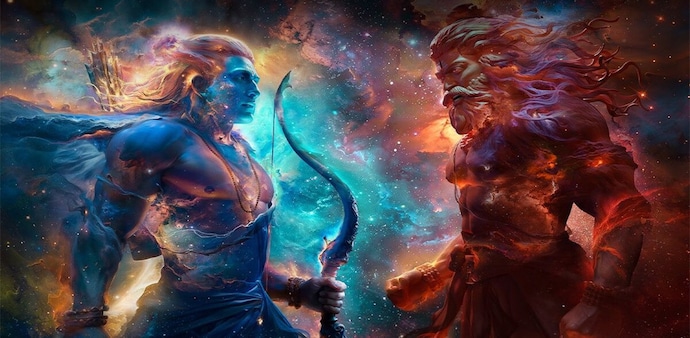
Directed by Nitesh Tiwari, Ramayana is being developed as a two-part live-action epic featuring Ranbir Kapoor as Lord Ram, Sai Pallavi as Sita, Yash as Raavan, Sunny Deol as Hanuman and Ravi Dubey as Lakshman. The film, scheduled to release worldwide on November 6, 2026, during the Diwali weekend, is being produced by Namit Malhotra’s Prime Focus Studios along with Yash’s Monster Mind Creations.
The visual world of the epic is being created by DNEG and its sister company, ReDefine, with the makers aiming to deliver a global-scale cinematic experience designed for IMAX.
From London beginnings to India’s global VFX giant
DNEG, originally founded as Double Negative in London in 1998, became one of the world's most recognised visual effects studios after merging with Indian media services company Prime Focus in 2014.
Today, the company works across high-end visual effects, animation and stereo conversion for films, television and immersive content. It has collaborated with some of the world's leading filmmakers, including Christopher Nolan, Denis Villeneuve, George Miller and Bong Joon-ho.
Its reputation has been built through some of the most technically demanding films in recent years, earning the studio eight Academy Awards for Best Visual Effects since 2011.
The Oscar-winning films that built DNEG’s reputation
DNEG’s Hollywood portfolio includes some of the most visually ambitious films of the modern era.
Christopher Nolan’s Inception (2010) gave DNEG its first Academy Award for Best Visual Effects, with the studio creating iconic sequences such as folding city landscapes and the film’s gravity-defying hotel fight.
The studio later delivered the scientifically detailed black holes and alien worlds of Interstellar (2014), the futuristic dystopia of Blade Runner 2049 (2017), and the realistic lunar landscapes of First Man (2018), all of which won Oscars for their visual effects.
DNEG also worked on Nolan’s Tenet (2020), creating its complex time-inversion sequences, before contributing to Denis Villeneuve’s Dune franchise. Both Dune (2021) and Dune: Part Two (2024) won Academy Awards for Best Visual Effects, with the studio creating the vast deserts of Arrakis, massive spacecraft and large-scale battle environments.
DNEG’s growing footprint in Indian cinema
While DNEG has a strong Hollywood presence, its Indian operations have become a crucial part of its global production network.
The company operates studios across Mumbai, Chennai, Bengaluru, Pune, Mohali, Patna, Kolkata, Thiruvananthapuram, Hyderabad and Goa. Its Indian teams contribute to international as well as domestic productions, with around 3,000 employees working across VFX and animation units.
The studio has also played a major role in some of India’s biggest visual effects-driven films.
Ayan Mukerji’s Brahmāstra: Part One – Shiva (2022) was among DNEG’s major Indian projects, where it created complex fantasy environments and the film’s magical "astra" effects. The film later won the National Film Award for Best VFX.
Siddharth Anand’s Fighter (2024) relied on DNEG’s expertise for realistic aerial combat sequences, fighter jet simulations and digital environment extensions.
The studio was also involved in projects connected with S.S. Rajamouli’s globally acclaimed RRR (2022), one of India’s biggest international successes.
Why Ramayana is a major test for DNEG
Unlike conventional films, mythological epics require filmmakers to build entire worlds, from kingdoms and battlefields to divine elements that do not exist in reality.
For Ramayana, DNEG is tasked with creating the visual scale of Ayodhya, Lanka, mythical weapons, large-scale battles and fantastical elements while ensuring the world feels believable for a modern global audience.
The project also represents a unique link between Indian filmmaking and global VFX expertise. Namit Malhotra, founder of Prime Focus and DNEG, is producing the film through Prime Focus Studios, bringing together the company’s Indian roots and international visual effects capabilities.
When audiences watch a flying spaceship tear through the skies, a futuristic city collapse, or a mythical world come alive on screen, much of that magic is created far away from the camera. Behind some of the biggest cinematic spectacles of the last decade is DNEG, the Oscar-winning visual effects studio that is now bringing one of India's most ambitious films, Ramayana, to life.
Directed by Nitesh Tiwari, Ramayana is being developed as a two-part live-action epic featuring Ranbir Kapoor as Lord Ram, Sai Pallavi as Sita, Yash as Raavan, Sunny Deol as Hanuman and Ravi Dubey as Lakshman. The film, scheduled to release worldwide on November 6, 2026, during the Diwali weekend, is being produced by Namit Malhotra’s Prime Focus Studios along with Yash’s Monster Mind Creations.
The visual world of the epic is being created by DNEG and its sister company, ReDefine, with the makers aiming to deliver a global-scale cinematic experience designed for IMAX.
From London beginnings to India’s global VFX giant
DNEG, originally founded as Double Negative in London in 1998, became one of the world's most recognised visual effects studios after merging with Indian media services company Prime Focus in 2014.
Today, the company works across high-end visual effects, animation and stereo conversion for films, television and immersive content. It has collaborated with some of the world's leading filmmakers, including Christopher Nolan, Denis Villeneuve, George Miller and Bong Joon-ho.
Its reputation has been built through some of the most technically demanding films in recent years, earning the studio eight Academy Awards for Best Visual Effects since 2011.
The Oscar-winning films that built DNEG’s reputation
DNEG’s Hollywood portfolio includes some of the most visually ambitious films of the modern era.
Christopher Nolan’s Inception (2010) gave DNEG its first Academy Award for Best Visual Effects, with the studio creating iconic sequences such as folding city landscapes and the film’s gravity-defying hotel fight.
The studio later delivered the scientifically detailed black holes and alien worlds of Interstellar (2014), the futuristic dystopia of Blade Runner 2049 (2017), and the realistic lunar landscapes of First Man (2018), all of which won Oscars for their visual effects.
DNEG also worked on Nolan’s Tenet (2020), creating its complex time-inversion sequences, before contributing to Denis Villeneuve’s Dune franchise. Both Dune (2021) and Dune: Part Two (2024) won Academy Awards for Best Visual Effects, with the studio creating the vast deserts of Arrakis, massive spacecraft and large-scale battle environments.
DNEG’s growing footprint in Indian cinema
While DNEG has a strong Hollywood presence, its Indian operations have become a crucial part of its global production network.
The company operates studios across Mumbai, Chennai, Bengaluru, Pune, Mohali, Patna, Kolkata, Thiruvananthapuram, Hyderabad and Goa. Its Indian teams contribute to international as well as domestic productions, with around 3,000 employees working across VFX and animation units.
The studio has also played a major role in some of India’s biggest visual effects-driven films.
Ayan Mukerji’s Brahmāstra: Part One – Shiva (2022) was among DNEG’s major Indian projects, where it created complex fantasy environments and the film’s magical "astra" effects. The film later won the National Film Award for Best VFX.
Siddharth Anand’s Fighter (2024) relied on DNEG’s expertise for realistic aerial combat sequences, fighter jet simulations and digital environment extensions.
The studio was also involved in projects connected with S.S. Rajamouli’s globally acclaimed RRR (2022), one of India’s biggest international successes.
Why Ramayana is a major test for DNEG
Unlike conventional films, mythological epics require filmmakers to build entire worlds, from kingdoms and battlefields to divine elements that do not exist in reality.
For Ramayana, DNEG is tasked with creating the visual scale of Ayodhya, Lanka, mythical weapons, large-scale battles and fantastical elements while ensuring the world feels believable for a modern global audience.
The project also represents a unique link between Indian filmmaking and global VFX expertise. Namit Malhotra, founder of Prime Focus and DNEG, is producing the film through Prime Focus Studios, bringing together the company’s Indian roots and international visual effects capabilities.