
West Asia conflict: Morgan Stanley raises oil price forecasts as Hormuz risk premium builds, Brent nears $90
In its latest research note, the brokerage revised its Brent crude forecasts higher, raising its 2026 estimate to $80 per barrel from $62.5, while lifting the next phase outlook to $70 from $60 and projecting prices around $65 for the 2026–27 period.
- Mar 7, 2026,
- Updated Mar 7, 2026 1:40 PM IST
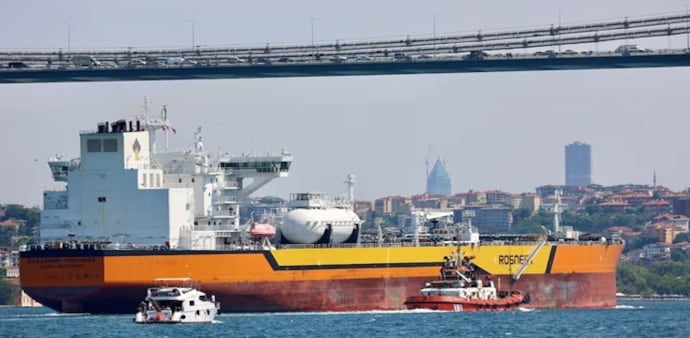
Brokerage Morgan Stanley has raised its near-term oil price forecasts, warning that rising tensions around the Strait of Hormuz are adding a significant risk premium to crude markets, with prices already climbing sharply amid disruptions to tanker traffic in the region.
In its latest research note, the brokerage revised its Brent crude forecasts higher, raising its 2026 estimate to $80 per barrel from $62.5, while lifting the next phase outlook to $70 from $60 and projecting prices around $65 for the 2026–27 period. The upgrade reflects growing uncertainty around shipments through the Strait of Hormuz, one of the world’s most important energy chokepoints.
The revision comes as oil prices have already surged in global markets. Brent crude climbed to around $90 per barrel as of March 7, 2026, while WTI traded close to $88, after tanker traffic through the Strait of Hormuz slowed sharply amid the intensifying Iran–U.S. conflict. Analysts say the near-total disruption of shipping has created fears of a major supply shock, with some estimates suggesting the market is currently factoring in the loss of 7–11 million barrels per day of crude and 4–5 million barrels per day of refined products.
Disruption continues
Market participants warn that if the disruption continues, prices could move significantly higher. Some estimates suggest the current geopolitical situation has already added a $20–$40 per barrel risk premium, and a prolonged closure of the strait could push crude above $100 per barrel, with some analysts drawing comparisons to the spikes seen in 2008 and 2022.
Morgan Stanley said that even without an actual loss of production, markets are beginning to price in delivery risks, higher insurance costs and the possibility of tanker withdrawals from the Gulf. The firm noted that the key risk is not only supply loss but a decline in effective supply caused by slower transportation and rising shipping costs.
If tanker productivity falls because of security concerns, convoy requirements or insurance restrictions, the result could be an effective tightening of global oil supply even without fewer barrels being produced.
The impact could be amplified because the tanker market was already tight before the latest escalation, with freight rates near multi-year highs. In such conditions, even a small disruption in Gulf shipping routes can trigger sharp price moves.
Strait of Hormuz
The Strait of Hormuz remains central to global energy trade. Morgan Stanley estimates that about 30% of seaborne crude exports outside the Middle East Gulf originate from behind the strait, along with roughly 33% of naphtha, 23% of LPG and 19% of LNG shipments, in addition to significant volumes of jet fuel and diesel.
The bank said the next few days will be critical. If shipping flows normalise, the risk premium could fade, but continued incidents or restrictions could push markets into a tighter supply scenario, increasing volatility and raising inflation risks for oil-importing economies, particularly in Asia.
The oil linkage
Shipping through the Strait of Hormuz, the narrow waterway between Iran and Oman that carries about one-fifth of global oil and nearly 20% of the world’s LNG, has slowed sharply after recent military escalation in the Middle East. The disruption followed Iranian retaliatory actions after US-Israeli strikes, with Iran’s Revolutionary Guard warning that vessels attempting to cross the strait could be targeted. A US-flagged tanker was damaged in the Gulf, adding to fears of a wider supply shock.
The uncertainty has pushed energy prices higher, with Brent crude rising sharply and gas prices in Europe also jumping, as traders fear prolonged supply disruption. Shipping companies say congestion is building, with container vessels delayed and cargo likely to pile up at major ports in Europe and Asia.
The Strait of Hormuz is critical because the Middle East holds some of the world’s largest oil and gas reserves, including Saudi Arabia, Iran, Iraq, the UAE and Kuwait. The region also accounts for a major share of global natural gas production.
Asia is the most exposed to any disruption. China, India, Japan and South Korea are the biggest buyers of oil and LNG moving through the strait, and several countries depend heavily on these supplies. While strategic reserves may cushion short-term shocks, analysts warn that a prolonged closure could severely strain global energy markets.
Brokerage Morgan Stanley has raised its near-term oil price forecasts, warning that rising tensions around the Strait of Hormuz are adding a significant risk premium to crude markets, with prices already climbing sharply amid disruptions to tanker traffic in the region.
In its latest research note, the brokerage revised its Brent crude forecasts higher, raising its 2026 estimate to $80 per barrel from $62.5, while lifting the next phase outlook to $70 from $60 and projecting prices around $65 for the 2026–27 period. The upgrade reflects growing uncertainty around shipments through the Strait of Hormuz, one of the world’s most important energy chokepoints.
The revision comes as oil prices have already surged in global markets. Brent crude climbed to around $90 per barrel as of March 7, 2026, while WTI traded close to $88, after tanker traffic through the Strait of Hormuz slowed sharply amid the intensifying Iran–U.S. conflict. Analysts say the near-total disruption of shipping has created fears of a major supply shock, with some estimates suggesting the market is currently factoring in the loss of 7–11 million barrels per day of crude and 4–5 million barrels per day of refined products.
Disruption continues
Market participants warn that if the disruption continues, prices could move significantly higher. Some estimates suggest the current geopolitical situation has already added a $20–$40 per barrel risk premium, and a prolonged closure of the strait could push crude above $100 per barrel, with some analysts drawing comparisons to the spikes seen in 2008 and 2022.
Morgan Stanley said that even without an actual loss of production, markets are beginning to price in delivery risks, higher insurance costs and the possibility of tanker withdrawals from the Gulf. The firm noted that the key risk is not only supply loss but a decline in effective supply caused by slower transportation and rising shipping costs.
If tanker productivity falls because of security concerns, convoy requirements or insurance restrictions, the result could be an effective tightening of global oil supply even without fewer barrels being produced.
The impact could be amplified because the tanker market was already tight before the latest escalation, with freight rates near multi-year highs. In such conditions, even a small disruption in Gulf shipping routes can trigger sharp price moves.
Strait of Hormuz
The Strait of Hormuz remains central to global energy trade. Morgan Stanley estimates that about 30% of seaborne crude exports outside the Middle East Gulf originate from behind the strait, along with roughly 33% of naphtha, 23% of LPG and 19% of LNG shipments, in addition to significant volumes of jet fuel and diesel.
The bank said the next few days will be critical. If shipping flows normalise, the risk premium could fade, but continued incidents or restrictions could push markets into a tighter supply scenario, increasing volatility and raising inflation risks for oil-importing economies, particularly in Asia.
The oil linkage
Shipping through the Strait of Hormuz, the narrow waterway between Iran and Oman that carries about one-fifth of global oil and nearly 20% of the world’s LNG, has slowed sharply after recent military escalation in the Middle East. The disruption followed Iranian retaliatory actions after US-Israeli strikes, with Iran’s Revolutionary Guard warning that vessels attempting to cross the strait could be targeted. A US-flagged tanker was damaged in the Gulf, adding to fears of a wider supply shock.
The uncertainty has pushed energy prices higher, with Brent crude rising sharply and gas prices in Europe also jumping, as traders fear prolonged supply disruption. Shipping companies say congestion is building, with container vessels delayed and cargo likely to pile up at major ports in Europe and Asia.
The Strait of Hormuz is critical because the Middle East holds some of the world’s largest oil and gas reserves, including Saudi Arabia, Iran, Iraq, the UAE and Kuwait. The region also accounts for a major share of global natural gas production.
Asia is the most exposed to any disruption. China, India, Japan and South Korea are the biggest buyers of oil and LNG moving through the strait, and several countries depend heavily on these supplies. While strategic reserves may cushion short-term shocks, analysts warn that a prolonged closure could severely strain global energy markets.