


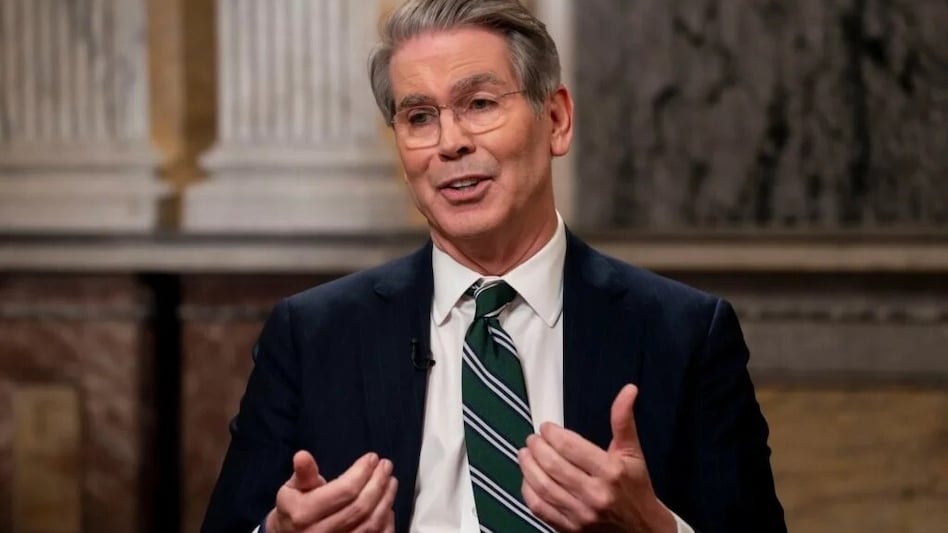
 In an interview with CNBC, Bessent said that China's reliance on Russian crude oil grew marginally compared to New Delhi's sharp escalation.
US Treasury Secretary Scott Bessent said the United States has temporarily allowed India to accept shipments of sanctioned Russian oil that are already at sea, describing the move as a short-term step to manage a temporary gap in global oil supplies.
In a post on X, Bessent said global oil markets remain well supplied due to the US administration’s policy of “American Energy Dominance.” However, he noted that Washington has made a limited exception for India as part of efforts to stabilise supply.

 Trump pauses Russia-linked tariffs threatening India and China: What it means for India
 Brent hits $110 as Hormuz ship attacks, Houthi strikes on Saudi trigger oil rally
 Emirates NBD’s Indian branches to merge with RBL Bank from December 1
 SBI Research urges tax clarity on G-Secs, ECB rules to deepen domestic borrowing markets
 India invested just $15 billion in AI against $757 billion in US: Why private capital matters
 Expert Names REITs And INVITs To Watch For Quarterly Payouts And Potential Investment Returns
 Jio IPO: Mukesh Ambani's Big ₹30,213 Crore Bet, Reliance Employees Asked To Invest?
 Flying Cars Are Here? Elon Musk Shows Tesla Roadster Flying Through Air In Stunning Demo
 Ramakrishna P, CEO, India Mobile Congress Talks To Us About India’s Next Digital Frontier
 Market Recovery: Gaurang Shah Picks Banking, Defence, Power And Cement Stocks For Fresh Bets
 Punjab National Bank: Buy, hold or sell post Q2 results? MOFSL shares targetBrent hits $110 as Hormuz ship attacks, Houthi strikes on Saudi trigger oil rally
 CCL Products shares fall 9% on Q2 results; brokerages see up to 30% upside
 PNB Q2 earnings: Net profit rises 13%, asset quality improves
  BT Explainer: What changes for investors post revision of new Closing Auction System
  Petrol, diesel prices today (October 17): Check latest rates in Delhi, Mumbai, Chennai, Kolkata & moreExpert Names REITs And INVITs To Watch For Quarterly Payouts And Potential Investment ReturnsPunjab National Bank: Buy, hold or sell post Q2 results? MOFSL shares target
 Audi India launches new Q3 at Rs 51.99 lakh; eyes 15% share of India’s luxury car market in 3-5 yearsTrump pauses Russia-linked tariffs threatening India and China: What it means for India












