
BT Explainer: Why UAE’s new Hormuz bypass oil pipeline matters for India and global markets
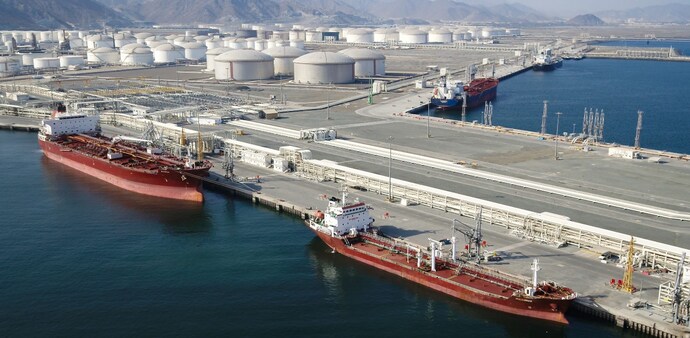
The pipeline terminates at the Port of Fujairah, located outside the Strait of Hormuz on the UAE’s eastern coast. Fujairah has increasingly become a critical oil storage and bunkering hub because ships can load crude there without entering the Persian Gulf.
- May 15, 2026,
- Updated May 15, 2026 8:33 PM IST
The United Arab Emirates has announced it will fast-track construction of a new oil pipeline designed to bypass the strategically critical Strait of Hormuz, a move aimed at protecting crude exports amid escalating regional tensions in West Asia.
The new “West-East Pipeline” project will significantly expand the UAE’s ability to export oil through the eastern port of Fujairah on the Gulf of Oman — avoiding the Hormuz chokepoint, through which nearly a fifth of the world’s oil supply typically passes.
What the UAE announced
According to reports, the pipeline is expected to:
- Be operational by 2027
- Nearly double the UAE’s current bypass export capacity
- Increase exports routed through Fujairah to nearly 4 million barrels per day
- Reduce dependence on the Strait of Hormuz during geopolitical crises
MUST READ | Iran says Strait of Hormuz open to commercial ships. But there is one major condition
The project expands on the existing Habshan-Fujairah pipeline, operational since 2012, which already allows some Emirati crude exports to bypass Hormuz.
Why the Strait of Hormuz matters
The Strait of Hormuz is considered one of the world’s most important energy chokepoints. It connects the Persian Gulf with the Gulf of Oman and the Arabian Sea, and is crucial for oil exports from Gulf producers including Saudi Arabia, the UAE, Iraq, Kuwait, Qatar and Iran.
DO CHECKOUT | 'Indian economy is sound, has enough buffers to...': S&P calms oil shock fears
Recent conflict involving Iran, Israel and the United States has sharply raised fears over disruptions to shipping in the region. Reports indicate that regional tensions and military escalation have severely affected traffic through the strait, causing spikes in global oil prices and insurance costs for tankers.
Why Fujairah is strategically important
The pipeline terminates at the Port of Fujairah, located outside the Strait of Hormuz on the UAE’s eastern coast. Fujairah has increasingly become a critical oil storage and bunkering hub because ships can load crude there without entering the Persian Gulf.
DON'T MISS | Volatility will have consequences: India asks US to extend Russian oil waiver
The UAE has also been expanding storage facilities and energy infrastructure around Fujairah over the past decade to strengthen long-term energy security.
Why this matters for India
India is one of the world’s largest crude oil importers and depends heavily on Gulf energy supplies. Any disruption in the Strait of Hormuz directly impacts Indian fuel prices, shipping costs and energy security.
The UAE’s expanded bypass capacity could help ensure more stable oil supplies to India even during regional instability. During Prime Minister Narendra Modi’s UAE visit on Friday, India and the UAE also signed agreements related to strategic petroleum reserves and broader energy cooperation.
The United Arab Emirates has announced it will fast-track construction of a new oil pipeline designed to bypass the strategically critical Strait of Hormuz, a move aimed at protecting crude exports amid escalating regional tensions in West Asia.
The new “West-East Pipeline” project will significantly expand the UAE’s ability to export oil through the eastern port of Fujairah on the Gulf of Oman — avoiding the Hormuz chokepoint, through which nearly a fifth of the world’s oil supply typically passes.
What the UAE announced
According to reports, the pipeline is expected to:
- Be operational by 2027
- Nearly double the UAE’s current bypass export capacity
- Increase exports routed through Fujairah to nearly 4 million barrels per day
- Reduce dependence on the Strait of Hormuz during geopolitical crises
MUST READ | Iran says Strait of Hormuz open to commercial ships. But there is one major condition
The project expands on the existing Habshan-Fujairah pipeline, operational since 2012, which already allows some Emirati crude exports to bypass Hormuz.
Why the Strait of Hormuz matters
The Strait of Hormuz is considered one of the world’s most important energy chokepoints. It connects the Persian Gulf with the Gulf of Oman and the Arabian Sea, and is crucial for oil exports from Gulf producers including Saudi Arabia, the UAE, Iraq, Kuwait, Qatar and Iran.
DO CHECKOUT | 'Indian economy is sound, has enough buffers to...': S&P calms oil shock fears
Recent conflict involving Iran, Israel and the United States has sharply raised fears over disruptions to shipping in the region. Reports indicate that regional tensions and military escalation have severely affected traffic through the strait, causing spikes in global oil prices and insurance costs for tankers.
Why Fujairah is strategically important
The pipeline terminates at the Port of Fujairah, located outside the Strait of Hormuz on the UAE’s eastern coast. Fujairah has increasingly become a critical oil storage and bunkering hub because ships can load crude there without entering the Persian Gulf.
DON'T MISS | Volatility will have consequences: India asks US to extend Russian oil waiver
The UAE has also been expanding storage facilities and energy infrastructure around Fujairah over the past decade to strengthen long-term energy security.
Why this matters for India
India is one of the world’s largest crude oil importers and depends heavily on Gulf energy supplies. Any disruption in the Strait of Hormuz directly impacts Indian fuel prices, shipping costs and energy security.
The UAE’s expanded bypass capacity could help ensure more stable oil supplies to India even during regional instability. During Prime Minister Narendra Modi’s UAE visit on Friday, India and the UAE also signed agreements related to strategic petroleum reserves and broader energy cooperation.