


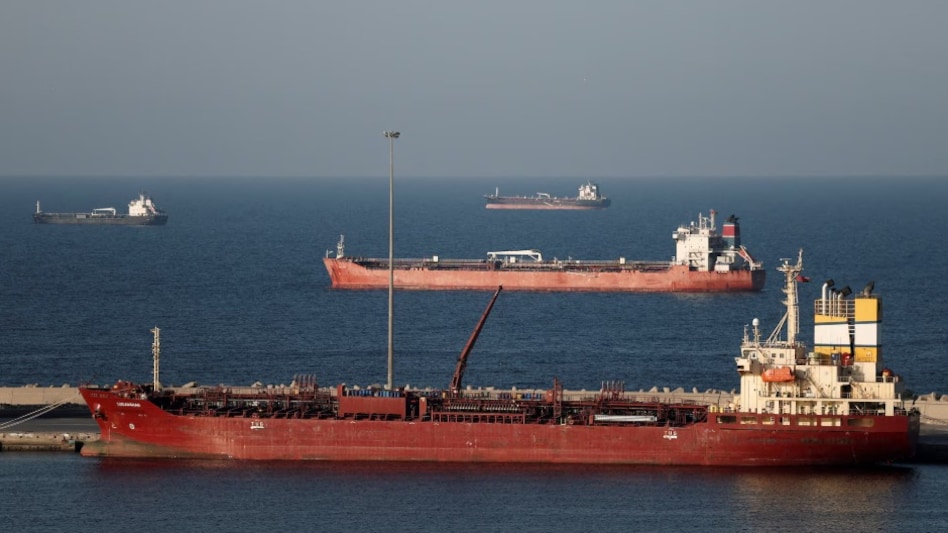
 Hormuz blockade: Gulf, other nations finding new ways to continue trade
 New trucking routes across the Arabian desert have become an emergency trade lifeline for Gulf economies trying to bypass the Strait of Hormuz after the US and Israel attacked Iran, stated a report. Highways, rail links and ports in Saudi Arabia, the United Arab Emirates and Oman are being used to move goods overland as governments and companies adjust to the disruption.
As mentioned in a report in Wall Street Journal, the shift has redrawn parts of the region’s logistics network, moving trade away from the Persian Gulf and towards the Red Sea and the Gulf of Oman. The alternative routes cannot match shipping on cost or capacity, and they do not solve shortages of jet fuel and other energy products, but they are keeping some cargo flowing and providing contingency options as US-Iran talks remain deadlocked, it said.

 ISRO places EOS-05 into orbit: Why India’s first geo-orbit imaging satellite matters
 Janmashtami 2026: Banks closed today in several states, Check convenient alternatives
 Janmashtami travel alert: Delhi gets special trains to Mathura, Ringas and Varanasi
 Hombale Films takes 'Hanuman Ansh' global: Check worldwide release date after ₹61 crore success
 'Methodology is very robust': Former statisticians back GDP base year revision
 Maruti Suzuki Sees Strong Demand Ahead; ‘No Reason Why We Should Not Sustain Volumes’: Partho Banerjee
 Ultravolt: Birla’s New Wires & Cables Bet | Kumar Mangalam Birla Explains The Opportunity
 Why Did India’s GDP Fall From ₹86L Cr To ₹80L Cr? | MoSPI Secy Dr. Saurabh Garg Explains
 India Back To ‘A’ Rating After 38 Years: N K Singh Explains The Big Economic Shift
 Exposing The GDP Controversy: Why Subhash Garg's Math Is Flawed
 Coal India, Finolex Cables, Gulf Oil, Federal-Mogul Goetze among stocks to turn ex-dividend tomorrow, details here
 Fintech smallcase launches US stock, ETF portfolios for Indian investors
 Sensex plunges over 2,100 points in 3 minutes; what happened in final 5 minutes?
 Britannia, Tata Consumer, Marico: What should investors do as commodity inflation rise
 How EV-themed stocks could impact sentiment on Maruti Suzuki counter
  Estonia defense minister resigns over €70M failed Ukraine deal with India-linked firm
  Quote of the Day by Rakesh Jhunjhunwala: ‘I don't think Indian e-commerce companies have an evolved business model’ ISRO places EOS-05 into orbit: Why India’s first geo-orbit imaging satellite matters
 OTT releases this week (August 31- Sept 06): 'Dhamaal 4', 'GDN', 'Gandhari' and more to watch this weekend
 Vijay’s ₹46,450 gesture: Why his Dior sunglasses ended up with an elderly woman












