
Europe's climate whiplash: Violent thunderstorms, lightning & hail follow record-breaking heat
Forecasters warn that Europe's weather crisis is not yet over. Several regions are expected to remain under intense heat in the coming days, while fresh disturbances moving across the continent could trigger additional thunderstorms wherever hot and cooler air masses collide.
- Jun 28, 2026,
- Updated Jun 28, 2026 4:40 PM IST
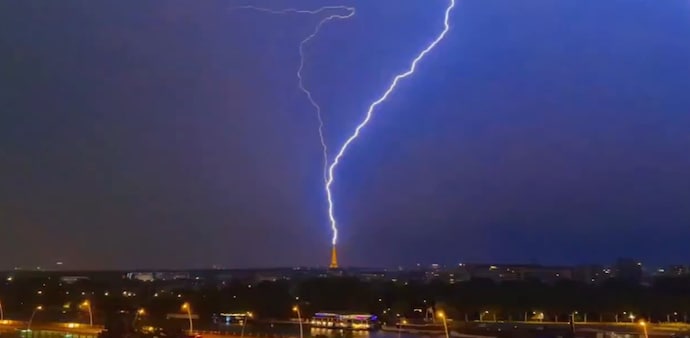
Europe's relentless heatwave has entered a dangerous new phase. After days of record-breaking temperatures that pushed thermometers past 40°C in several countries, violent thunderstorms, frequent lightning, giant hail, flash floods and damaging winds have swept across parts of the continent, exposing the volatile nature of an atmosphere supercharged by extreme heat.
The dramatic shift from blistering sunshine to destructive storms has left meteorologists warning that Europe's weather is becoming increasingly erratic. While thunderstorms have brought temporary relief from the oppressive heat, they have also triggered widespread disruption, infrastructure damage and fresh safety concerns across multiple countries.
Heatwave sets the stage for violent storms
The latest spell of extreme heat has gripped much of western and southern Europe, with Spain, Portugal, France and Italy recording unusually high temperatures for late June. Heat alerts remain in place across several countries, while authorities continue to urge people to avoid outdoor activities during the hottest parts of the day.
MUST READ | Same 43°C temperature, different reality: Why Europe's heatwave is more brutal than India's
Meteorologists say prolonged heat creates ideal conditions for severe thunderstorms. As scorching air rises rapidly and collides with cooler Atlantic air masses moving across Europe, the atmosphere becomes highly unstable, producing towering thunderclouds capable of generating intense lightning, torrential rain, giant hail and destructive wind gusts.
This phenomenon is increasingly being witnessed across Europe during major heatwaves, where prolonged periods of extreme heat are followed by sudden outbreaks of violent weather.
Lightning, hail and storms lash multiple countries
The United Kingdom was among the hardest-hit as severe thunderstorms rolled across southern England. London and surrounding areas witnessed intense lightning, torrential rain and localized flooding, while major airports including Heathrow and Gatwick experienced flight delays and cancellations due to storm activity. Emergency crews also responded to lightning-related incidents, including fires triggered by lightning strikes.
DON'T MISS | Europe's heatwave far from over: Second heat dome could send temperatures soaring to 46°C in July
Further east, Slovenia endured powerful thunderstorms packing wind gusts of more than 100 km/h, with large hail damaging homes, vehicles and crops. The storm system later swept into Croatia and Bosnia and Herzegovina, unleashing heavy rain, hailstorms and widespread thunderstorm activity.
The Netherlands experienced one of its most intense overnight lightning displays in recent memory, accompanied by powerful wind gusts and hail. Meteorological agencies also issued severe thunderstorm warnings across parts of Germany, Belgium, Switzerland and the Czech Republic as unstable atmospheric conditions spread across Central Europe.
Storms unleash widespread disruption
Across affected regions, sudden downpours flooded streets, overwhelmed drainage systems and disrupted road and rail transport. Powerful winds uprooted trees, damaged buildings and left thousands without electricity in some areas.
READ NOW | 40°C heatwaves, 282 deaths so far: Why does Europe still have so few ACs?
Air travel was also affected as thunderstorms forced flight delays, diversions and cancellations at several European airports. Emergency services responded to hundreds of weather-related incidents as residents grappled with rapidly changing conditions.
Climate whiplash becoming more common
Scientists increasingly describe these rapid transitions from extreme heat to violent storms as "climate whiplash" — a pattern in which weather swings abruptly between different extremes over a short period.
Warmer air can hold around 7% more moisture for every 1°C rise in temperature. When that moisture is released during thunderstorms, rainfall becomes more intense, increasing the risk of flash floods. At the same time, hotter surface temperatures provide additional energy that fuels stronger storm development, leading to more frequent lightning, larger hail and damaging winds.
FIND OUT | Built for 50°C summers: Here's what Indian Railways can teach Europe about keeping trains cool
While no individual storm can be attributed solely to climate change, researchers say rising global temperatures are making heatwaves more frequent, longer-lasting and more intense, while also increasing the likelihood of severe rainfall events and extreme thunderstorms.
Heatwave far from over
Forecasters warn that Europe's weather crisis is not yet over. Several regions are expected to remain under intense heat in the coming days, while fresh disturbances moving across the continent could trigger additional thunderstorms wherever hot and cooler air masses collide.
DO CHECKOUT | Europe heatwave: France's anti-AC culture wilts as 40°C triggers 'Black Friday' buying vibes
The combination of prolonged heat, drought conditions in some regions and sudden bursts of extreme rainfall presents multiple hazards — from wildfires and heat-related illnesses to flash floods, lightning strikes and infrastructure damage.
Europe's relentless heatwave has entered a dangerous new phase. After days of record-breaking temperatures that pushed thermometers past 40°C in several countries, violent thunderstorms, frequent lightning, giant hail, flash floods and damaging winds have swept across parts of the continent, exposing the volatile nature of an atmosphere supercharged by extreme heat.
The dramatic shift from blistering sunshine to destructive storms has left meteorologists warning that Europe's weather is becoming increasingly erratic. While thunderstorms have brought temporary relief from the oppressive heat, they have also triggered widespread disruption, infrastructure damage and fresh safety concerns across multiple countries.
Heatwave sets the stage for violent storms
The latest spell of extreme heat has gripped much of western and southern Europe, with Spain, Portugal, France and Italy recording unusually high temperatures for late June. Heat alerts remain in place across several countries, while authorities continue to urge people to avoid outdoor activities during the hottest parts of the day.
MUST READ | Same 43°C temperature, different reality: Why Europe's heatwave is more brutal than India's
Meteorologists say prolonged heat creates ideal conditions for severe thunderstorms. As scorching air rises rapidly and collides with cooler Atlantic air masses moving across Europe, the atmosphere becomes highly unstable, producing towering thunderclouds capable of generating intense lightning, torrential rain, giant hail and destructive wind gusts.
This phenomenon is increasingly being witnessed across Europe during major heatwaves, where prolonged periods of extreme heat are followed by sudden outbreaks of violent weather.
Lightning, hail and storms lash multiple countries
The United Kingdom was among the hardest-hit as severe thunderstorms rolled across southern England. London and surrounding areas witnessed intense lightning, torrential rain and localized flooding, while major airports including Heathrow and Gatwick experienced flight delays and cancellations due to storm activity. Emergency crews also responded to lightning-related incidents, including fires triggered by lightning strikes.
DON'T MISS | Europe's heatwave far from over: Second heat dome could send temperatures soaring to 46°C in July
Further east, Slovenia endured powerful thunderstorms packing wind gusts of more than 100 km/h, with large hail damaging homes, vehicles and crops. The storm system later swept into Croatia and Bosnia and Herzegovina, unleashing heavy rain, hailstorms and widespread thunderstorm activity.
The Netherlands experienced one of its most intense overnight lightning displays in recent memory, accompanied by powerful wind gusts and hail. Meteorological agencies also issued severe thunderstorm warnings across parts of Germany, Belgium, Switzerland and the Czech Republic as unstable atmospheric conditions spread across Central Europe.
Storms unleash widespread disruption
Across affected regions, sudden downpours flooded streets, overwhelmed drainage systems and disrupted road and rail transport. Powerful winds uprooted trees, damaged buildings and left thousands without electricity in some areas.
READ NOW | 40°C heatwaves, 282 deaths so far: Why does Europe still have so few ACs?
Air travel was also affected as thunderstorms forced flight delays, diversions and cancellations at several European airports. Emergency services responded to hundreds of weather-related incidents as residents grappled with rapidly changing conditions.
Climate whiplash becoming more common
Scientists increasingly describe these rapid transitions from extreme heat to violent storms as "climate whiplash" — a pattern in which weather swings abruptly between different extremes over a short period.
Warmer air can hold around 7% more moisture for every 1°C rise in temperature. When that moisture is released during thunderstorms, rainfall becomes more intense, increasing the risk of flash floods. At the same time, hotter surface temperatures provide additional energy that fuels stronger storm development, leading to more frequent lightning, larger hail and damaging winds.
FIND OUT | Built for 50°C summers: Here's what Indian Railways can teach Europe about keeping trains cool
While no individual storm can be attributed solely to climate change, researchers say rising global temperatures are making heatwaves more frequent, longer-lasting and more intense, while also increasing the likelihood of severe rainfall events and extreme thunderstorms.
Heatwave far from over
Forecasters warn that Europe's weather crisis is not yet over. Several regions are expected to remain under intense heat in the coming days, while fresh disturbances moving across the continent could trigger additional thunderstorms wherever hot and cooler air masses collide.
DO CHECKOUT | Europe heatwave: France's anti-AC culture wilts as 40°C triggers 'Black Friday' buying vibes
The combination of prolonged heat, drought conditions in some regions and sudden bursts of extreme rainfall presents multiple hazards — from wildfires and heat-related illnesses to flash floods, lightning strikes and infrastructure damage.