
Shipping at Hormuz nearly comes to a halt, Iran issues new warnings: Report
At least 13 oil tankers turned back towards the Persian Gulf on Saturday after Iran's Foreign Minister Abbas Araghchi said the strait was open.
- Jul 10, 2026,
- Updated Jul 10, 2026 12:03 PM IST
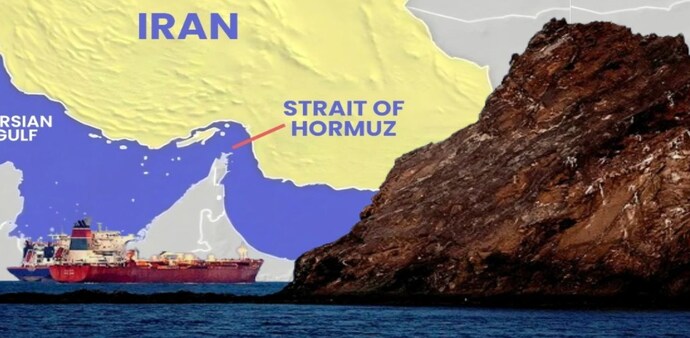
Commercial shipping through the Strait of Hormuz has nearly come to a halt after vessels were fired upon and Iran issued new warnings against crossings. This raises the risk of prolonged disruption to global energy supplies. According to a report in Bloomberg that cited tracking data, no commercial ship crossings were recorded on Sunday. There was a brief increase in traffic on Saturday.
At least 13 oil tankers turned back towards the Persian Gulf on Saturday after Iran's Foreign Minister Abbas Araghchi said the strait was open. However, Tehran closed the waterway again after the United States refused to lift its naval blockade of Iranian vessels.
The reversal came after confusion when some ships tried to pass through the strait following Araghchi's statement, but many made U-turns, the report stated. The disruption is trapping millions of barrels of oil and large volumes of liquefied natural gas in the Persian Gulf, threatening to extend the energy crunch affecting the global economy.
The latest escalation followed several security incidents near the strategic waterway. The UK Maritime Trade Operations (UKMTO) reported that a tanker was approached by Islamic Revolutionary Guard Corps gunboats off Oman and came under fire on Saturday. In another incident, a container ship was hit by an unknown projectile, and another commercial vessel reported a projectile splash nearby.
DON'T MISS | India's Nanda Devi only inbound LPG vessel at Hormuz as dark transits rise
These incidents occurred shortly after Iran said it would allow ships to transit the Strait of Hormuz during a ceasefire between Israel and Tehran's Lebanon-based ally Hezbollah. US President Donald Trump also said the strait was open but insisted the US Navy's blockade of Iranian vessels would continue. Iran called the blockade unacceptable, leading to the renewed closure of the waterway.
The heightened security risks may reduce visibility into shipping movements. Blockades could prompt vessels to switch off tracking signals to avoid detection, making it harder to know how many ships are transiting the area. Transit figures may be revised upward later when ships reappear after leaving the highest-risk zones.
MUST READ | White House prepares for multi-day exchange of fire with Iran over Hormuz: Report
Despite the disruption, some inbound traffic was recorded on Saturday. Ships entering the Persian Gulf included three liquefied petroleum gas tankers, four bulk carriers, and two container ships, both sanctioned by the United States for links to Iran.
Commercial shipping through the Strait of Hormuz has nearly come to a halt after vessels were fired upon and Iran issued new warnings against crossings. This raises the risk of prolonged disruption to global energy supplies. According to a report in Bloomberg that cited tracking data, no commercial ship crossings were recorded on Sunday. There was a brief increase in traffic on Saturday.
At least 13 oil tankers turned back towards the Persian Gulf on Saturday after Iran's Foreign Minister Abbas Araghchi said the strait was open. However, Tehran closed the waterway again after the United States refused to lift its naval blockade of Iranian vessels.
The reversal came after confusion when some ships tried to pass through the strait following Araghchi's statement, but many made U-turns, the report stated. The disruption is trapping millions of barrels of oil and large volumes of liquefied natural gas in the Persian Gulf, threatening to extend the energy crunch affecting the global economy.
The latest escalation followed several security incidents near the strategic waterway. The UK Maritime Trade Operations (UKMTO) reported that a tanker was approached by Islamic Revolutionary Guard Corps gunboats off Oman and came under fire on Saturday. In another incident, a container ship was hit by an unknown projectile, and another commercial vessel reported a projectile splash nearby.
DON'T MISS | India's Nanda Devi only inbound LPG vessel at Hormuz as dark transits rise
These incidents occurred shortly after Iran said it would allow ships to transit the Strait of Hormuz during a ceasefire between Israel and Tehran's Lebanon-based ally Hezbollah. US President Donald Trump also said the strait was open but insisted the US Navy's blockade of Iranian vessels would continue. Iran called the blockade unacceptable, leading to the renewed closure of the waterway.
The heightened security risks may reduce visibility into shipping movements. Blockades could prompt vessels to switch off tracking signals to avoid detection, making it harder to know how many ships are transiting the area. Transit figures may be revised upward later when ships reappear after leaving the highest-risk zones.
MUST READ | White House prepares for multi-day exchange of fire with Iran over Hormuz: Report
Despite the disruption, some inbound traffic was recorded on Saturday. Ships entering the Persian Gulf included three liquefied petroleum gas tankers, four bulk carriers, and two container ships, both sanctioned by the United States for links to Iran.