
BT Explainer: Planning a rooftop solar system? New rule from June 1 could increase costs by this amount
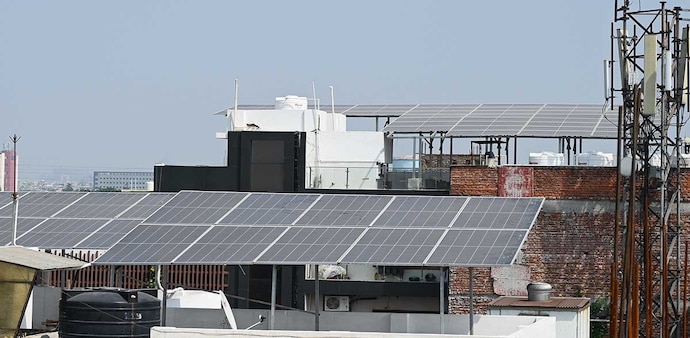
Planning to install a rooftop solar system? A new government rule that came into effect on June 1 could increase installation costs by around ₹15,000 for a typical 5-kW system, as developers are now required to use domestically manufactured solar cells.
- Jun 3, 2026,
- Updated Jun 3, 2026 5:05 PM IST
Consumers planning to install rooftop solar systems may face higher upfront costs following a major policy change that took effect on June 1, as the government pushes to strengthen India's domestic solar manufacturing ecosystem and reduce dependence on imports.
Under the new rules, solar projects connected through net-metering and open-access arrangements can now use only domestically manufactured solar cells sourced from government-approved manufacturers. India had already mandated the use of locally manufactured solar modules, but the latest requirement extends the localization mandate to the solar cells used inside those panels. The rule applies to rooftop solar installations, including projects under the PM Surya Ghar: Muft Bijli Yojana, as well as open-access projects used by commercial and industrial consumers.
What has changed from June 1?
The solar manufacturing chain begins with polysilicon, which is converted into ingots and wafers before being used to manufacture solar cells. These cells are then assembled into solar modules that are installed on rooftops and large-scale solar projects.
With the implementation of the Approved List of Models and Manufacturers (ALMM) List-II framework, developers can now source solar cells only from approved domestic manufacturers. Despite requests from developers seeking additional time, the government has decided to proceed with the transition without a blanket extension.
MUST READ: Suzlon share price falls: RE player unveils growth ambition; what Girish Tanti, CEO say
Clean energy push
The move is part of India's broader strategy to build a complete domestic solar manufacturing supply chain and reduce dependence on imported components, particularly from China.
While India has built nearly 200 GW of annual solar module manufacturing capacity, domestic solar cell production remains significantly lower at around 30 GW. The government believes the new mandate will encourage investments in cell manufacturing, improve energy security, and strengthen India's clean energy ambitions.
Higher costs
Industry estimates suggest rooftop solar installations could become around ₹3,000 per kilowatt more expensive because domestically manufactured cells cost significantly more than imported alternatives. For a typical 5-kW residential rooftop system, that could mean an additional expense of roughly ₹15,000.
Consumers installing systems under the PM Surya Ghar scheme will continue to receive government subsidies, although industry participants expect compliance requirements and documentation checks to become stricter.
MUST READ: PM Modi reviews ₹30,000 crore infra projects at PRAGATI meet; pushes rooftop solar, waste management
Supply constraints
A major concern is the gap between domestic manufacturing capacity and demand. Industry estimates place annual solar cell demand at around 50 GW, compared with domestic production capacity of only 25-30 GW. Historically, more than 90% of India's solar cell requirements have been met through imports.
Smaller solar module manufacturers are particularly worried because many do not produce cells themselves and will now have to depend on larger integrated manufacturers for supplies. Industry executives fear this could create supply bottlenecks and strengthen the pricing power of domestic cell producers.
Long-term benefits
Despite concerns over near-term disruptions, several industry leaders support the government's decision.
"While there may be some short term challenges related to cell availability and pricing, the long-term benefits far outweigh the transition concerns. The move is expected to boost demand for domestically produced solar cells and support the government's vision of building a self-reliant and globally competitive solar industry while ensuring quality and energy security," said Pawan Kumar Garg, Founder and Joint Managing Director, Fujiyama Power Systems.
Why domestic cells cost more
Industry experts point out that solar cell manufacturing requires substantial investments and long gestation periods.
"Solar cell manufacturing is highly capital-intensive, requiring investments of around ₹500 crore per GW and 18–24 months to establish. With technology evolving every few years, manufacturers must recover investments quickly, keeping costs elevated. Today, imported cells are available at around ₹5/Wp, while Indian cells cost ₹12–14/Wp due to limited domestic capacity and supply constraints. However, several new cell manufacturing facilities are under development, and increased competition is expected to gradually reduce costs over the coming years,” said Hanish Gupta, Founder & Managing Director, Sunkind India Limited.
MUST READ: Power play: How renewable energy is acing peak energy demand amid scorching heat
Road ahead
While the new sourcing mandate may result in higher prices and temporary supply challenges, supporters argue that it provides the policy certainty needed to encourage billions of rupees in fresh manufacturing investments. Over time, increased domestic production capacity and greater competition could help bring costs down, creating a stronger and more self-sufficient solar industry for India.
Consumers planning to install rooftop solar systems may face higher upfront costs following a major policy change that took effect on June 1, as the government pushes to strengthen India's domestic solar manufacturing ecosystem and reduce dependence on imports.
Under the new rules, solar projects connected through net-metering and open-access arrangements can now use only domestically manufactured solar cells sourced from government-approved manufacturers. India had already mandated the use of locally manufactured solar modules, but the latest requirement extends the localization mandate to the solar cells used inside those panels. The rule applies to rooftop solar installations, including projects under the PM Surya Ghar: Muft Bijli Yojana, as well as open-access projects used by commercial and industrial consumers.
What has changed from June 1?
The solar manufacturing chain begins with polysilicon, which is converted into ingots and wafers before being used to manufacture solar cells. These cells are then assembled into solar modules that are installed on rooftops and large-scale solar projects.
With the implementation of the Approved List of Models and Manufacturers (ALMM) List-II framework, developers can now source solar cells only from approved domestic manufacturers. Despite requests from developers seeking additional time, the government has decided to proceed with the transition without a blanket extension.
MUST READ: Suzlon share price falls: RE player unveils growth ambition; what Girish Tanti, CEO say
Clean energy push
The move is part of India's broader strategy to build a complete domestic solar manufacturing supply chain and reduce dependence on imported components, particularly from China.
While India has built nearly 200 GW of annual solar module manufacturing capacity, domestic solar cell production remains significantly lower at around 30 GW. The government believes the new mandate will encourage investments in cell manufacturing, improve energy security, and strengthen India's clean energy ambitions.
Higher costs
Industry estimates suggest rooftop solar installations could become around ₹3,000 per kilowatt more expensive because domestically manufactured cells cost significantly more than imported alternatives. For a typical 5-kW residential rooftop system, that could mean an additional expense of roughly ₹15,000.
Consumers installing systems under the PM Surya Ghar scheme will continue to receive government subsidies, although industry participants expect compliance requirements and documentation checks to become stricter.
MUST READ: PM Modi reviews ₹30,000 crore infra projects at PRAGATI meet; pushes rooftop solar, waste management
Supply constraints
A major concern is the gap between domestic manufacturing capacity and demand. Industry estimates place annual solar cell demand at around 50 GW, compared with domestic production capacity of only 25-30 GW. Historically, more than 90% of India's solar cell requirements have been met through imports.
Smaller solar module manufacturers are particularly worried because many do not produce cells themselves and will now have to depend on larger integrated manufacturers for supplies. Industry executives fear this could create supply bottlenecks and strengthen the pricing power of domestic cell producers.
Long-term benefits
Despite concerns over near-term disruptions, several industry leaders support the government's decision.
"While there may be some short term challenges related to cell availability and pricing, the long-term benefits far outweigh the transition concerns. The move is expected to boost demand for domestically produced solar cells and support the government's vision of building a self-reliant and globally competitive solar industry while ensuring quality and energy security," said Pawan Kumar Garg, Founder and Joint Managing Director, Fujiyama Power Systems.
Why domestic cells cost more
Industry experts point out that solar cell manufacturing requires substantial investments and long gestation periods.
"Solar cell manufacturing is highly capital-intensive, requiring investments of around ₹500 crore per GW and 18–24 months to establish. With technology evolving every few years, manufacturers must recover investments quickly, keeping costs elevated. Today, imported cells are available at around ₹5/Wp, while Indian cells cost ₹12–14/Wp due to limited domestic capacity and supply constraints. However, several new cell manufacturing facilities are under development, and increased competition is expected to gradually reduce costs over the coming years,” said Hanish Gupta, Founder & Managing Director, Sunkind India Limited.
MUST READ: Power play: How renewable energy is acing peak energy demand amid scorching heat
Road ahead
While the new sourcing mandate may result in higher prices and temporary supply challenges, supporters argue that it provides the policy certainty needed to encourage billions of rupees in fresh manufacturing investments. Over time, increased domestic production capacity and greater competition could help bring costs down, creating a stronger and more self-sufficient solar industry for India.