
Why Jefferies sees FY13 gold crisis echoes in PM Modi’s latest appeal
Jefferies has warned that Prime Minister Narendra Modi’s appeal to avoid gold jewellery purchases for one year resembles the policy messaging seen during India’s FY13 current account deficit crisis. The brokerage said rising gold imports, rupee weakness and elevated crude oil prices could revive concerns around CAD pressure and potential gold-related policy tightening.
Basudha Das
- May 12, 2026,
- Updated May 12, 2026 7:43 PM IST
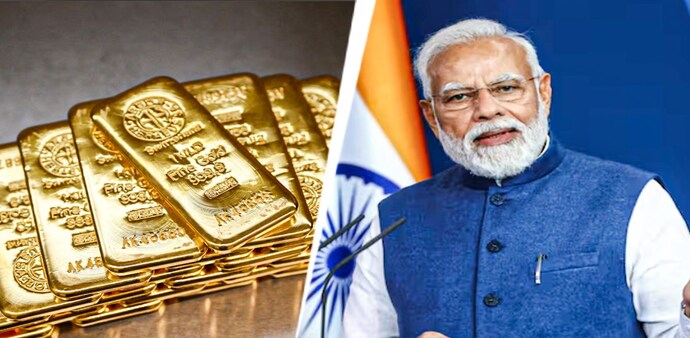
Prime Minister Narendra Modi’s recent appeal urging households to avoid buying gold jewellery for one year has triggered comparisons with India’s 2012-13 current account deficit (CAD) crisis, according to global brokerage Jefferies.
In a report on the Indian jewellery sector, Jefferies said the Prime Minister’s remarks resemble the messaging seen during FY12-13, when the government and the Reserve Bank of India introduced a series of restrictions to curb gold imports and protect India’s external balances.
Advertisement
The brokerage believes the latest appeal is part of a broader effort to conserve foreign exchange reserves at a time when elevated crude oil prices, rising gold imports and rupee weakness are increasing pressure on India’s economy.
What has PM said
PM Modi on Sunday urged Indians to adopt austerity measures amid the prolonged West Asia crisis, including avoiding gold purchases for at least one year to ease pressure on India’s foreign exchange reserves. India’s gold imports surged 24% to a record $71.98 billion in FY26, nearly doubling from $35 billion in FY23. Gold is now India’s second-largest import after crude oil, accounting for almost 10% of the country’s total import bill of $775 billion.
Why FY13 comparisons are resurfacing
Advertisement
Jefferies highlighted that India faced severe CAD stress during FY12 and FY13 as gold imports surged beyond US$50 billion annually. At the same time, the rupee weakened sharply, depreciating nearly 20% between January and September 2013.
During that period, policymakers attempted to reduce discretionary imports, especially gold, which was seen as a major contributor to dollar outflows.
MUST READ: Why gold, silver continue to attract investors despite market volatility
The report noted that then Finance Minister P. Chidambaram had also publicly urged households to reduce gold purchases before a series of policy actions followed.
These measures included raising customs duty on gold from 2% to 15%, restricting gold metal loans, banning imports of gold coins and implementing the 80:20 import rule, under which importers had to export part of imported gold before receiving fresh import approvals.
Advertisement
Jefferies warned that while the current macroeconomic environment is not yet as severe as FY13, the possibility of renewed policy intervention cannot be ruled out if external pressures intensify.
“Customs duty, which was reduced from 15% to 6%, could be increased again. There may be higher GST levy,” the brokerage said.
Gold, currency and CAD concerns
The report said the government’s latest messaging appears focused on reducing discretionary dollar outflows and limiting risks to India’s current account deficit.
Charts in the report showed that India’s gold imports, domestic gold prices and INR/USD exchange rates have all risen sharply over the past decade.
Jefferies believes these trends are reviving concerns around currency stability, especially amid geopolitical uncertainty and higher energy prices.
The brokerage noted that although India’s external position remains stronger than during the FY13 crisis period, policymakers may still take preventive measures if pressure on the rupee increases further.
Titan stronger
Advertisement
Despite concerns around the broader jewellery sector, Jefferies said organised players such as Titan are structurally stronger today than they were during the earlier gold crisis.
The brokerage said Titan has reduced dependence on imported gold through higher domestic sourcing and gold exchange programmes, with nearly 50% of its business now linked to gold exchange.
However, risks still remain. Around 40% of Titan’s gold requirements reportedly come through gold-on-lease arrangements, making any regulatory tightening in gold leasing an important monitorable.
The report also noted that Titan sold nearly Rs 61 billion worth of gold bullion during the fourth quarter, suggesting that the company currently holds adequate inventory levels.
How much can India save
Even so, Jefferies warned that jewellery stocks could remain volatile as investors assess potential policy changes, currency trends and the impact of softer gold demand sentiment following the Prime Minister’s appeal.
Economists believe a reduction in gold purchases could significantly improve India’s external balances. Infomerics Ratings Chief Economist Manoranjan Sharma said lower gold imports could sharply narrow the current account deficit, estimated at 0.9–1.1% of GDP for FY25.
Advertisement
According to a Moneycontrol analysis, even a 10% reduction in gold consumption could save India around $7.2 billion in foreign exchange. Experts also noted that the saved dollars could help finance expensive energy imports amid rising geopolitical tensions. A fall in Indian demand may also impact global gold prices, given India’s position as one of the world’s largest gold consumers.
MUST WATCH: Economic Warning! Chidambaram On Why Gold Imports Are Draining India’s Foreign Reserves
Prime Minister Narendra Modi’s recent appeal urging households to avoid buying gold jewellery for one year has triggered comparisons with India’s 2012-13 current account deficit (CAD) crisis, according to global brokerage Jefferies.
In a report on the Indian jewellery sector, Jefferies said the Prime Minister’s remarks resemble the messaging seen during FY12-13, when the government and the Reserve Bank of India introduced a series of restrictions to curb gold imports and protect India’s external balances.
Advertisement
The brokerage believes the latest appeal is part of a broader effort to conserve foreign exchange reserves at a time when elevated crude oil prices, rising gold imports and rupee weakness are increasing pressure on India’s economy.
What has PM said
PM Modi on Sunday urged Indians to adopt austerity measures amid the prolonged West Asia crisis, including avoiding gold purchases for at least one year to ease pressure on India’s foreign exchange reserves. India’s gold imports surged 24% to a record $71.98 billion in FY26, nearly doubling from $35 billion in FY23. Gold is now India’s second-largest import after crude oil, accounting for almost 10% of the country’s total import bill of $775 billion.
Why FY13 comparisons are resurfacing
Advertisement
Jefferies highlighted that India faced severe CAD stress during FY12 and FY13 as gold imports surged beyond US$50 billion annually. At the same time, the rupee weakened sharply, depreciating nearly 20% between January and September 2013.
During that period, policymakers attempted to reduce discretionary imports, especially gold, which was seen as a major contributor to dollar outflows.
MUST READ: Why gold, silver continue to attract investors despite market volatility
The report noted that then Finance Minister P. Chidambaram had also publicly urged households to reduce gold purchases before a series of policy actions followed.
These measures included raising customs duty on gold from 2% to 15%, restricting gold metal loans, banning imports of gold coins and implementing the 80:20 import rule, under which importers had to export part of imported gold before receiving fresh import approvals.
Advertisement
Jefferies warned that while the current macroeconomic environment is not yet as severe as FY13, the possibility of renewed policy intervention cannot be ruled out if external pressures intensify.
“Customs duty, which was reduced from 15% to 6%, could be increased again. There may be higher GST levy,” the brokerage said.
Gold, currency and CAD concerns
The report said the government’s latest messaging appears focused on reducing discretionary dollar outflows and limiting risks to India’s current account deficit.
Charts in the report showed that India’s gold imports, domestic gold prices and INR/USD exchange rates have all risen sharply over the past decade.
Jefferies believes these trends are reviving concerns around currency stability, especially amid geopolitical uncertainty and higher energy prices.
The brokerage noted that although India’s external position remains stronger than during the FY13 crisis period, policymakers may still take preventive measures if pressure on the rupee increases further.
Titan stronger
Advertisement
Despite concerns around the broader jewellery sector, Jefferies said organised players such as Titan are structurally stronger today than they were during the earlier gold crisis.
The brokerage said Titan has reduced dependence on imported gold through higher domestic sourcing and gold exchange programmes, with nearly 50% of its business now linked to gold exchange.
However, risks still remain. Around 40% of Titan’s gold requirements reportedly come through gold-on-lease arrangements, making any regulatory tightening in gold leasing an important monitorable.
The report also noted that Titan sold nearly Rs 61 billion worth of gold bullion during the fourth quarter, suggesting that the company currently holds adequate inventory levels.
How much can India save
Even so, Jefferies warned that jewellery stocks could remain volatile as investors assess potential policy changes, currency trends and the impact of softer gold demand sentiment following the Prime Minister’s appeal.
Economists believe a reduction in gold purchases could significantly improve India’s external balances. Infomerics Ratings Chief Economist Manoranjan Sharma said lower gold imports could sharply narrow the current account deficit, estimated at 0.9–1.1% of GDP for FY25.
Advertisement
According to a Moneycontrol analysis, even a 10% reduction in gold consumption could save India around $7.2 billion in foreign exchange. Experts also noted that the saved dollars could help finance expensive energy imports amid rising geopolitical tensions. A fall in Indian demand may also impact global gold prices, given India’s position as one of the world’s largest gold consumers.
MUST WATCH: Economic Warning! Chidambaram On Why Gold Imports Are Draining India’s Foreign Reserves
Read more!