
From New York to Sarojini stalls: How branded clothes end up selling for just a few hundred rupees
While buyers know the category of clothing they are purchasing, the brands, colours, sizes and styles remain unknown until the bale is opened.
- Jul 12, 2026,
- Updated Jul 17, 2026 2:22 PM IST
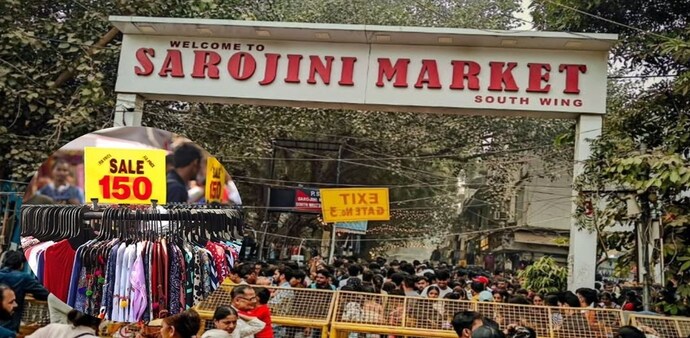
A bargain buy in Delhi's Sarojini Nagar often has a much longer journey than shoppers realise. Before a discounted jacket, pair of jeans or branded sweatshirt reaches a street market, it is likely to have travelled across continents and passed through Panipat, a wholesale hub that quietly supplies second-hand clothing to retailers across India.
The journey begins with imported garments arriving in tightly packed bales in Panipat before being distributed to markets across India. While some are recycled, many are sorted and resold, giving them a second life on shop racks.
From overseas donation bins to Panipat
The journey often begins in countries such as the United States, Canada, South Korea, China, the UAE and Japan, where garments are collected through donation bins, charity organisations, thrift stores and commercial sorting facilities.
Don't Miss: Dharmendra Pradhan seeks strict action over NCERT's paper procurement lapse
After travelling thousands of kilometres by sea and road, the consignments arrive at Barsat Road in Panipat, a stretch lined with warehouses stacked floor to ceiling with tightly compressed bales of clothing.
"From Kashmir to Kanyakumari, Panipat sends these clothes everywhere in India," a 55-year-old wholesaler told India Today from his office at the entrance of one such warehouse.
Each bale weighs between 80 kg and 100 kg and contains a single category of clothing, ranging from women's jeans and men's cotton trousers to Korean tops, white shirts, palazzos, cardigans, overcoats, dresses and winter jackets. Separate bales are also packed with undergarments.
Retailers from across India visit these warehouses to buy the bales. But there is one catch — they only get to see what is inside after making the payment.
An 80-kg bale costs anywhere between ₹8,000 and ₹30,000, depending on its contents. Bales of tops are generally cheaper, while those containing winter jackets command higher prices.
The bales are also graded. A-grade consignments usually contain only 5-10% garments with minor defects, while B-grade and C-grade bales have a larger share of worn or damaged clothing.
For retailers, the margins can be attractive. A bale costing ₹250 per kilogram may contain around three pairs of trousers per kilogram, bringing the cost of each pair to roughly ₹80-₹100. Those same trousers can later be sold for ₹200, ₹300 or more.
Every bale is a surprise
While buyers know the category of clothing they are purchasing, the brands, colours, sizes and styles remain unknown until the bale is opened.
When one warehouse owner opened a bale at India Today's request, it revealed what appeared to be a Louis Vuitton teddy knitwear pullover designed by Virgil Abloh.
That also explains how shoppers sometimes come across a Louis Vuitton pullover selling for around ₹300 in a market such as Sarojini Nagar. For the retailer, it may have cost as little as ₹70.
"A single bale can contain anything from unsold fashion inventory and export surplus to factory rejects and used clothing. We mostly import from China and Korea," Aman Jain of Vardhaman Impex, a wholesaler and distributor said.
"Many garments abroad go out of fashion very quickly. People often wear them only once or twice before discarding them, preferring to buy something new rather than wash and reuse them. These clothes are then collected, sorted, and resold," he added.
Besides China and South Korea, traders also import clothing from countries including the United States, Canada and Japan.
Many garments sold in street markets still carry labels from thrift stores and charity organisations such as Goodwill, the Salvation Army and Value Village.
In countries including the United States and Canada, these organisations sell part of the donated clothing through their own stores. Unsold stock, lower-grade garments and items with minor defects are then sorted, compressed into bales and exported through the global second-hand clothing trade.
In China, specialist sorting companies process large volumes of used clothing, grading garments by quality before compressing them into export-ready bales. Many eventually end up in Panipat.
"We work with several companies throughout the process. The goods come from multiple countries and are then distributed across India. Most shipments arrive through Gujarat, primarily via Mundra Port," a businessman said during a casual conversation after declining to be interviewed.
Jain explained that shipments from China are loaded into containers weighing around 25 tonnes, each carrying approximately 350 bales of different clothing categories.
"The containers travel by sea to Mundra Port in India and are then transported to Panipat," he said, adding that deliveries typically take around two months.
Reports also suggest that, because of import restrictions, some consignments enter India as "mutilated" used garments intended for recycling. Once they reach Panipat, the best-quality garments are separated for resale, while lower-grade clothing is sent for recycling.
A nationwide supply chain
After arriving in Panipat, the clothes begin another journey.
Traders say the garments are shipped to buyers across the country — from Jammu and Kashmir, Himachal Pradesh and the Northeast to Kerala and Kanyakumari — before being sold through local markets, fairs, shops and showrooms.
"We have delivered in over 1,500 pincodes so far," Jain said.
Another trader added: "Buyers come from all over India — street vendors, small retailers and showroom owners," noting that jackets are particularly popular in hill states such as Himachal Pradesh and Ladakh.
The business has also expanded online, with wholesalers selling through YouTube, WhatsApp and platforms such as IndiaMART.
The final touch before sale
Before many garments leave Panipat, some make one last stop at small workshops tucked behind the warehouses on Barsat Road.
Here, clothes can be ironed, folded, packed and fitted with branded tags before being shipped to retailers. The process costs around ₹6-₹7 per garment.
"You want a company tag? That costs ₹1 extra. A regular tag costs 50 paise. You can get tags for Max, Zara, Tommy Hilfiger — there are many such brand tags available," a woman working at one of the workshops told India Today.
She said not every trader chooses this service.
"Not all vendors opt for such tags, though. Only a few who sell in proper stores are the ones getting them packed and add these tags," she added.
The workshops offer an explanation for why some garments in local markets carry familiar brand labels despite not being genuine. At the same time, traders insist that not every branded item passing through Panipat is counterfeit. Some pieces, including premium labels, may well be authentic — but until a bale is opened, nobody knows exactly what is inside.
A bargain buy in Delhi's Sarojini Nagar often has a much longer journey than shoppers realise. Before a discounted jacket, pair of jeans or branded sweatshirt reaches a street market, it is likely to have travelled across continents and passed through Panipat, a wholesale hub that quietly supplies second-hand clothing to retailers across India.
The journey begins with imported garments arriving in tightly packed bales in Panipat before being distributed to markets across India. While some are recycled, many are sorted and resold, giving them a second life on shop racks.
From overseas donation bins to Panipat
The journey often begins in countries such as the United States, Canada, South Korea, China, the UAE and Japan, where garments are collected through donation bins, charity organisations, thrift stores and commercial sorting facilities.
Don't Miss: Dharmendra Pradhan seeks strict action over NCERT's paper procurement lapse
After travelling thousands of kilometres by sea and road, the consignments arrive at Barsat Road in Panipat, a stretch lined with warehouses stacked floor to ceiling with tightly compressed bales of clothing.
"From Kashmir to Kanyakumari, Panipat sends these clothes everywhere in India," a 55-year-old wholesaler told India Today from his office at the entrance of one such warehouse.
Each bale weighs between 80 kg and 100 kg and contains a single category of clothing, ranging from women's jeans and men's cotton trousers to Korean tops, white shirts, palazzos, cardigans, overcoats, dresses and winter jackets. Separate bales are also packed with undergarments.
Retailers from across India visit these warehouses to buy the bales. But there is one catch — they only get to see what is inside after making the payment.
An 80-kg bale costs anywhere between ₹8,000 and ₹30,000, depending on its contents. Bales of tops are generally cheaper, while those containing winter jackets command higher prices.
The bales are also graded. A-grade consignments usually contain only 5-10% garments with minor defects, while B-grade and C-grade bales have a larger share of worn or damaged clothing.
For retailers, the margins can be attractive. A bale costing ₹250 per kilogram may contain around three pairs of trousers per kilogram, bringing the cost of each pair to roughly ₹80-₹100. Those same trousers can later be sold for ₹200, ₹300 or more.
Every bale is a surprise
While buyers know the category of clothing they are purchasing, the brands, colours, sizes and styles remain unknown until the bale is opened.
When one warehouse owner opened a bale at India Today's request, it revealed what appeared to be a Louis Vuitton teddy knitwear pullover designed by Virgil Abloh.
That also explains how shoppers sometimes come across a Louis Vuitton pullover selling for around ₹300 in a market such as Sarojini Nagar. For the retailer, it may have cost as little as ₹70.
"A single bale can contain anything from unsold fashion inventory and export surplus to factory rejects and used clothing. We mostly import from China and Korea," Aman Jain of Vardhaman Impex, a wholesaler and distributor said.
"Many garments abroad go out of fashion very quickly. People often wear them only once or twice before discarding them, preferring to buy something new rather than wash and reuse them. These clothes are then collected, sorted, and resold," he added.
Besides China and South Korea, traders also import clothing from countries including the United States, Canada and Japan.
Many garments sold in street markets still carry labels from thrift stores and charity organisations such as Goodwill, the Salvation Army and Value Village.
In countries including the United States and Canada, these organisations sell part of the donated clothing through their own stores. Unsold stock, lower-grade garments and items with minor defects are then sorted, compressed into bales and exported through the global second-hand clothing trade.
In China, specialist sorting companies process large volumes of used clothing, grading garments by quality before compressing them into export-ready bales. Many eventually end up in Panipat.
"We work with several companies throughout the process. The goods come from multiple countries and are then distributed across India. Most shipments arrive through Gujarat, primarily via Mundra Port," a businessman said during a casual conversation after declining to be interviewed.
Jain explained that shipments from China are loaded into containers weighing around 25 tonnes, each carrying approximately 350 bales of different clothing categories.
"The containers travel by sea to Mundra Port in India and are then transported to Panipat," he said, adding that deliveries typically take around two months.
Reports also suggest that, because of import restrictions, some consignments enter India as "mutilated" used garments intended for recycling. Once they reach Panipat, the best-quality garments are separated for resale, while lower-grade clothing is sent for recycling.
A nationwide supply chain
After arriving in Panipat, the clothes begin another journey.
Traders say the garments are shipped to buyers across the country — from Jammu and Kashmir, Himachal Pradesh and the Northeast to Kerala and Kanyakumari — before being sold through local markets, fairs, shops and showrooms.
"We have delivered in over 1,500 pincodes so far," Jain said.
Another trader added: "Buyers come from all over India — street vendors, small retailers and showroom owners," noting that jackets are particularly popular in hill states such as Himachal Pradesh and Ladakh.
The business has also expanded online, with wholesalers selling through YouTube, WhatsApp and platforms such as IndiaMART.
The final touch before sale
Before many garments leave Panipat, some make one last stop at small workshops tucked behind the warehouses on Barsat Road.
Here, clothes can be ironed, folded, packed and fitted with branded tags before being shipped to retailers. The process costs around ₹6-₹7 per garment.
"You want a company tag? That costs ₹1 extra. A regular tag costs 50 paise. You can get tags for Max, Zara, Tommy Hilfiger — there are many such brand tags available," a woman working at one of the workshops told India Today.
She said not every trader chooses this service.
"Not all vendors opt for such tags, though. Only a few who sell in proper stores are the ones getting them packed and add these tags," she added.
The workshops offer an explanation for why some garments in local markets carry familiar brand labels despite not being genuine. At the same time, traders insist that not every branded item passing through Panipat is counterfeit. Some pieces, including premium labels, may well be authentic — but until a bale is opened, nobody knows exactly what is inside.