
'They were more concerned about...': BioCompute founder explains why she left India to build deep-tech in US
BioCompute is developing a new way to store digital information using DNA instead of traditional computer hardware.
- Jun 23, 2026,
- Updated Jun 23, 2026 7:30 AM IST
A 24-year-old Bengaluru entrepreneur building what could become the future of data storage is moving her company to the United States, saying India has the talent to create deep-tech breakthroughs but lacks the risk-taking ecosystem needed to support ambitious ideas.
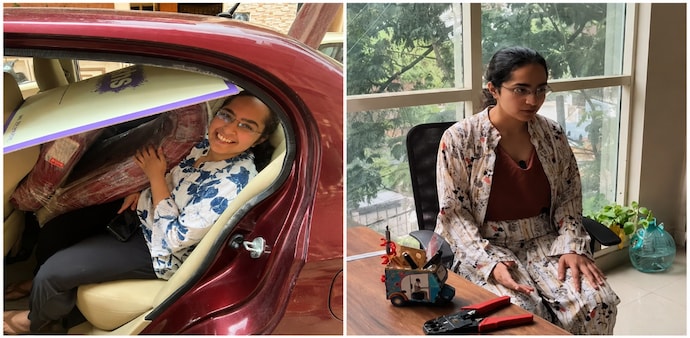
Anagha Rajesh, founder of deep-tech startup BioCompute, announced that the company will relocate to San Francisco as it begins work on its first DNA data storage chips. She said the move was driven not by a shortage of talent in India, but by the need for an ecosystem that can support high-risk, high-reward innovation.
What is BioCompute?
BioCompute is developing a new way to store digital information using DNA instead of traditional computer hardware. The startup aims to use DNA’s natural ability to store vast amounts of information to create data storage systems that are smaller, more efficient and require less energy.
Don't Miss: Can you repaint, redecorate or install AC in a rented flat? Here's what the law says
In simple terms, the company is working on a future where massive amounts of digital data could be stored inside tiny biological systems.
From Bengaluru lab to DNA storage prototype
She started BioCompute in 2024 with the ambition of building computing and storage infrastructure inspired by biological systems.
Over the last two years, she built a team, raised more than ₹5 crore from investors including WTF Fund, Grad Capital and 1517 Fund, set up a lab, conducted thousands of experiments and developed an end-to-end prototype.
“We are the first lab in India to go after the audacious problem of DNA data storage, and have leveraged the resources in India over the last 2 years to get to an end to end prototype,” Anagha wrote in her blog post.
However, as the company moves from research to developing chips and taking the technology to customers, Rajesh believes the next stage requires a different ecosystem.
Why is Anagha Rajesh moving BioCompute to San Francisco?
In an interview with Vyom Bhatia, Rajesh said she decided to move to San Francisco because “people there got the point of what I was doing”.
She said the ecosystem there focused on helping her build the technology rather than only questioning short-term revenue goals.
“They [the people in San Francisco] were not as concerned about revenue. They were more concerned about what I would need to follow this through,” said the founder of BioCompute.
Explaining her decision, Rajesh said India’s deep-tech ecosystem is still developing and is not ready for companies working on highly experimental technologies.
“While India is now starting to invest in deep tech through RDI fund and the likes, we don’t think the ecosystem is ready for a product like ours.
“India often likes to play safe, looking at what has been built in the West and adapting it to our socio-cultural and economic landscape. But what we need to build a new age data storage hardware company, and take on Goliaths like IBM, is an ecosystem that is built on abundance and takes high-risk-high-reward bets,” Anagha wrote.
‘India’s challenge is not talent, but capital’
Vyom Bhatia, who shared Rajesh’s story online, argued that India’s challenge is not a shortage of skilled people but the lack of capital available for ambitious deep-tech ventures.
“India ke paas paise ki kummi nahi hai. Awareness ki hai,” Bhatia wrote.
He said BioCompute had already raised funding and received recognition, but the move highlighted two major issues: access to capital and attracting specialised talent.
“In one of the many conversations i have had with her, this one stuck with me: There are Indians in the US who I know I will be hiring. They don't want to raise their kids there. They want to come home.
“So this isn't about talent either. It's about money. If there's capital for people like Anagha, starting with Anagha, the dam will break,” Bhatia said.
Bengaluru team let go as company shifts base
The relocation also means shutting down BioCompute’s Bengaluru operations and parting ways with the team that helped build the company’s foundation.
Rajesh said the conversations with employees were among the hardest moments of her journey as a founder.
“These are folks who have spent most of their waking hours thinking, building, troubleshooting and most importantly enjoying the challenges that come with having a once in a lifetime opportunity to shape data infrastructure,” she wrote.
Last week, she listed office furniture, equipment and chemicals from the Bengaluru setup for sale on LinkedIn.
Angha said BioCompute’s next phase will focus on product development, building its DNA storage chips and taking the technology to customers.
“It’s an exciting (and nerve-wrecking) chapter ahead as I head out to San Francisco and build on the product development we have done in the last few years, and take our first chip to customers,” she wrote.
A 24-year-old Bengaluru entrepreneur building what could become the future of data storage is moving her company to the United States, saying India has the talent to create deep-tech breakthroughs but lacks the risk-taking ecosystem needed to support ambitious ideas.
Anagha Rajesh, founder of deep-tech startup BioCompute, announced that the company will relocate to San Francisco as it begins work on its first DNA data storage chips. She said the move was driven not by a shortage of talent in India, but by the need for an ecosystem that can support high-risk, high-reward innovation.
What is BioCompute?
BioCompute is developing a new way to store digital information using DNA instead of traditional computer hardware. The startup aims to use DNA’s natural ability to store vast amounts of information to create data storage systems that are smaller, more efficient and require less energy.
Don't Miss: Can you repaint, redecorate or install AC in a rented flat? Here's what the law says
In simple terms, the company is working on a future where massive amounts of digital data could be stored inside tiny biological systems.
From Bengaluru lab to DNA storage prototype
She started BioCompute in 2024 with the ambition of building computing and storage infrastructure inspired by biological systems.
Over the last two years, she built a team, raised more than ₹5 crore from investors including WTF Fund, Grad Capital and 1517 Fund, set up a lab, conducted thousands of experiments and developed an end-to-end prototype.
“We are the first lab in India to go after the audacious problem of DNA data storage, and have leveraged the resources in India over the last 2 years to get to an end to end prototype,” Anagha wrote in her blog post.
However, as the company moves from research to developing chips and taking the technology to customers, Rajesh believes the next stage requires a different ecosystem.
Why is Anagha Rajesh moving BioCompute to San Francisco?
In an interview with Vyom Bhatia, Rajesh said she decided to move to San Francisco because “people there got the point of what I was doing”.
She said the ecosystem there focused on helping her build the technology rather than only questioning short-term revenue goals.
“They [the people in San Francisco] were not as concerned about revenue. They were more concerned about what I would need to follow this through,” said the founder of BioCompute.
Explaining her decision, Rajesh said India’s deep-tech ecosystem is still developing and is not ready for companies working on highly experimental technologies.
“While India is now starting to invest in deep tech through RDI fund and the likes, we don’t think the ecosystem is ready for a product like ours.
“India often likes to play safe, looking at what has been built in the West and adapting it to our socio-cultural and economic landscape. But what we need to build a new age data storage hardware company, and take on Goliaths like IBM, is an ecosystem that is built on abundance and takes high-risk-high-reward bets,” Anagha wrote.
‘India’s challenge is not talent, but capital’
Vyom Bhatia, who shared Rajesh’s story online, argued that India’s challenge is not a shortage of skilled people but the lack of capital available for ambitious deep-tech ventures.
“India ke paas paise ki kummi nahi hai. Awareness ki hai,” Bhatia wrote.
He said BioCompute had already raised funding and received recognition, but the move highlighted two major issues: access to capital and attracting specialised talent.
“In one of the many conversations i have had with her, this one stuck with me: There are Indians in the US who I know I will be hiring. They don't want to raise their kids there. They want to come home.
“So this isn't about talent either. It's about money. If there's capital for people like Anagha, starting with Anagha, the dam will break,” Bhatia said.
Bengaluru team let go as company shifts base
The relocation also means shutting down BioCompute’s Bengaluru operations and parting ways with the team that helped build the company’s foundation.
Rajesh said the conversations with employees were among the hardest moments of her journey as a founder.
“These are folks who have spent most of their waking hours thinking, building, troubleshooting and most importantly enjoying the challenges that come with having a once in a lifetime opportunity to shape data infrastructure,” she wrote.
Last week, she listed office furniture, equipment and chemicals from the Bengaluru setup for sale on LinkedIn.
Angha said BioCompute’s next phase will focus on product development, building its DNA storage chips and taking the technology to customers.
“It’s an exciting (and nerve-wrecking) chapter ahead as I head out to San Francisco and build on the product development we have done in the last few years, and take our first chip to customers,” she wrote.