
'Will ban construction work in Delhi areas recording severe air quality': Delhi's Environment Minister Gopal Rai
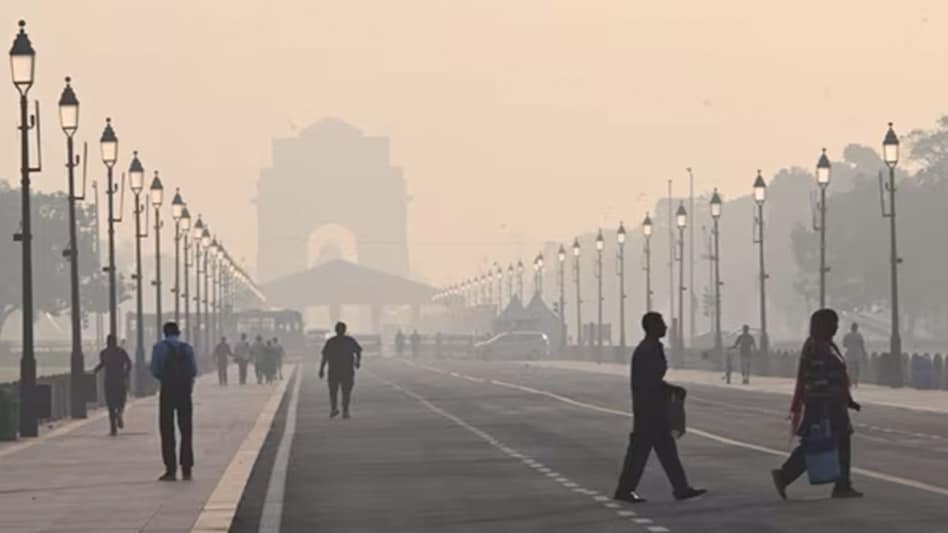
The air quality index in the national capital was recorded at 346 at 12:30 pm on November 1, which is classified as 'very poor' category for the fifth day in a row. On Tuesday, Delhi’s 24-hour average AQI was recorded at 327, SAFAR-India data showed.
- Nov 1, 2023,
- Updated Nov 1, 2023 5:25 PM IST
Delhi Environment Minister Gopal Rai on Wednesday said that the government will ban construction work in areas recording severe air quality for 5 days in a row. Like every year, Delhi and the adjacent areas are facing deteriorating air quality and rising pollution levels. The Air Quality Index (AQI) has reached alarming heights and some areas have recorded an AQI of 400 in the last few days.
From today, the Delhi government said only CNG, electric and BS-VI-compliant diesel buses will be permitted to ply between Delhi and the National Capital Region (NCR).
Earlier in the day, Rai said that the next 15-20 days starting from November 1 onwards would be critical in the context of the air quality index. He said that Graded Response Action Plan (GRAP)-II rules have been implemented in Delhi to control air pollution in the city and efforts are underway to tackle biomass burning and control vehicle pollution.
“From November 1, the next 15 to 20 days are critical. Scientists are saying that the temperature is dropping and the speed of air has decreased, so pollutants are at a lower level. Yesterday, AQI was nearly 350. Due to the work going on in the 13 hotspots in Delhi, the situation is fairly under control. At some hotspots, vehicle pollution's contribution is high," Rai told ANI on Wednesday morning.
"Today there is a meeting of different departments to analyze GRAP-II, which was implemented in all of Delhi. We have asked for reports from different places to know what the sources of local pollution are. We have requested that the state governments send CNG or BS-VI buses from the depot itself. The report released by the Commission for Air Quality Management in National Capital Region and Adjoining Areas (CAQM) shows that stubble burning has reduced, but its impact can be seen on Delhi pollution," the minister said on Wednesday.
The air quality index in the national capital was recorded at 346 at 12:30 pm on November 1, which is classified as 'very poor' category for the fifth day in a row.
As per Central Pollution Control Board data at 7:30 am, AQI recorded in Wazirpur was 421, 414 in Anand Vihar. SAFAR data showed that Pusa and Lodhi Road recorded AQI levels of 329 and 342, respectively, both categorised as ‘very poor’.
Delhi University recorded an AQI of 385, while the airport at Terminal 3 noted an AQI of 353, Noida at 372, IIT Delhi at 347, Gurugram at 329, Dhirpur at 385, all in the 'very poor' range.
On Tuesday morning, Delhi’s 24-hour average AQI was recorded at 327, as per SAFAR-India data. Specifically, Pusa Road and Lodhi Road areas recorded AQI levels of 300 and 306, respectively, both falling under the ‘very poor’ category.
Meanwhile, the Supreme Court on Tuesday asked five states -- including Delhi, Punjab, Haryana, Uttar Pradesh and Rajasthan -- to provide a detailed account of the measures implemented to combat the problem of air pollution.
A three-judge bench headed by Justice SK Kaul and comprising Justices Sudhanshu Dhulia and P K Mishra, gave the states a week to file the affidavits, slating the matter for hearing on November 7 next.
Observing that until a couple of decades ago this was the best time in Delhi, the apex court said the city is now marred by worsening air quality and it is difficult to even step outside the house.
(With PTI inputs)
Also read: Rising Pollution In Delhi, AQI Hits 300 In Multiple Locations
Delhi Environment Minister Gopal Rai on Wednesday said that the government will ban construction work in areas recording severe air quality for 5 days in a row. Like every year, Delhi and the adjacent areas are facing deteriorating air quality and rising pollution levels. The Air Quality Index (AQI) has reached alarming heights and some areas have recorded an AQI of 400 in the last few days.
From today, the Delhi government said only CNG, electric and BS-VI-compliant diesel buses will be permitted to ply between Delhi and the National Capital Region (NCR).
Earlier in the day, Rai said that the next 15-20 days starting from November 1 onwards would be critical in the context of the air quality index. He said that Graded Response Action Plan (GRAP)-II rules have been implemented in Delhi to control air pollution in the city and efforts are underway to tackle biomass burning and control vehicle pollution.
“From November 1, the next 15 to 20 days are critical. Scientists are saying that the temperature is dropping and the speed of air has decreased, so pollutants are at a lower level. Yesterday, AQI was nearly 350. Due to the work going on in the 13 hotspots in Delhi, the situation is fairly under control. At some hotspots, vehicle pollution's contribution is high," Rai told ANI on Wednesday morning.
"Today there is a meeting of different departments to analyze GRAP-II, which was implemented in all of Delhi. We have asked for reports from different places to know what the sources of local pollution are. We have requested that the state governments send CNG or BS-VI buses from the depot itself. The report released by the Commission for Air Quality Management in National Capital Region and Adjoining Areas (CAQM) shows that stubble burning has reduced, but its impact can be seen on Delhi pollution," the minister said on Wednesday.
The air quality index in the national capital was recorded at 346 at 12:30 pm on November 1, which is classified as 'very poor' category for the fifth day in a row.
As per Central Pollution Control Board data at 7:30 am, AQI recorded in Wazirpur was 421, 414 in Anand Vihar. SAFAR data showed that Pusa and Lodhi Road recorded AQI levels of 329 and 342, respectively, both categorised as ‘very poor’.
Delhi University recorded an AQI of 385, while the airport at Terminal 3 noted an AQI of 353, Noida at 372, IIT Delhi at 347, Gurugram at 329, Dhirpur at 385, all in the 'very poor' range.
On Tuesday morning, Delhi’s 24-hour average AQI was recorded at 327, as per SAFAR-India data. Specifically, Pusa Road and Lodhi Road areas recorded AQI levels of 300 and 306, respectively, both falling under the ‘very poor’ category.
Meanwhile, the Supreme Court on Tuesday asked five states -- including Delhi, Punjab, Haryana, Uttar Pradesh and Rajasthan -- to provide a detailed account of the measures implemented to combat the problem of air pollution.
A three-judge bench headed by Justice SK Kaul and comprising Justices Sudhanshu Dhulia and P K Mishra, gave the states a week to file the affidavits, slating the matter for hearing on November 7 next.
Observing that until a couple of decades ago this was the best time in Delhi, the apex court said the city is now marred by worsening air quality and it is difficult to even step outside the house.
(With PTI inputs)
Also read: Rising Pollution In Delhi, AQI Hits 300 In Multiple Locations