
Building collapse in India: Will health insurance cover your hospital bills after an accident?
Building collapses can leave families facing sudden hospitalisation and steep medical bills alongside the trauma of the accident. Here’s what health insurance typically covers after accidental injuries, and which expenses may fall outside the policy.
- Sep 22, 2026,
- Updated Sep 22, 2026 5:35 AM IST
A building collapse can leave families dealing with two crises at once — the trauma of an accident and the sudden burden of hospital expenses. As recent incidents in Delhi highlight the risks associated with structural failures, experts explain what health insurance typically covers when a person is injured in such an accident.
An under-construction building collapsed in north Delhi’s Alipur area on Sunday, days after a building collapse in Satya Niketan claimed seven lives. No casualties were reported in the latest incident, police said.
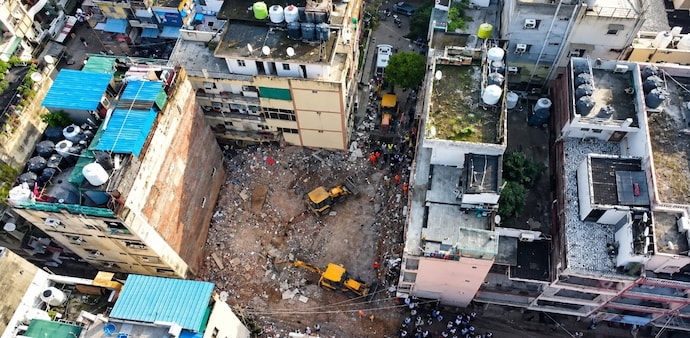
The Satya Niketan incident took place on September 6, 2026, when a five-storey residential building being used as a boys’ paying guest (PG) accommodation collapsed in the South-West Delhi neighbourhood. At least seven people were killed and six critically injured, while several students were reportedly trapped under the rubble during the rescue operation.
The incidents have also drawn attention to concerns surrounding residential infrastructure, particularly the shortage of official university hostel accommodation and the expansion of private PG facilities. Student groups and critics have raised concerns about the regulation and safety of such accommodation.
Will health insurance cover injuries from a building collapse?
For those injured in such accidents, a key question is whether health insurance will cover the resulting hospital bills.
Yogesh Agarwal, CEO and Founder at Onsurity, said health insurance coverage is generally determined by the nature of the injury and the treatment required, rather than simply by the fact that the injury resulted from a building collapse.
“A building collapse is a devastating event, and in that moment, the last thing a family should have to worry about is whether the hospital bill will be paid,” Agarwal said.
He added that if an insured person suffers accidental injuries requiring medically necessary hospitalisation, the expenses would typically be considered under the health policy, subject to the sum insured, policy terms and applicable exclusions.
What expenses may be covered?
Arun Ramamurthy, Co-founder of Staywell.Health, said building collapses are accidents that can result in immediate hospitalisation and significant medical expenses, making adequate health insurance important.
“Most often, a full health insurance policy would be able to cover medically essential hospitalisation which stems from an accident as long as the various terms, conditions, exclusions, and limitations contained in the policy allow one to do that,” Ramamurthy said.
He added that hospitalisation, surgery, medical tests, diagnostics, doctor consultations and prescribed medicines may be covered when they are medically necessary and fall within the policy’s terms.
Not every post-accident expense is covered
However, not every expense following an accident is necessarily covered. Non-medical expenses, certain outpatient treatments and costs falling outside the policy’s scope may not be payable.
There may also be separate personal accident insurance policies that provide additional financial protection, depending on the policy and circumstances.
Check your policy before an emergency
Both experts stressed the importance of understanding a policy before an emergency occurs. Policyholders should check the sum insured, exclusions, cashless hospital network, claim procedures and applicable limits.
With urbanisation increasing and accidents remaining an unforeseen risk, adequate health insurance can help families manage the financial impact of emergency medical treatment when a crisis strikes.
DO READ: Delhi to get new PG rules, safety standards within 1.5 months: Education Minister Ashish Sood
A building collapse can leave families dealing with two crises at once — the trauma of an accident and the sudden burden of hospital expenses. As recent incidents in Delhi highlight the risks associated with structural failures, experts explain what health insurance typically covers when a person is injured in such an accident.
An under-construction building collapsed in north Delhi’s Alipur area on Sunday, days after a building collapse in Satya Niketan claimed seven lives. No casualties were reported in the latest incident, police said.
The Satya Niketan incident took place on September 6, 2026, when a five-storey residential building being used as a boys’ paying guest (PG) accommodation collapsed in the South-West Delhi neighbourhood. At least seven people were killed and six critically injured, while several students were reportedly trapped under the rubble during the rescue operation.
The incidents have also drawn attention to concerns surrounding residential infrastructure, particularly the shortage of official university hostel accommodation and the expansion of private PG facilities. Student groups and critics have raised concerns about the regulation and safety of such accommodation.
Will health insurance cover injuries from a building collapse?
For those injured in such accidents, a key question is whether health insurance will cover the resulting hospital bills.
Yogesh Agarwal, CEO and Founder at Onsurity, said health insurance coverage is generally determined by the nature of the injury and the treatment required, rather than simply by the fact that the injury resulted from a building collapse.
“A building collapse is a devastating event, and in that moment, the last thing a family should have to worry about is whether the hospital bill will be paid,” Agarwal said.
He added that if an insured person suffers accidental injuries requiring medically necessary hospitalisation, the expenses would typically be considered under the health policy, subject to the sum insured, policy terms and applicable exclusions.
What expenses may be covered?
Arun Ramamurthy, Co-founder of Staywell.Health, said building collapses are accidents that can result in immediate hospitalisation and significant medical expenses, making adequate health insurance important.
“Most often, a full health insurance policy would be able to cover medically essential hospitalisation which stems from an accident as long as the various terms, conditions, exclusions, and limitations contained in the policy allow one to do that,” Ramamurthy said.
He added that hospitalisation, surgery, medical tests, diagnostics, doctor consultations and prescribed medicines may be covered when they are medically necessary and fall within the policy’s terms.
Not every post-accident expense is covered
However, not every expense following an accident is necessarily covered. Non-medical expenses, certain outpatient treatments and costs falling outside the policy’s scope may not be payable.
There may also be separate personal accident insurance policies that provide additional financial protection, depending on the policy and circumstances.
Check your policy before an emergency
Both experts stressed the importance of understanding a policy before an emergency occurs. Policyholders should check the sum insured, exclusions, cashless hospital network, claim procedures and applicable limits.
With urbanisation increasing and accidents remaining an unforeseen risk, adequate health insurance can help families manage the financial impact of emergency medical treatment when a crisis strikes.
DO READ: Delhi to get new PG rules, safety standards within 1.5 months: Education Minister Ashish Sood