
'AI super-users seeing productivity gains': Vianai CEO Vishal Sikka; urges bridging LLM-enterprise gap
Sikka described a recent case in which a large online service originally built by a team of 15 engineers over nine months was recreated by a single individual in just two weeks using AI coding tools.
- Feb 19, 2026,
- Updated Feb 19, 2026 1:35 PM IST
People who know how to use artificial intelligence effectively are achieving dramatic productivity gains, highlighting both the promise and disruption of the technology, Vishal Sikka, founder and chief executive of Vianai Systems, said on 19 February.
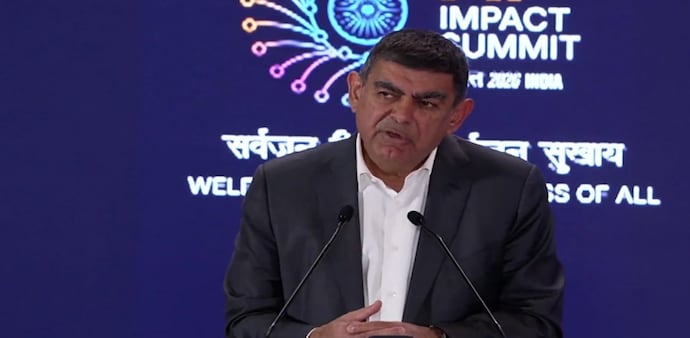
“People who understand how to use AI are astonishingly effective,” Vishal Sikka said at the India AI Impact Summit, pointing to rapid improvements in software development and decision-making.
Sikka described a recent case in which a large online service originally built by a team of 15 engineers over nine months was recreated by a single individual in just two weeks using AI coding tools.
“Recently, a service built by 15 engineers over nine months was rebuilt by one person in 14 days using AI coding,” he said, calling it an example of unprecedented productivity gains enabled by the technology.
He said AI now gives users “instant access to knowledge in any language,” fundamentally changing how work is performed across industries.
“This is an incredible power, deeply disruptive, but enabling things we could never do before,” Sikka said.
The LLM-enterprise gap
However, he warned that widespread value will depend on bridging the gap between advanced AI models and real-world enterprise use.
“There is a huge gap between large language models and business users,” he said. “Bridging that gap requires correct, trusted, verifiable systems that deliver real value.”
Sikka added that organisations that successfully integrate AI could transform legacy operations and unlock new capabilities.
“We can transform every existing system, especially legacy systems inside enterprises,” he said.
On safety and risks
Despite the optimism, he warned that today’s AI systems still face significant technical limitations and risks, particularly around safety and energy consumption.
“AI today has enormous limitations,” Sikka said. “Safety of AI is an existential issue. Swarms of agents can be made to do completely reckless things, and we don’t yet know how to deal with this.”
Sikka said countries with strong human capital could benefit disproportionately from the technology, highlighting India’s potential.
“India is a country of human potential,” he said, adding that AI could enable “a billion entrepreneurs” to create new value.
“We must not only master today’s AI, we must live for the next AI,” he said.
For Unparalleled coverage of India's Businesses and Economy – Subscribe to Business Today Magazine
People who know how to use artificial intelligence effectively are achieving dramatic productivity gains, highlighting both the promise and disruption of the technology, Vishal Sikka, founder and chief executive of Vianai Systems, said on 19 February.
“People who understand how to use AI are astonishingly effective,” Vishal Sikka said at the India AI Impact Summit, pointing to rapid improvements in software development and decision-making.
Sikka described a recent case in which a large online service originally built by a team of 15 engineers over nine months was recreated by a single individual in just two weeks using AI coding tools.
“Recently, a service built by 15 engineers over nine months was rebuilt by one person in 14 days using AI coding,” he said, calling it an example of unprecedented productivity gains enabled by the technology.
He said AI now gives users “instant access to knowledge in any language,” fundamentally changing how work is performed across industries.
“This is an incredible power, deeply disruptive, but enabling things we could never do before,” Sikka said.
The LLM-enterprise gap
However, he warned that widespread value will depend on bridging the gap between advanced AI models and real-world enterprise use.
“There is a huge gap between large language models and business users,” he said. “Bridging that gap requires correct, trusted, verifiable systems that deliver real value.”
Sikka added that organisations that successfully integrate AI could transform legacy operations and unlock new capabilities.
“We can transform every existing system, especially legacy systems inside enterprises,” he said.
On safety and risks
Despite the optimism, he warned that today’s AI systems still face significant technical limitations and risks, particularly around safety and energy consumption.
“AI today has enormous limitations,” Sikka said. “Safety of AI is an existential issue. Swarms of agents can be made to do completely reckless things, and we don’t yet know how to deal with this.”
Sikka said countries with strong human capital could benefit disproportionately from the technology, highlighting India’s potential.
“India is a country of human potential,” he said, adding that AI could enable “a billion entrepreneurs” to create new value.
“We must not only master today’s AI, we must live for the next AI,” he said.
For Unparalleled coverage of India's Businesses and Economy – Subscribe to Business Today Magazine