
India’s ChatGPT obsession is no measure of AI success, says Sarvam’s Vivek Raghavan
Drawing a parallel with colonial-era trade, when India exported raw cotton and imported finished cloth, Raghavan said India is now exporting data and importing intelligence, and the country must avoid becoming a digital colony.
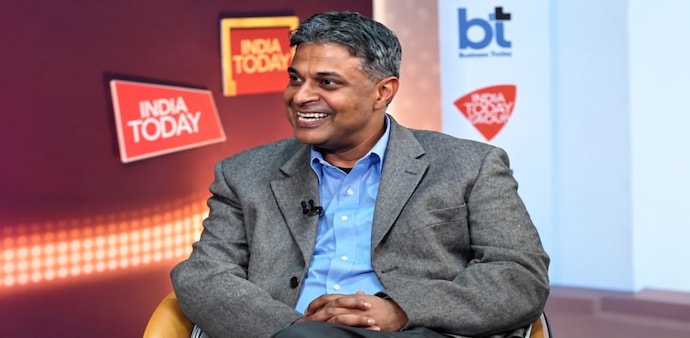
- Nov 18, 2026,
- Updated Nov 18, 2026 5:01 PM IST
India’s growing appetite for artificial intelligence (AI) may not translate into technological leadership, Sarvam co-founder Vivek Raghavan cautioned, arguing that the country must move beyond consuming AI services to building and owning the technology.
Speaking in a keynote address at the Bengaluru Tech Summit 2026, Raghavan said India’s position as one of the world’s largest users of AI tools such as ChatGPT should not, by itself, be seen as a measure of success. “We are exporting our data and importing intelligence,” he said, warning that India could risk becoming a “digital colony” if it failed to develop capabilities across the AI value chain.
Must read: Sarvam’s next big bet: Can India’s AI challenger become a global full-stack player?
Drawing a parallel with colonial-era trade, when India exported raw cotton and imported finished cloth, Raghavan said the country must avoid repeating that pattern in the digital economy. He argued that long-term technological sovereignty would matter more than the short-term convenience of relying on foreign platforms.
India’s scale and linguistic diversity, he said, make it fundamentally different from markets where AI development is largely English-first. With nearly a billion active internet users, hundreds of millions of them in rural areas, the country needs AI systems built around its linguistic realities.
Raghavan argued that AI for India must be “Indian language-first” and “voice-first”, rather than treating regional languages as an afterthought. Voice interfaces could make AI accessible to users who are less comfortable with text-based technology, opening up applications across education, public services, healthcare and everyday communication.
He pointed to India’s diverse linguistic landscape, comprising thousands of dialects, as a challenge as well as an opportunity for developers to build technology that understands users in their own language and context.
Cost, he said, will be equally critical. India’s digital transformation was accelerated by affordable mobile data and connectivity, and AI adoption could follow a similar trajectory only if services become inexpensive enough to reach millions of users.
“AI systems developed for India must therefore be designed for scale, low cost and widespread accessibility, not merely adapted from premium products built for other markets,” he added.
Raghavan called for India to build capabilities across the AI ecosystem, from computing infrastructure and hardware to datasets, models and applications. While developing domestic GPU capacity would be a long-term undertaking, he said India needed a clear roadmap to strengthen its computing resources and reduce dependence on external providers.
He also emphasised the need for Indian datasets, robust benchmarks, homegrown models and open-source systems that can be deployed and operated locally. The AI “harness layer”—including memory, permissions, context management and evaluation—would also be critical, as it could significantly improve the capabilities of models.
For India, renting AI infrastructure may be the cheaper option in the short term, Raghavan said, but building its own capabilities would be a more consequential investment in the long run. The challenge, he argued, is not simply to use AI at scale, but to ensure India has the capacity to shape, control and build it.
For Unparalleled coverage of India's Businesses and Economy – Subscribe to Business Today Magazine