
Meta’s Alexandr Wang unveils vision of ‘personal superintelligence,’ bets on AI as daily life partner
India AI Impact Summit 2026: Meta is also collaborating with the Indian government on language datasets to help developers build localised AI systems.
- Feb 19, 2026,
- Updated Feb 19, 2026 3:25 PM IST
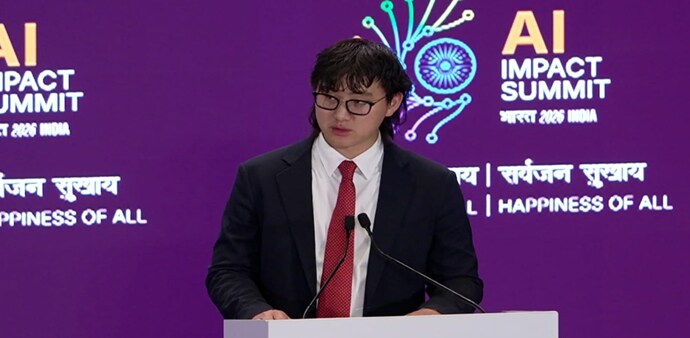
India AI Impact Summit 2026: Meta’s Chief AI Officer Alexandr Wang on February 19 laid out an ambitious vision for what he called “personal superintelligence", arguing that the next generation of artificial intelligence will function less like a tool and more like a deeply personalised digital partner embedded in daily life.
Speaking at the India AI Impact Summit, Wang said his belief that “anything is possible” was shaped by his upbringing in Los Alamos, New Mexico, a government research town known for cutting-edge scientific work. Growing up among physicists, he said, instilled two core ideas: “a belief that anything is possible and that science should serve society".
Wang said Meta’s scale gives it a unique opportunity to deploy advanced AI globally. “Three and a half billion people use at least one of our apps every day,” he noted, adding that “more than half a billion people are in India alone.”
He pointed to current use cases across the country as evidence that AI is already delivering tangible value. Creators are using Meta tools to “automatically translate reels into the language of the person watching,” while small businesses deploy WhatsApp agents to interact with customers and generate advertising content. Researchers and startups are also applying AI to healthcare, agriculture and accessibility challenges.
In healthcare, Wang highlighted work using Meta’s segmentation models to speed tumour identification, saying AI systems can complete tasks “in seconds when it takes hours to do manually.” He also emphasised the versatility of general-purpose models, noting that the same technology can assist both medical professionals and farmers.
Language technology remains a central focus for Meta’s India strategy. Wang said the company’s speech models can recognise more than 1,600 languages and adapt quickly to new ones. “It’s not a fantasy that, in a few years, real-time voice-to-voice translation for every spoken language” will be possible, he said, calling it particularly transformative for multilingual societies like India.
Meta is also collaborating with the Indian government on language datasets to help developers build localised AI systems.
However, Wang’s core message centred on the evolution toward highly personalised AI assistants. “Our vision is personal super intelligence, AI that knows you, your goals, your interests, and helps you with whatever you’re focussed on doing,” he said.
Addressing concerns about technology companies encouraging passive screen use, he argued that the opposite is true. “The whole point of personal super intelligence is… helping you be more active in your life, in pursuing your goals and deepening your relationships.”
Wang acknowledged scepticism about large tech companies’ intentions but said market incentives would force responsible deployment. “People aren’t going to hire us for the job if we’re not doing it responsibly,” he said, adding that trust and safety will determine adoption.
Looking ahead, Wang emphasised that AI leadership will depend on four foundational elements: “talent, energy, data, and compute.” Governments and industry must collaborate to ensure access to these resources, he said, warning against fragmented regulations that could hinder innovation.
For Unparalleled coverage of India's Businesses and Economy – Subscribe to Business Today Magazine
India AI Impact Summit 2026: Meta’s Chief AI Officer Alexandr Wang on February 19 laid out an ambitious vision for what he called “personal superintelligence", arguing that the next generation of artificial intelligence will function less like a tool and more like a deeply personalised digital partner embedded in daily life.
Speaking at the India AI Impact Summit, Wang said his belief that “anything is possible” was shaped by his upbringing in Los Alamos, New Mexico, a government research town known for cutting-edge scientific work. Growing up among physicists, he said, instilled two core ideas: “a belief that anything is possible and that science should serve society".
Wang said Meta’s scale gives it a unique opportunity to deploy advanced AI globally. “Three and a half billion people use at least one of our apps every day,” he noted, adding that “more than half a billion people are in India alone.”
He pointed to current use cases across the country as evidence that AI is already delivering tangible value. Creators are using Meta tools to “automatically translate reels into the language of the person watching,” while small businesses deploy WhatsApp agents to interact with customers and generate advertising content. Researchers and startups are also applying AI to healthcare, agriculture and accessibility challenges.
In healthcare, Wang highlighted work using Meta’s segmentation models to speed tumour identification, saying AI systems can complete tasks “in seconds when it takes hours to do manually.” He also emphasised the versatility of general-purpose models, noting that the same technology can assist both medical professionals and farmers.
Language technology remains a central focus for Meta’s India strategy. Wang said the company’s speech models can recognise more than 1,600 languages and adapt quickly to new ones. “It’s not a fantasy that, in a few years, real-time voice-to-voice translation for every spoken language” will be possible, he said, calling it particularly transformative for multilingual societies like India.
Meta is also collaborating with the Indian government on language datasets to help developers build localised AI systems.
However, Wang’s core message centred on the evolution toward highly personalised AI assistants. “Our vision is personal super intelligence, AI that knows you, your goals, your interests, and helps you with whatever you’re focussed on doing,” he said.
Addressing concerns about technology companies encouraging passive screen use, he argued that the opposite is true. “The whole point of personal super intelligence is… helping you be more active in your life, in pursuing your goals and deepening your relationships.”
Wang acknowledged scepticism about large tech companies’ intentions but said market incentives would force responsible deployment. “People aren’t going to hire us for the job if we’re not doing it responsibly,” he said, adding that trust and safety will determine adoption.
Looking ahead, Wang emphasised that AI leadership will depend on four foundational elements: “talent, energy, data, and compute.” Governments and industry must collaborate to ensure access to these resources, he said, warning against fragmented regulations that could hinder innovation.
For Unparalleled coverage of India's Businesses and Economy – Subscribe to Business Today Magazine