
Hello Meta! Adios Facebook?
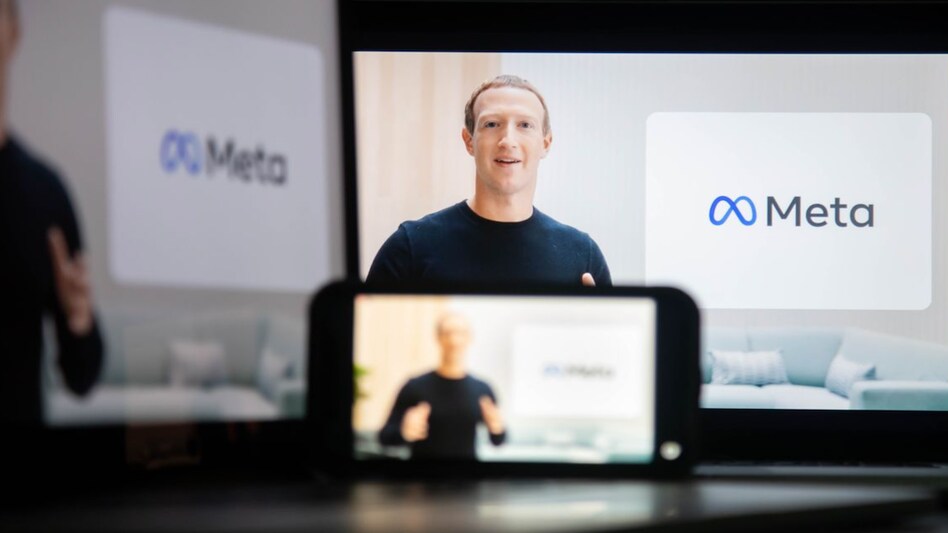
By rebranding itself with the new moniker, Mark Zuckerberg has ushered in the future. But why has he opted for such a major overhaul at this time?
Aayush Ailawadi
- Oct 29, 2021,
- Updated Oct 29, 2021 7:37 PM IST
For years, bloggers, analysts and journalists have collectively referred to Big Tech as FAANG. That's short for Facebook-Apple-Amazon-Netflix-Google. But, after Mark Zuckerberg's mega announcement on Thursday, we're all a little confused. By rebranding Facebook as "Meta", will the Big Tech acronym also change? MAANG is a serious contender. But Google has held onto the letter G, even after the Alphabet restructuring. The other burning question is: why has Zuckerberg opted for such a major overhaul at this time?
Advertisement
Welcome to the Metaverse
For the uninitiated, and those who think this sounds like a dystopian concept from a sci-fi movie, you're not too far from the truth. In fact, Neal Stephenson coined the concept of a metaverse in his novel Snow Crash, nearly three decades ago. Back then, he spoke of a virtual world where real people interacted as avatars. Cut to 2021, and here we are talking about one of the world's biggest tech companies literally taking a leaf out of Stephensons's book.
Zuckerberg explains in a blog post, “We’ve gone from desktop to web to mobile; from text to photos to video. But this isn’t the end of the line. The next platform will be even more immersive — an embodied internet where you’re in the experience, not just looking at it. We call this the metaverse, and it will touch every product we build.”
Advertisement
Judging by the announcement, his concept of the future of the internet involves a VR and AR driven world where people interact, work and play as their virtual avatars using special headsets. It’s like adding an abstract layer to the internet as we know it and the pandemic has certainly made a strong case for such a concept. Think of it as taking your work-from-anywhere lifestyle to the next level. No more zoom calls and two-dimensional introductions to your new colleagues or fitness trainers. In this new virtual world, you’re instantly teleported to a shared room (with tons of branding opportunities for advertisers of course!) where your colleagues or trainers will be able to interact with you using virtual reality.
Advertisement
The successor to the internet?
The metaverse will need to be open, interoperable and safe and it’s imperative that tech giants like Meta strive towards achieving that from scratch. At the end of the day, we will be relying on this new world for our business, fitness, entertainment and lifestyle needs, remotely and at any given time.
Think about how many physical things you have today that could just be holograms in the future. Your TV, your perfect work setup with multiple monitors, your board games and more — instead of physical things assembled in factories, they’ll be holograms designed by creators around the world.
Mark Zuckerberg, CEO, Facebook
It’s no secret that Facebook has been working on the metaverse for years. As tech consumers and enthusiasts, we got a whiff of this plan in August, when Facebook introduced Horizon Workrooms, a way for people to work together remotely, as avatars, in groups with virtual reality headsets. Zuckerberg alluded to this being a part of his Metaverse plans on Thursday.
Whilst rebranding Facebook as Meta, it appears like Zuckerberg is the pioneer in this space, that’s not the case. In fact, companies like Roblox Corp and Epic Games have invested heavily in this concept. Their online multiplayer games are considered as precursors to the metaverse. After all, hundreds of millions of gamers play Fortnite and PUBg every day in 3D environments and interact with fellow players as virtual avatars. Tech companies like Microsoft and Tencent have all reportedly been tweaking their business models for the metaverse, which is being called the inevitable future.
Advertisement
Hardware will play a pivotal part in this universe as well. Meta already has the Oculus Quest 2 (soon to be renamed Meta Quest), a VR headset that will not only enable your entry to the metaverse, but as announced by Zuckerberg, will also let you play the iconic Grand Theft Auto: San Andreas in an immersive environment soon. For most of us, that’s enough incentive to switch over to the metaverse. In India, Reliance Jio had announced its mixed reality plans in 2020, with Jio Glass. While that is a slightly different concept from Meta’s, albeit with some overlapping use cases, it will definitely be interesting to see more innovation in this space in the years to come.
Goodbye 'Toxic' past, hello 3D future?
It's clear Zuckerberg wants to pivot from being a social network to a social technology company and that he sees the metaverse as the future of the internet. But, it's only natural to ask the question -- why now? It's no strange coincidence that all of this comes in the middle of a PR nightmare for the company. For the past few weeks, several questions have been raised of the company by whistleblowers like Frances Haugen who revealed that Facebook prioritises profit over safety, promotes hate speech and that (Facebook owned) Instagram is a toxic place for teenagers. The platform is also in the crosshairs of regulators around the world for its business model, market dominance, algorithm and the way it deals with abuse on its platforms.
Advertisement
Although the metaverse rebranding was in the works for a long time, the move could temporarily help the company deflect a lot of that negative publicity and perhaps placate shareholders and consumers for now.
The word “meta” is a prefix that means after or beyond and also denotes change. But in pop culture, it means that someone is self-aware. Given the recent aspersions cast in the name of the tech giant, we can only hope Facebook has truly gone “meta” with a change in moniker.
Also read: People with infinity tattoos are now owned by Facebook Meta? Not really but jokes are flying
For Unparalleled coverage of India's Businesses and Economy – Subscribe to Business Today Magazine
For years, bloggers, analysts and journalists have collectively referred to Big Tech as FAANG. That's short for Facebook-Apple-Amazon-Netflix-Google. But, after Mark Zuckerberg's mega announcement on Thursday, we're all a little confused. By rebranding Facebook as "Meta", will the Big Tech acronym also change? MAANG is a serious contender. But Google has held onto the letter G, even after the Alphabet restructuring. The other burning question is: why has Zuckerberg opted for such a major overhaul at this time?
Advertisement
Welcome to the Metaverse
For the uninitiated, and those who think this sounds like a dystopian concept from a sci-fi movie, you're not too far from the truth. In fact, Neal Stephenson coined the concept of a metaverse in his novel Snow Crash, nearly three decades ago. Back then, he spoke of a virtual world where real people interacted as avatars. Cut to 2021, and here we are talking about one of the world's biggest tech companies literally taking a leaf out of Stephensons's book.
Zuckerberg explains in a blog post, “We’ve gone from desktop to web to mobile; from text to photos to video. But this isn’t the end of the line. The next platform will be even more immersive — an embodied internet where you’re in the experience, not just looking at it. We call this the metaverse, and it will touch every product we build.”
Advertisement
Judging by the announcement, his concept of the future of the internet involves a VR and AR driven world where people interact, work and play as their virtual avatars using special headsets. It’s like adding an abstract layer to the internet as we know it and the pandemic has certainly made a strong case for such a concept. Think of it as taking your work-from-anywhere lifestyle to the next level. No more zoom calls and two-dimensional introductions to your new colleagues or fitness trainers. In this new virtual world, you’re instantly teleported to a shared room (with tons of branding opportunities for advertisers of course!) where your colleagues or trainers will be able to interact with you using virtual reality.
Advertisement
The successor to the internet?
The metaverse will need to be open, interoperable and safe and it’s imperative that tech giants like Meta strive towards achieving that from scratch. At the end of the day, we will be relying on this new world for our business, fitness, entertainment and lifestyle needs, remotely and at any given time.
Think about how many physical things you have today that could just be holograms in the future. Your TV, your perfect work setup with multiple monitors, your board games and more — instead of physical things assembled in factories, they’ll be holograms designed by creators around the world.
Mark Zuckerberg, CEO, Facebook
It’s no secret that Facebook has been working on the metaverse for years. As tech consumers and enthusiasts, we got a whiff of this plan in August, when Facebook introduced Horizon Workrooms, a way for people to work together remotely, as avatars, in groups with virtual reality headsets. Zuckerberg alluded to this being a part of his Metaverse plans on Thursday.
Whilst rebranding Facebook as Meta, it appears like Zuckerberg is the pioneer in this space, that’s not the case. In fact, companies like Roblox Corp and Epic Games have invested heavily in this concept. Their online multiplayer games are considered as precursors to the metaverse. After all, hundreds of millions of gamers play Fortnite and PUBg every day in 3D environments and interact with fellow players as virtual avatars. Tech companies like Microsoft and Tencent have all reportedly been tweaking their business models for the metaverse, which is being called the inevitable future.
Advertisement
Hardware will play a pivotal part in this universe as well. Meta already has the Oculus Quest 2 (soon to be renamed Meta Quest), a VR headset that will not only enable your entry to the metaverse, but as announced by Zuckerberg, will also let you play the iconic Grand Theft Auto: San Andreas in an immersive environment soon. For most of us, that’s enough incentive to switch over to the metaverse. In India, Reliance Jio had announced its mixed reality plans in 2020, with Jio Glass. While that is a slightly different concept from Meta’s, albeit with some overlapping use cases, it will definitely be interesting to see more innovation in this space in the years to come.
Goodbye 'Toxic' past, hello 3D future?
It's clear Zuckerberg wants to pivot from being a social network to a social technology company and that he sees the metaverse as the future of the internet. But, it's only natural to ask the question -- why now? It's no strange coincidence that all of this comes in the middle of a PR nightmare for the company. For the past few weeks, several questions have been raised of the company by whistleblowers like Frances Haugen who revealed that Facebook prioritises profit over safety, promotes hate speech and that (Facebook owned) Instagram is a toxic place for teenagers. The platform is also in the crosshairs of regulators around the world for its business model, market dominance, algorithm and the way it deals with abuse on its platforms.
Advertisement
Although the metaverse rebranding was in the works for a long time, the move could temporarily help the company deflect a lot of that negative publicity and perhaps placate shareholders and consumers for now.
The word “meta” is a prefix that means after or beyond and also denotes change. But in pop culture, it means that someone is self-aware. Given the recent aspersions cast in the name of the tech giant, we can only hope Facebook has truly gone “meta” with a change in moniker.
Also read: People with infinity tattoos are now owned by Facebook Meta? Not really but jokes are flying
For Unparalleled coverage of India's Businesses and Economy – Subscribe to Business Today Magazine
Read more!