
Same 43°C temperature, different reality: Why Europe's heatwave is more deadly than India's
One of the biggest differences is geography. Much of Europe lies significantly farther north than India. During peak summer, many European cities experience 15-17 hours of daylight, allowing buildings, roads and pavements to absorb solar energy throughout the day.
- Jun 28, 2026,
- Updated Jun 28, 2026 9:06 PM IST
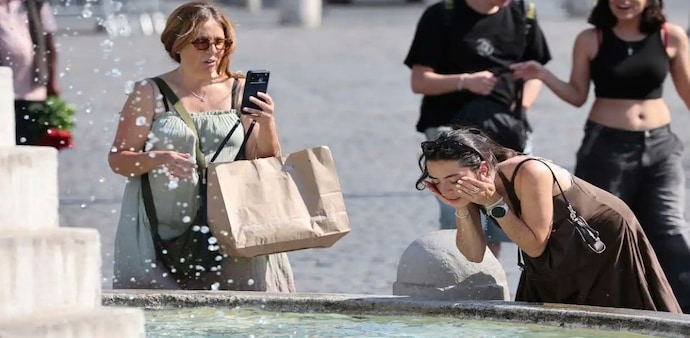
With over 1,000 deaths in France alone, Europe's thermometers may read the same 43°C as India's, but for millions experiencing the continent's latest heatwave, the heat feels unfamiliar, relentless and, in many cases, deadlier.
As temperatures surge past 40°C across parts of southern Europe and heat alerts spread across the continent, many are asking the same question: Why does 43°C in Europe feel so different from 43°C in India?
The answer lies in far more than the number on the thermometer. Geography, sunlight, building design, humidity, air quality, urban planning and even cultural habits all shape how people experience extreme heat.
Why the same temperature feels different
A temperature reading only tells part of the story. The human body responds not just to air temperature, but also to humidity, wind, sunlight, surroundings and how well people are adapted to the climate.
MUST READ | Europe's heatwave far from over: Second heat dome could send temperatures soaring to 46°C in July
1) Europe's location means the sun behaves differently: One of the biggest differences is geography. Much of Europe lies significantly farther north than India. For instance, Paris sits farther north than Toronto in Canada, while most of India lies within the tropical and subtropical belt.
Because of this, the summer sun reaches Europe at a lower angle but remains above the horizon for much longer. During peak summer, many European cities experience 15-17 hours of daylight, allowing buildings, roads and pavements to absorb solar energy throughout the day.
In India, the sun climbs much higher overhead, producing more direct radiation but over comparatively shorter daylight periods. The result is that prolonged sunshine in Europe can leave cities radiating heat well into the evening.
2) Pollution changes how the Sun feels: India's cities often experience high levels of suspended particulate matter, especially before the monsoon. These tiny particles scatter sunlight, reducing its intensity at ground level and creating the hazy skies common across northern India during summer.
Europe, by contrast, generally enjoys much clearer skies. With fewer particles to diffuse sunlight, solar radiation reaches the ground more directly, making the sun feel noticeably sharper on the skin even at identical temperatures.
DON'T MISS | 40°C heatwaves, 282 deaths so far: Why does Europe still have so few ACs?
3) Calm air can make Europe's heat feel suffocating: Recent European heatwaves have been accompanied by stagnant atmospheric conditions. In many affected regions, there has been little or no wind movement, leaving hot air trapped over cities. Trees barely move, and the lack of airflow limits the body's ability to cool itself through evaporation.
India's heat is often associated with hot, dry winds in northwestern regions or humid air ahead of the monsoon. While these conditions bring their own discomforts, even light air movement can make outdoor conditions feel different from Europe's unusually still heat.
4) Humidity changes how the body cools: Humidity remains one of the biggest reasons why the same temperature can feel dramatically different. Large parts of India frequently experience high humidity during summer and the monsoon season. Moist air slows the evaporation of sweat — the body's natural cooling mechanism — making 43°C feel considerably hotter.
Many European heatwaves, particularly across Spain, Portugal and inland France, are relatively dry. Sweat evaporates more easily, but the dry heat rapidly dehydrates the body. Coastal Mediterranean regions, however, can combine high temperatures with humidity, making conditions equally oppressive.
FIND OUT | Built for 50°C summers: Here's what Indian Railways can teach Europe about keeping trains cool
5) Buildings made to retain heat: Europe's homes were largely designed to survive long, cold winters — not prolonged spells above 40°C. Many buildings feature thick insulation, limited ventilation and materials that retain warmth. Wooden flooring, insulated walls and even dark-coloured roofs help conserve heat during winter but become liabilities during extreme summer heat.
Indian architecture evolved differently.
Stone and tiled flooring, shaded courtyards, verandas, higher ceilings and cross-ventilation help dissipate heat during long summers. These same features can make homes feel colder during winter, but they are well suited to India's climate.
6) Air conditioning not a part of European lifestyle: Until recently, many European cities experienced only a handful of very warm days each year. In places such as Paris, temperatures above 25°C were historically relatively rare compared with cities like New York, reducing the incentive for widespread residential air conditioning.
That is changing rapidly as climate change drives longer and more intense heatwaves, prompting households, businesses and governments to rethink cooling infrastructure.
READ NOW | Europe heatwave: France's anti-AC culture wilts as 40°C triggers 'Black Friday' buying vibes
India, meanwhile, has long relied on ceiling fans, evaporative coolers and increasingly air conditioners to cope with extreme summer temperatures.
7) Urban design also plays a role: Europe's famous streetscapes come with trade-offs. Many historic neighbourhoods restrict external air-conditioning units to preserve architectural character and public aesthetics. Building associations in several cities discourage bulky outdoor compressors facing streets, partly to maintain walkability and outdoor café culture.
While these rules have helped preserve Europe's iconic city centres, they are increasingly being questioned as extreme heat becomes more frequent.
8) People in India are better acclimatised: Repeated exposure also changes how the body responds. People living in hot climates gradually become acclimatised by sweating earlier, producing more sweat and improving cardiovascular efficiency during heat stress.
SEE WHY | Zero-cooling crisis: How 40°C became India’s irreversible new summer normal
That does not make extreme heat safe, but it does mean populations regularly exposed to high temperatures generally tolerate them better than those encountering such conditions only occasionally.
Why the comparison isn't straightforward
The notion that "Indians handle 43°C better than Europeans" oversimplifies a much more complex reality.
A humid 43°C in India can feel far more oppressive because sweat struggles to evaporate. A dry 43°C in Europe may initially feel less sticky but can still cause severe dehydration, especially when combined with relentless sunshine, stagnant air, heat-retaining buildings and unusually warm nights that prevent recovery.
With over 1,000 deaths in France alone, Europe's thermometers may read the same 43°C as India's, but for millions experiencing the continent's latest heatwave, the heat feels unfamiliar, relentless and, in many cases, deadlier.
As temperatures surge past 40°C across parts of southern Europe and heat alerts spread across the continent, many are asking the same question: Why does 43°C in Europe feel so different from 43°C in India?
The answer lies in far more than the number on the thermometer. Geography, sunlight, building design, humidity, air quality, urban planning and even cultural habits all shape how people experience extreme heat.
Why the same temperature feels different
A temperature reading only tells part of the story. The human body responds not just to air temperature, but also to humidity, wind, sunlight, surroundings and how well people are adapted to the climate.
MUST READ | Europe's heatwave far from over: Second heat dome could send temperatures soaring to 46°C in July
1) Europe's location means the sun behaves differently: One of the biggest differences is geography. Much of Europe lies significantly farther north than India. For instance, Paris sits farther north than Toronto in Canada, while most of India lies within the tropical and subtropical belt.
Because of this, the summer sun reaches Europe at a lower angle but remains above the horizon for much longer. During peak summer, many European cities experience 15-17 hours of daylight, allowing buildings, roads and pavements to absorb solar energy throughout the day.
In India, the sun climbs much higher overhead, producing more direct radiation but over comparatively shorter daylight periods. The result is that prolonged sunshine in Europe can leave cities radiating heat well into the evening.
2) Pollution changes how the Sun feels: India's cities often experience high levels of suspended particulate matter, especially before the monsoon. These tiny particles scatter sunlight, reducing its intensity at ground level and creating the hazy skies common across northern India during summer.
Europe, by contrast, generally enjoys much clearer skies. With fewer particles to diffuse sunlight, solar radiation reaches the ground more directly, making the sun feel noticeably sharper on the skin even at identical temperatures.
DON'T MISS | 40°C heatwaves, 282 deaths so far: Why does Europe still have so few ACs?
3) Calm air can make Europe's heat feel suffocating: Recent European heatwaves have been accompanied by stagnant atmospheric conditions. In many affected regions, there has been little or no wind movement, leaving hot air trapped over cities. Trees barely move, and the lack of airflow limits the body's ability to cool itself through evaporation.
India's heat is often associated with hot, dry winds in northwestern regions or humid air ahead of the monsoon. While these conditions bring their own discomforts, even light air movement can make outdoor conditions feel different from Europe's unusually still heat.
4) Humidity changes how the body cools: Humidity remains one of the biggest reasons why the same temperature can feel dramatically different. Large parts of India frequently experience high humidity during summer and the monsoon season. Moist air slows the evaporation of sweat — the body's natural cooling mechanism — making 43°C feel considerably hotter.
Many European heatwaves, particularly across Spain, Portugal and inland France, are relatively dry. Sweat evaporates more easily, but the dry heat rapidly dehydrates the body. Coastal Mediterranean regions, however, can combine high temperatures with humidity, making conditions equally oppressive.
FIND OUT | Built for 50°C summers: Here's what Indian Railways can teach Europe about keeping trains cool
5) Buildings made to retain heat: Europe's homes were largely designed to survive long, cold winters — not prolonged spells above 40°C. Many buildings feature thick insulation, limited ventilation and materials that retain warmth. Wooden flooring, insulated walls and even dark-coloured roofs help conserve heat during winter but become liabilities during extreme summer heat.
Indian architecture evolved differently.
Stone and tiled flooring, shaded courtyards, verandas, higher ceilings and cross-ventilation help dissipate heat during long summers. These same features can make homes feel colder during winter, but they are well suited to India's climate.
6) Air conditioning not a part of European lifestyle: Until recently, many European cities experienced only a handful of very warm days each year. In places such as Paris, temperatures above 25°C were historically relatively rare compared with cities like New York, reducing the incentive for widespread residential air conditioning.
That is changing rapidly as climate change drives longer and more intense heatwaves, prompting households, businesses and governments to rethink cooling infrastructure.
READ NOW | Europe heatwave: France's anti-AC culture wilts as 40°C triggers 'Black Friday' buying vibes
India, meanwhile, has long relied on ceiling fans, evaporative coolers and increasingly air conditioners to cope with extreme summer temperatures.
7) Urban design also plays a role: Europe's famous streetscapes come with trade-offs. Many historic neighbourhoods restrict external air-conditioning units to preserve architectural character and public aesthetics. Building associations in several cities discourage bulky outdoor compressors facing streets, partly to maintain walkability and outdoor café culture.
While these rules have helped preserve Europe's iconic city centres, they are increasingly being questioned as extreme heat becomes more frequent.
8) People in India are better acclimatised: Repeated exposure also changes how the body responds. People living in hot climates gradually become acclimatised by sweating earlier, producing more sweat and improving cardiovascular efficiency during heat stress.
SEE WHY | Zero-cooling crisis: How 40°C became India’s irreversible new summer normal
That does not make extreme heat safe, but it does mean populations regularly exposed to high temperatures generally tolerate them better than those encountering such conditions only occasionally.
Why the comparison isn't straightforward
The notion that "Indians handle 43°C better than Europeans" oversimplifies a much more complex reality.
A humid 43°C in India can feel far more oppressive because sweat struggles to evaporate. A dry 43°C in Europe may initially feel less sticky but can still cause severe dehydration, especially when combined with relentless sunshine, stagnant air, heat-retaining buildings and unusually warm nights that prevent recovery.