
Tata boardroom tussle: Bombay High Court to hear Tata Trusts' plea against N Chandrasekaran's reappointment today; here's what you need to know
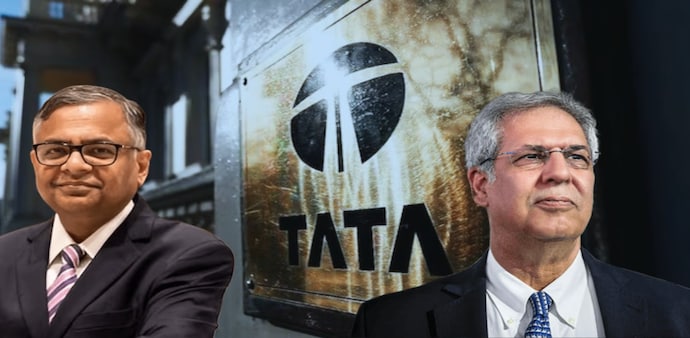
Today, the Bombay High Court will hear a petition filed by two Tata Trusts against N Chandrasekaran's reappointment as Tata Sons' executive chairman.
- Nov 27, 2026,
- Updated Nov 27, 2026 8:48 AM IST
A long-simmering disagreement within the Tata Group has finally reached the courtroom. Today, the Bombay High Court will hear a petition filed by two Tata Trusts against N Chandrasekaran's reappointment as Tata Sons' executive chairman. At stake: whether a key board decision taken in September was even valid in the first place. Tata Sons says it was, the trusts disagree. So what exactly went down at that board meeting, and what happens next? Here's the full breakdown.
Why Tata Trusts challenged Chandra's reappointment?
The Sir Dorabji Tata Trust (SDTT) and RD Tata Trust (RDTT) are challenging the September 17 resolution to reappoint N Chandrasekaran as the Tata Sons' executive chairman for another five-year term beginning February 21, 2027.
According to the trusts, the September 17 board resolution didn't meet requirements under the company's Articles of Association (AoA) and they've also sought monetary damages. Moreover, the trusts jointly sought ₹65 crore in damages; ₹50 crore from SDTT and ₹15 crore from RDTT, along with 18% annual interest.
A divided board
Three out of five trustees - Noel Tata, his son Neville, and Bhaskar Bhat - voted in favour of seeking a legal remedy while Venu Srinivasan and Vijay Singh were against it.
DON'T MISS | Noel Tata-led welfare trust gets nod to invest Rs 150 crore in equities amid Tata boardroom dispute
What do the trusts want from the court?
The trusts sought judicial intervention over the validity of Chandrasekaran's reappointment. The lawsuit has also sought a broad ruling to prevent the chairman of a Tata Sons board meeting from using a casting vote to resolve a disagreement between the two trust-appointed directors.
The trusts are apprehensive that if Noel and Srinivasan disagree again, the board may utilise the same casting-vote mechanism to break the stalemate and pass the resolutions. SDTT and RDTT, however, are not seeking a stay on the November 30 meeting itself.
DO CHECKOUT | Tata Sons listing row: Showdown looms over November 30 board meet
What happened at the September 17 board meeting?
Tata Sons' board considered N Chandrasekaran's reappointment for another 5 years, starting February 21, 2027. The two directors nominated by Tata Trusts, Noel Tata and Venu Srinivasan, disagreed.
While Noel opposed Chandra's reappointment, Srinivasan supported it. Harish Manwani, who presided over the meeting, treated the vote as a tie. Following this, he exercised his casting vote in favour of Chandrasekaran's reappointment.
Tata Sons directors, including Srinivasan, also agreed to list Tata Sons on the bourses, much to Noel's chagrin.
The voting rule at the heart of the dispute
The trusts argue that the reappointment did not receive the affirmative majority required under Article 121 of the Tata Sons' AoA. Article 121 of the Tata Sons' AoA governs how board decisions are passed and requires the board to receive the affirmative vote of a majority of the directors nominated by Tata Trusts.
As per Article 121, key board actions require majority backing from the Tata Trusts' nominee directors appointed under Articles of Association. A point of contention is whether a casting vote can be used to break a stalemate when Trust nominees are split or oppose a measure.
The Trusts argue that the September 17 board meeting resolution is invalid since Article 121 doesn't permit a casting vote to override the required affirmative support from Trust nominees. They also invoked related provisions regarding equity expansion and IPO plans.
Noel invoked Article 121A(g), which regulates the Tata Trusts' shareholding percentage and governance rights in Tata Sons. In case of an IPO or fresh share issuance, diluting the Tata Sons' stake or altering their special governance powers directly implicates this protection.
As per Article 121B, it is mandatory that the board must take up a matter at the next meeting before any other business if a director submits it with at least 15 days' notice. Citing this clause, Noel urged the board to prioritise his September 28 proposal to merge Tata Electronics Systems Solutions and Tata Consulting Engineers ahead of the IPO resolution.
ALSO READ | Noel Tata wants revision of Tata Sons’ Nov 30 board meeting agenda: Report
Why is Vijay Singh opposing legal action?
SDTT Vice-Chairman and trustee Singh approached the Maharashtra Charity Commissioner challenging SDTT Circular No. 113, issued on November 25, which authorised legal action. He alleged that the trust passed the resolution despite opposition from him and Srinivasan, CNBC TV-18 reported.
He did not object to pursue a bona fide legal remedy but to the use of a public charitable trust and its resources that could potentially obstruct Tata Sons' compliance with a binding requirement of the Reserve Bank of India (RBI). Singh also sought access to the trustee voting records, legal opinions, estimated litigation costs and the sources of funding for the proposed case.
He has also sought restrictions on further litigation expenditure pending an independent assessment.
MUST READ | Tata Sons listing row: Vijay Singh seeks urgent probe into Dorabji Tata Trust's proposed legal action