
What is the Au Pair programme in China and what financial advantage does it offer?
China’s Au Pair programme, which is a cultural exchange program focused heavily on language immersion and childcare, offers a unique model where income may be modest, but expenses are minimal — creating real savings potential. By covering essentials like rent and food, it turns a cultural exchange into a financially efficient way to live abroad.
- Apr 16, 2026,
- Updated Apr 16, 2026 7:40 PM IST
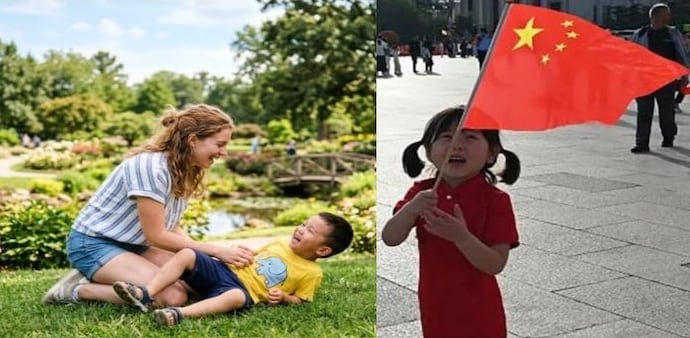
The Au Pair programme in China is structured as a cultural exchange rather than formal employment. Participants, typically aged 18 to 30, live with a Chinese host family and take on the role of an English-speaking “big sister” or tutor. Their responsibilities are centered on childcare and language interaction — playing with children, reading stories, helping with homework, and teaching English through activities — rather than performing heavy domestic work.
Cultural programme
Au pairs generally work 25–30 hours per week, with at least one day off, making the arrangement relatively balanced. Many families already employ domestic help, so the au pair’s primary role is cultural exchange and English exposure for children aged 1–10. In addition, several programmes include Mandarin language classes, further enhancing the learning experience.
In return, host families provide accommodation, meals, and a monthly stipend, usually ranging from ¥1,500 to ¥4,000 (approximately $200–$550). At first glance, this may seem modest. However, the financial reality becomes clearer when viewed in the context of cost coverage.
Linda (Fu Yuan Yuan), Founder and CEO of China Education Talent Recruitment, highlights that the real equation lies in understanding net savings rather than headline earnings. She notes that applicants often overlook “what’s covered, what isn’t, and whether you actually save by the end of the year.”
The biggest advantage lies in the near elimination of fixed expenses. Au pairs are provided with a private room, daily meals, and work-related transport. In major cities like Beijing or Shanghai, rent alone can range between ¥3,000 and ¥8,000 per month, meaning that free accommodation itself exceeds or matches the stipend in value. Food and commuting costs—two other major monthly expenses—are also largely removed.
Low-income, low-expense model
This creates a low-income, low-expense model where the stipend becomes largely disposable income rather than money needed for basic survival.
China’s relatively low cost of living further strengthens this advantage. Everyday expenses remain affordable: restaurant meals typically cost ¥20–¥40, metro rides are often under ¥6, and leisure activities are inexpensive. As a result, discretionary spending can be controlled without compromising quality of life.
ALSO READ: Student interest up by 38%: Why Indians are choosing Ireland over Canada, UK and US
A typical financial scenario highlights this dynamic. With a monthly stipend of around ¥2,500, an au pair may spend ¥1,000–¥1,500 on personal expenses such as outings, shopping, or short trips. This still leaves potential savings of about ¥1,000 per month. Over a year, savings can reach roughly ¥12,000, excluding the significant indirect savings from rent and food.
However, financial outcomes depend on placement conditions. Lower stipends, especially around ¥1,500, require careful evaluation against working hours and expectations. A lighter schedule may still allow savings, but heavier workloads without higher compensation can reduce financial efficiency.
The programme is also gaining popularity among Indian applicants, who increasingly view it as a low-risk pathway to live abroad. With minimal upfront costs, structured agency support, and limited monthly expenses, it offers international exposure without financial strain or debt. Indian participants typically enter on short-term study or exchange visas and benefit from accommodation and meals from day one.
Ultimately, the au pair programme in China reframes the traditional income narrative. It is not about earning more, but about spending less. By removing major cost burdens and leveraging a low-cost environment, it allows participants to save, travel, and gain global experience—even on a modest stipend.
ALSO READ: Greece golden visa: Schengen access, no stay rule, family included; Why Indians are applying
The Au Pair programme in China is structured as a cultural exchange rather than formal employment. Participants, typically aged 18 to 30, live with a Chinese host family and take on the role of an English-speaking “big sister” or tutor. Their responsibilities are centered on childcare and language interaction — playing with children, reading stories, helping with homework, and teaching English through activities — rather than performing heavy domestic work.
Cultural programme
Au pairs generally work 25–30 hours per week, with at least one day off, making the arrangement relatively balanced. Many families already employ domestic help, so the au pair’s primary role is cultural exchange and English exposure for children aged 1–10. In addition, several programmes include Mandarin language classes, further enhancing the learning experience.
In return, host families provide accommodation, meals, and a monthly stipend, usually ranging from ¥1,500 to ¥4,000 (approximately $200–$550). At first glance, this may seem modest. However, the financial reality becomes clearer when viewed in the context of cost coverage.
Linda (Fu Yuan Yuan), Founder and CEO of China Education Talent Recruitment, highlights that the real equation lies in understanding net savings rather than headline earnings. She notes that applicants often overlook “what’s covered, what isn’t, and whether you actually save by the end of the year.”
The biggest advantage lies in the near elimination of fixed expenses. Au pairs are provided with a private room, daily meals, and work-related transport. In major cities like Beijing or Shanghai, rent alone can range between ¥3,000 and ¥8,000 per month, meaning that free accommodation itself exceeds or matches the stipend in value. Food and commuting costs—two other major monthly expenses—are also largely removed.
Low-income, low-expense model
This creates a low-income, low-expense model where the stipend becomes largely disposable income rather than money needed for basic survival.
China’s relatively low cost of living further strengthens this advantage. Everyday expenses remain affordable: restaurant meals typically cost ¥20–¥40, metro rides are often under ¥6, and leisure activities are inexpensive. As a result, discretionary spending can be controlled without compromising quality of life.
ALSO READ: Student interest up by 38%: Why Indians are choosing Ireland over Canada, UK and US
A typical financial scenario highlights this dynamic. With a monthly stipend of around ¥2,500, an au pair may spend ¥1,000–¥1,500 on personal expenses such as outings, shopping, or short trips. This still leaves potential savings of about ¥1,000 per month. Over a year, savings can reach roughly ¥12,000, excluding the significant indirect savings from rent and food.
However, financial outcomes depend on placement conditions. Lower stipends, especially around ¥1,500, require careful evaluation against working hours and expectations. A lighter schedule may still allow savings, but heavier workloads without higher compensation can reduce financial efficiency.
The programme is also gaining popularity among Indian applicants, who increasingly view it as a low-risk pathway to live abroad. With minimal upfront costs, structured agency support, and limited monthly expenses, it offers international exposure without financial strain or debt. Indian participants typically enter on short-term study or exchange visas and benefit from accommodation and meals from day one.
Ultimately, the au pair programme in China reframes the traditional income narrative. It is not about earning more, but about spending less. By removing major cost burdens and leveraging a low-cost environment, it allows participants to save, travel, and gain global experience—even on a modest stipend.
ALSO READ: Greece golden visa: Schengen access, no stay rule, family included; Why Indians are applying