









 As per an official statement, bilateral merchandise trade between India and the EU amounted to $136.54 billion in 2024-25, with India exporting roughly $ 75.85 billion to the EU.

 As per an official statement, bilateral merchandise trade between India and the EU amounted to $136.54 billion in 2024-25, with India exporting roughly $ 75.85 billion to the EU.
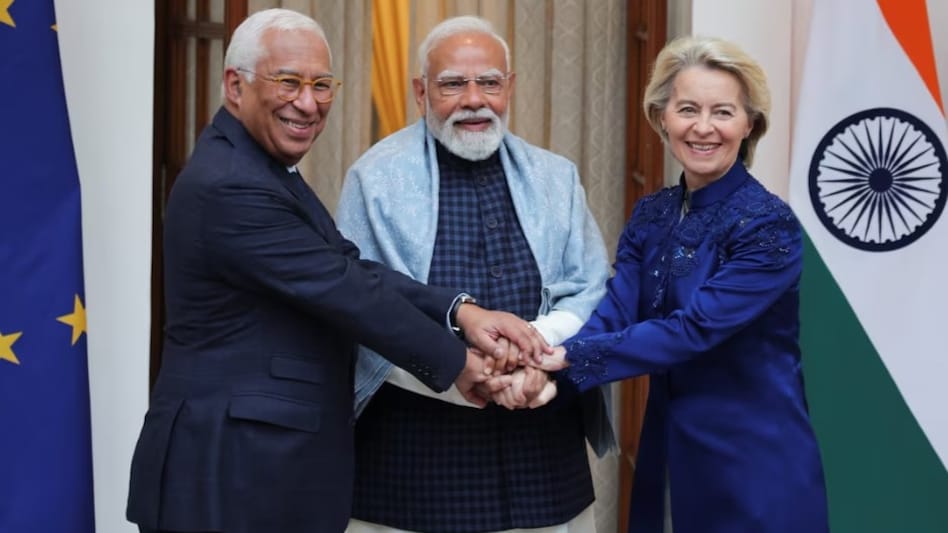
The free trade agreement (FTA) concluded between India and the European Union comes at a time of tumult in the global trade order from the US tariffs and is expected to help both India and the EU boost exports.
For India, which is facing 50% tariffs on its exports to the US, the FTA with the EU could unlock $75 billion of fresh exports including $ 33 billion of exports in labour-intensive sectors like textiles, leather, marine products, gems and jewellery from preferential access.
Commerce and Industry Minister Piyush Goyal on Tuesday noted that the FTA leads to a massive opening of opportunities. “At present, India's total exports of goods to the EU are about 1.5% of its total export share and service exports are 2.5%. This is set to increase tremendously with the FTA,” he said.
He also expressed hope that the trade agreement will come into effect within this calendar year 2026.
He also underlined the job creation opportunities with the FTA noting that labour intensive sectors like textiles will get a tremendous boost. If textiles exports to the EU increase from the current $ 7 billion to about $35-$40 billion, it would lead to fresh jobs to the tune of 6-7 million being created, he said.
As per an official statement, bilateral merchandise trade between India and the EU amounted to $136.54 billion in 2024-25, with India exporting roughly $ 75.85 billion to the EU. India-EU trade in services reached $83.10 billion in 2024. The two hope to double bilateral trade by 2032.
Key labour-intensive sectors such as textiles, apparel, marine, leather, footwear, chemicals, plastics/rubber, sports goods, toys, gems, and jewellery that have been facing the brunt of US tariffs will enjoy zero duty access to the EU from the day the FTA becomes operational. They are currently subjected to import duty between 4% and 26% in the EU.
In fact, several of these segments are already looking forward to new opportunities. The Confederation of Indian Textile Industry (CITI) said the deal makes it possible for India to achieve textile and apparel exports worth $100 billion by 2030. Currently, the European Union is the 2nd biggest market for India’s textile and apparel exports, after the United States. The FTA is expected to give a level playing field to Indian textile and apparel exporters vis-a-vis peers from Vietnam and Bangladesh.
Noting that as part of the FTA, EU will cut or eliminate tariffs on 98% of Indian goods, a report by GTRI said that since many EU duties were already low, India’s main gains lie in labour-intensive sectors where tariffs were still high. “The biggest beneficiaries are garments (around 12% tariffs) and footwear (8–15%), along with marine products, gems and jewellery, handicrafts, chemicals and machinery,” it said.
A crucial issue however remains that the EU’s Carbon Border Adjustment Mechanism (CBAM) is not addressed in the FTA. From January 1, EU imports are taxed based on carbon emissions.
“Through CBAM provisions, commitments have been secured including a forward-looking most-favoured nation assurance extending flexibilities if any granted to third countries under the regulation, enhanced technical cooperation on recognition of carbon prices, recognition of verifiers, as well as financial assistance and targeted support to reduce greenhouse gas emissions and comply with emerging carbon requirements,” said an official release.
Commerce Secretary Rajesh Agarwal noted that CBAM is a horizontal regulation that is applicable to all partner countries. In the FTA, there are certain technical provisions that have been agreed on CBAM, including a technical dialogue that has been agreed to set up that will address the pathway for our industries to access the market in spite of the CBAM regulation. We will be working together to see that the verifiers for CBAM in India are also accredited with the agencies in the EU,” he noted.
We will also be working together to understand the technical processes through which the carbon emission measurement will be done in both the economies, he further said, adding that this group will also provide that whatever Indian carbon trading system comes into being will be accounted for in the CBAM regulation. “Further to our larger comfort they have given this comfort that in case they are able to bring any flexibility on CBAM to any partner country, then it automatically be extended to India,” he said, underlining that this is a forward looking commitment.
The GTRI report noted that although CBAM currently applies to only six products, including steel and aluminium, it is designed to expand to all industrial goods, potentially eroding much of the FTA’s tariff benefits.
 Delhi EV policy: Removal of incentives on strong hybrids ‘surprising’, says Maruti Suzuki
 At 5.1 lakh jobs, India's Global Capability Centre hiring boom scales new peak
 WhatsApp's Username feature under govt scanner over online fraud concerns: Sources
 India's higher gold import duty could cut demand by up to 60 tonnes in 2026: WGC
 Jio Platforms IPO: How Ambani's secret Jupiter paved the way for India's biggest listing
 Market Commentary LIVE: Piyush Pandey On Nifty, Sensex & Top Stock Picks
 TN Politics Explodes: 3 Arrested For Alleged ₹35 Cr Plot To Topple Vijay’s TVK Govt!
 Market Master LIVE: Ravi Dharamshi On India's Next Big Investment Opportunities
 Ram Mandir Theft Exclusive: The 'Ram Rajya Kosh' Mystery Box & The Inside Nexus Exposed!
 Telangana Political War: CM Revanth Reddy Mocks Nitin Nabin, Dismisses BJP’s State Ambitions!
 Sensex, Nifty rebound: What's fueling the recovery and what investors should watch next
 Paisalo Digital shares zoom 20%, hit 52-week high; here's why
  Infosys, TCS, Wipro, HCLTech shares hit 52-week lows as Nifty IT slides over 2%
 Dual shock for KPIT Technologies stock; analysts see more weakness, share price targets
 Vedanta Oil & Gas, Power, Iron shares zoom up to 20%; should investors chase the rally?