








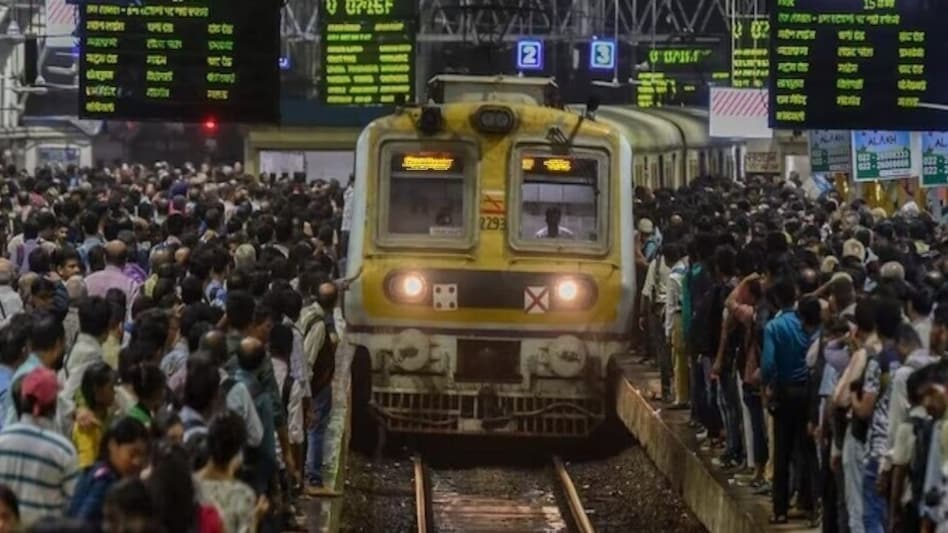
 India’s urban population is expanding rapidly, placing pressure on housing, mobility, water systems, and civic services.
  India’s urban population is expanding rapidly, placing pressure on housing, mobility, water systems, and civic services.
 The Union Cabinet, chaired by Narendra Modi, has approved the launch of the Urban Challenge Fund (UCF) — a major financing reform aimed at reshaping how Indian cities build infrastructure. With ₹1 lakh crore in central assistance designed to unlock ₹4 lakh crore in total urban investment over five years, the initiative marks a shift away from traditional grant-based funding toward a market-driven, reform-linked model of urban development.
India’s urban population is expanding rapidly, placing pressure on housing, mobility, water systems, and civic services. Until now, many city projects relied heavily on government grants, often leading to delays, weak financial discipline, and limited private-sector participation.
The Urban Challenge Fund seeks to change that by:
The government sees cities as the next engines of economic growth, similar to how industrial corridors powered earlier development phases.
How the fund will work
1. Shared Financing Model
Why this matters: Cities will need stronger financial planning and governance to attract investors.
2. Competitive “Challenge Mode” Selection
Projects won’t receive automatic funding. Instead, cities must compete by submitting proposals demonstrating:
Funding will be released in stages, tied to milestones and performance outcomes.
3. Reform-Linked Funding Framework
Urban funding will now depend on structural reforms across:
Cities that fail to sustain reforms risk losing further funding.
Boost for smaller cities: Credit repayment guarantee
A major concern has been that smaller municipalities lack credit history and struggle to borrow. To address this, the Cabinet approved a ₹5,000 crore Credit Repayment Guarantee Scheme.
This is especially targeted at:
Goal: Bring over 4,200 cities into formal capital markets for the first time.
Key areas where money will be spent
A. Cities as Growth Hubs
B. Creative Redevelopment of Cities
C. Water and Sanitation
Who is eligible?
The Urban Challenge Fund will cover:
In principle, the government says every city can participate, provided it meets reform and financing requirements.
Timeline
This long horizon is intended to support multi-year infrastructure pipelines rather than short-term schemes.
The big shift: From grants to market discipline
The Urban Challenge Fund represents a structural transition:
| Earlier Model | New UCF Model |
| Grant-driven funding | Market-linked financing |
| Limited accountability | Outcome-based evaluation |
| Government-led execution | Public-private collaboration |
| Short project cycles | Long-term urban transformation |
Expected outcomes
The government expects the fund to:
The Urban Challenge Fund is less about spending more money and more about changing how India builds its cities — making them financially self-reliant, investment-ready, and structurally accountable.
 Historic move amid Hormuz closure: IEA approves emergency release of 400 million barrels of oil
 'Get ready for $200 oil': Iran warns tankers bound for US, Israel will be targeted
 West Asia conflict: ‘Practically nothing left to target in Iran’, Donald Trump says war could end anytime
 India diversifies crude supply routes: 75% now coming from outside Strait of Hormuz
 Parliamentary Committee bats for subsidy on electric cars under PM E-DRIVE Scheme
 US Supports India’s Russian Oil Imports Amid Strait Of Hormuz Disruptions
 Railways Modernisation In Full Swing | Govt Spends 97% Of FY26 Allocation
 Iran War Hits Airlines: Air India Fuel Surcharge, Flight Cancellations & Fare Surge
 LPG Crisis Boosts Appliance Stocks | Electric Appliance Stocks Surge On Alternate Fuel Buzz
 “Fishermen Are Key To Blue Economy”: PM Modi Announces ₹1,400 Crore Boost For Kerala
 IndiGo shares rebound nearly 8% from 52-week low; what lies ahead for India's largest airline?
 Sensex, Nifty outlook as oil weighs, FPI March selloff hits Rs 34,000 crore
 Suzlon shares rebound 10% from 52-week low; What's next after 44% fall in 10 months?
 Adani Total zooms 20%; flags supply cuts to industrial customers amid West Asia tensions; analysts share outlook
 Butterfly Gandhimathi, TTK Prestige, Stove Kraft shares rally up to 17% today; here's why