


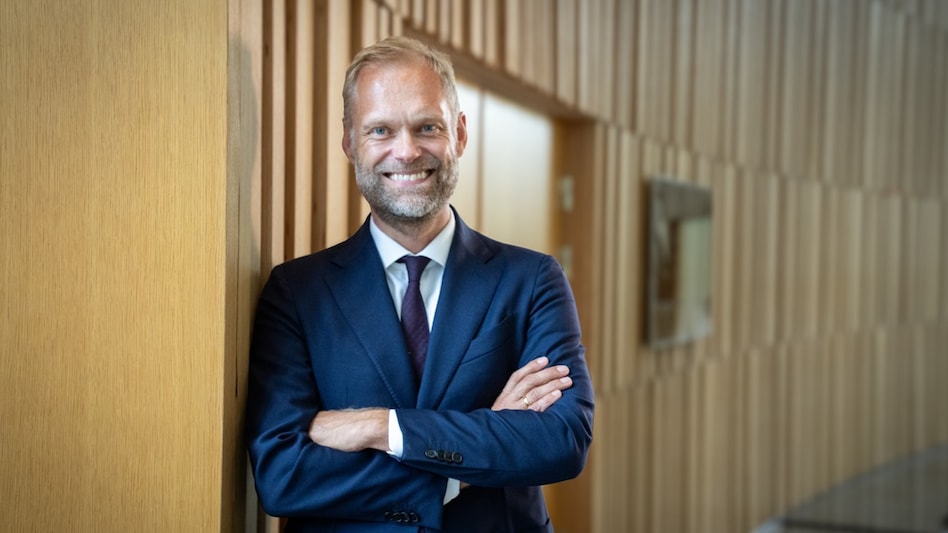
 Emil Kongshøj Larsen, Executive Vice President for International Operations at Novo Nordisk
Danish drugmaker Novo Nordisk’s launch of Ozempic in India, coupled with a 37% reduction in the price of Wegovy, goes beyond a routine product introduction. The moves come as semaglutide enters a later stage of its global patent cycle and competition in obesity treatment sharpens. With global peers increasing their presence and newer therapies in development, the company is refining its India approach to focus on metabolic health, patient access and collaborations with domestic partners. Emil Kongshøj Larsen, Executive Vice President for International Operations at Novo Nordisk, tells Business Today that India will play a key role in the company’s growth plans, as it works to broaden reach while protecting its GLP-1 portfolio in a more contested market. Edited excerpts from the interview:
BT: Novo Nordisk has just launched Ozempic in India, and you have also adjusted pricing on Wegovy. How important is India to Novo Nordisk’s global growth plans, and what are your key priorities in this market over the next few years?
EKL: We have a clear ambition to change health at scale globally and reach many more patients, particularly through our GLP-1 portfolio, where Ozempic is the leading brand. You cannot change global health without having big ambitions for India, given its large population and significant unmet needs, especially in obesity. India is still at an early stage of the obesity curve compared with Europe and the US, but this is precisely the moment to act—so the country can avoid many of the long-term health consequences linked to development that we have seen elsewhere.
BT: Semaglutide has reshaped obesity and diabetes care worldwide, and key patents are nearing expiry. How is Novo Nordisk thinking about expanding and defending its semaglutide portfolio in India as competition intensifies?
EKL: India is a good example of our dual strategy. We are in the midst of launching Ozempic while also partnering with strong local companies to bring authorised generics to patients across the country. I recently met the CEO and leadership team of Emcure Pharmaceuticals, our partner for Poviztra, our GLP-1 obesity brand. Together, we are focused on broad reach across all tiers of Indian society and on addressing affordability. So, it is a combination of collaborating with the strongest local partners and continuing to build our own leading brands.
BT: The obesity space is becoming increasingly crowded, with global pharma companies investing heavily. How does Novo Nordisk view this competition, and what differentiates your approach as the focus shifts beyond weight loss to broader metabolic health?
EKL: We welcome competition, it keeps us sharp, and, of course, we always aim for pole position. We were pioneers in obesity and GLP-1 therapies. Our strategy is to partner with the best while also going to market ourselves, so we can address access to care for patients across India, regardless of where they live. What truly sets us apart is our experience: we have 38 million patient-years of global exposure to semaglutide. That depth of safety and efficacy data provides reassurance to patients and doctors that is unmatched in the industry.
BT: India is a large and diverse market with uneven access to care. What is your strategy to improve affordability and access, and what role do partnerships play in gaining market share?
EKL: Pricing is critical. We recently reduced the price of our obesity medicine by 37%, and we are already seeing a positive response. Beyond pricing, education is essential educating doctors and patients about obesity, its treatment and prevention. Scale also matters, which is why we are expanding our own footprint while working closely with local partners. In addition, digital channels are important. Many patients prefer online consultations and frictionless delivery. We are pleased to partner with platforms such as Tata 1mg and Healthify, whose patient-centric approach will be key to education and access across the country.
BT: Globally, the obesity market has grown faster than expected, with Novo Nordisk and Eli Lilly emerging as dominant players. How do you assess Novo Nordisk’s position, and where will the next phase of competition play out?
EKL: It is a fiercely competitive space, and we respect all our competitors, including Lilly. Our focus is on communicating the unique profile of our GLP-1 therapies. Ozempic has a strong track record in glucose lowering, weight management and, importantly, cardiovascular protection, which is critical for people with obesity and diabetes. Cardiovascular disease remains a leading cause of death. We have some of the strongest clinical trials in this area, many conducted in India, which accounts for around 10% of our global clinical trial footprint. That gives us confidence in both the science and our presence in the market.
BT: With work on semaglutide for Alzheimer’s having ended, what is the next big focus area for Novo Nordisk’s pipeline, and how soon can we expect progress?
EKL: Without revealing too much, we will continue to bring innovation to India. This could include higher doses, new formulations and greater convenience. Diabetes and obesity are complex diseases, and patient needs vary some want greater weight loss, some want easier administration, and some need fewer side effects. We are still in the early stages of innovation in a space affecting hundreds of millions of people, and we remain focused on delivering meaningful advances at affordable prices.
BT: Novo Nordisk has recently gone through a global leadership alignment. How will this shape the company’s strategy, culture and long-term direction?
EKL: We are a 100-year-old company, and the organisation is stronger than any individual leader. Our new CEO previously held my role and knows emerging markets such as India very well, having visited multiple times. That understanding of local realities, affordability challenges and the importance of partnerships will serve the company—and markets like India—very well going forward.
BT: Beyond injectables, what newer obesity treatments are in the pipeline that you can share with our viewers?
EKL: We already have an oral form of semaglutide for diabetes available in India, and we are working on higher doses of the tablet for obesity, though I cannot share timelines yet. Beyond that, we have combination molecules in development, including dual and triple agonists. One dual agonist combines an amylin component with semaglutide and is expected to launch first in the US and Europe before coming to India. We intend to keep pushing the boundaries with strong support from our medical, research and development teams in India.
BT: What are your expectations from the Ozempic launch in India, particularly in terms of sales?
EKL: Ozempic is a global blockbuster and one of the best-known brands in the industry. We have high ambitions for India as well. It offers a unique opportunity to address blood glucose control, weight management and cardiovascular protection. In a large outcomes trial, we demonstrated a 26% reduction in major cardiovascular events such as heart attacks and strokes. India has been part of many of our pivotal trials over the years, and it is only fitting that we now bring this molecule to Indian patients at scale—both through our own brand and through partnerships.

 Behind the reduction in workforce in India’s top three private sector banks
  'Eye for an eye': Houthis declare naval blockade against Saudi Arabia
 No proposal to abolish LTCG on listed equities: Govt in Lok Sabha
 Blame it on the IndiGo fiasco? Air ticket refund complaints up 233% in 2025
 'No commitments made so far': CJP delegation meets JP Nadda, seeks Dharmendra Pradhan's removal
  Tatva Up 20%; HDFC, Axis Bank Drop on Weak Q1
 Why Parliament Could Not Function on Day 1 of the Monsoon Session | Full Report
 Is Facial Recognition Actually Secure? | 1X Neo Robot & Ultraviolette X-47 Review | Tech Today
  Jupiter Hospital Opens Dombivli Unit As It Targets A 3,000-Bed Network
 Best Midcap & Small Cap Mutual Funds to Buy Now | Expert Reveals Top Picks
 JSW Steel Q1 earnings: Here's how the stellar show may impact the metal sector
  Kotak Bank, Axis Bank Q1 earnings are out: Expert strategy on trading these stocks
  Sensex falls over 400 pts, Nifty ends below 24,250 as US-Iran attacks, banking results hit sentiment
 Vedanta stocks: Accumulate from a medium-term perspective, says Kranthi Bathini
 Reliance Industries Q1 results: Analysts turn bullish after earnings; is it time to buy?









