













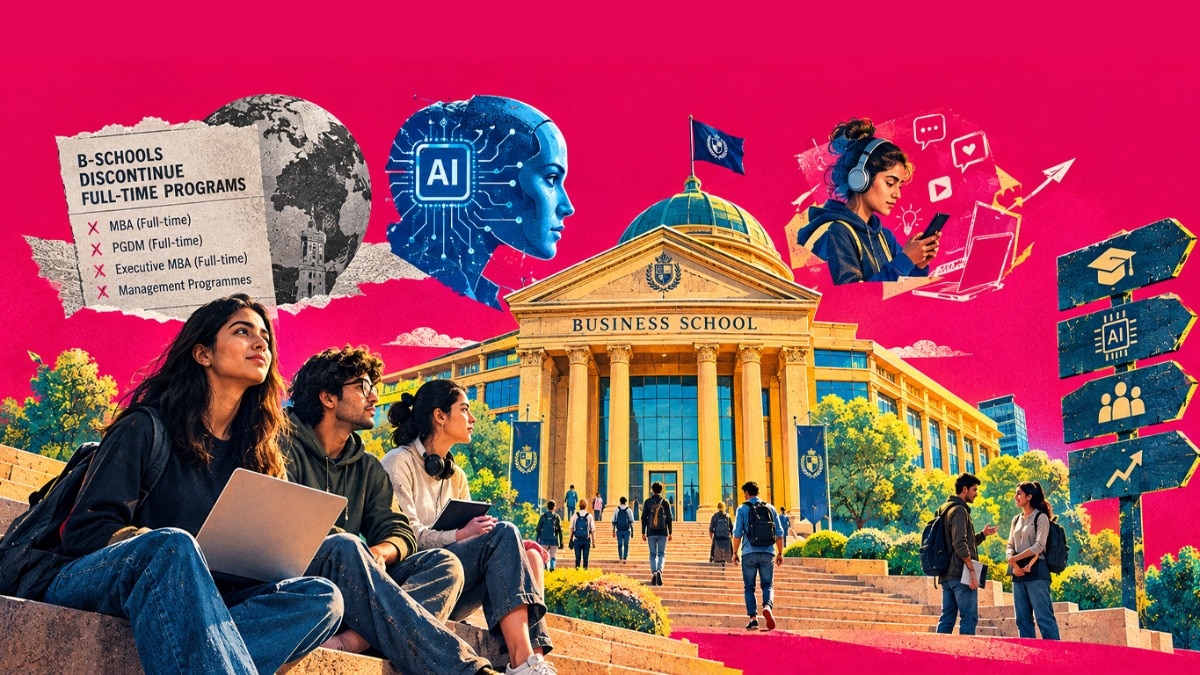
Fancy your knowledge of B-schools? Try answering this question. What is common to the University of Illinois Urbana-Champaign, Arizona State University, the University of Iowa, and the UK’s Henley Business School? Clue: it’s got nothing to do with alumni or jobs.
Here’s the answer: All of them, over the past few years, have discontinued their full-time MBA programme. Why so? Applications to these schools have been on a decline for the two-year MBA, with students showing preference for shorter and more affordable options.
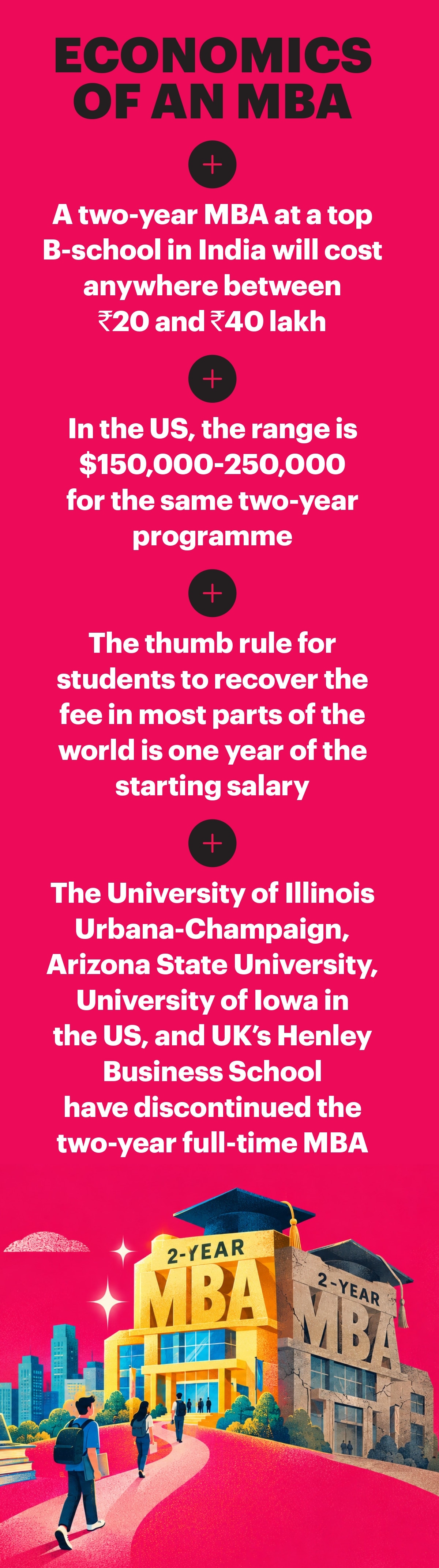
The tuition fee at these B-schools is around $150,000 for the full-time MBA. In good times, that was equivalent to one’s first year’s salary or ‘cost to company’.
That equation has now begun to come apart. In the west, prior work experience is (almost) mandatory at a good B-school. For a student, it means saving up for an MBA while on a job or, in most cases, opting for a bank loan. In today’s world, that monetary trade-off to keep aside two years and then get back to the job market is not compelling enough anymore.
Then, there is the big part on AI and how well-equipped a student is based on the skills he has picked up. All these factors have contributed to a scenario where the MBA in its current form, at least in more developed markets, is being seriously questioned.
The genesis of this paradigm shift can be traced back to the period before the Covid-19 pandemic, when digitalisation became the buzzword, and to the pandemic years, when lockdowns pushed practically everything online.
In mid-2019, the University of Illinois Urbana-Champaign (a much sought-after place) announced that it was shutting its residential full-time and part-time MBA programmes to focus on an online MBA or iMBA. “The iMBA is the right format for the times – providing a powerful learning experience with anytime/anywhere accessibility at an affordable cost,” the university said in a statement at that point.
A whiff of that storm is blowing towards India as well, which has around 4,000 institutes (includes universities, standalone institutes and colleges) offering the degree.
Alok Kumar Rai, Director of IIM Calcutta, says getting students to pursue a two-year MBA will become a challenge in India. “That will lead to greater emergence of the one-year degree. A key benefit is the duration being compressed,” he says.
The one-year executive programme at his institute, and other top B-schools, stipulates prior work experience of about five years. This arrangement allowed students to save a year and helped them move up within their organisations. “Clearly, the one-year degree is the future and our curriculum needs to be reviewed from that perspective,” adds Rai.
Another element is added by IIM-Ahmedabad Director Bharat Bhasker. While noting that there has been a drop in the number of students sitting for the MBA entrance tests, Bhasker says a lot of that has to do with an overall shift from management to the technology space.
About three years ago, he says, a lot of talk in the US was about how relevant an MBA is. “Technology, especially AI-led, has created more room and growth for those who understand it. A lot of students who once rushed to B-schools now pursue careers in the technology domain,” Bhasker says.
Justifying the Degree
In the US, a student first gets a four-year undergraduate degree, followed by at least two years of work, before getting into a B-school. Now, universities are offering a fifth year after four years in a specialised field—which could be fintech, supply chain, AI or data analytics—at an incremental fee.
Given it’s possible to obtain an undergraduate degree from a good university at around $40,000 a year (something that parents pay), there is very good reason to spend that if it comes with a handy specialisation. More importantly, it reduces (and even eliminates) the need for an MBA.
By all counts, that may be a while away in India, given the demand for talent remains unabated across industries, but voices are already beginning to lean in that direction.
“A student needs to see a clear rationale for an MBA from an RoI perspective,” says Varun Nagaraj, Dean, S.P. Jain Institute of Management & Research.
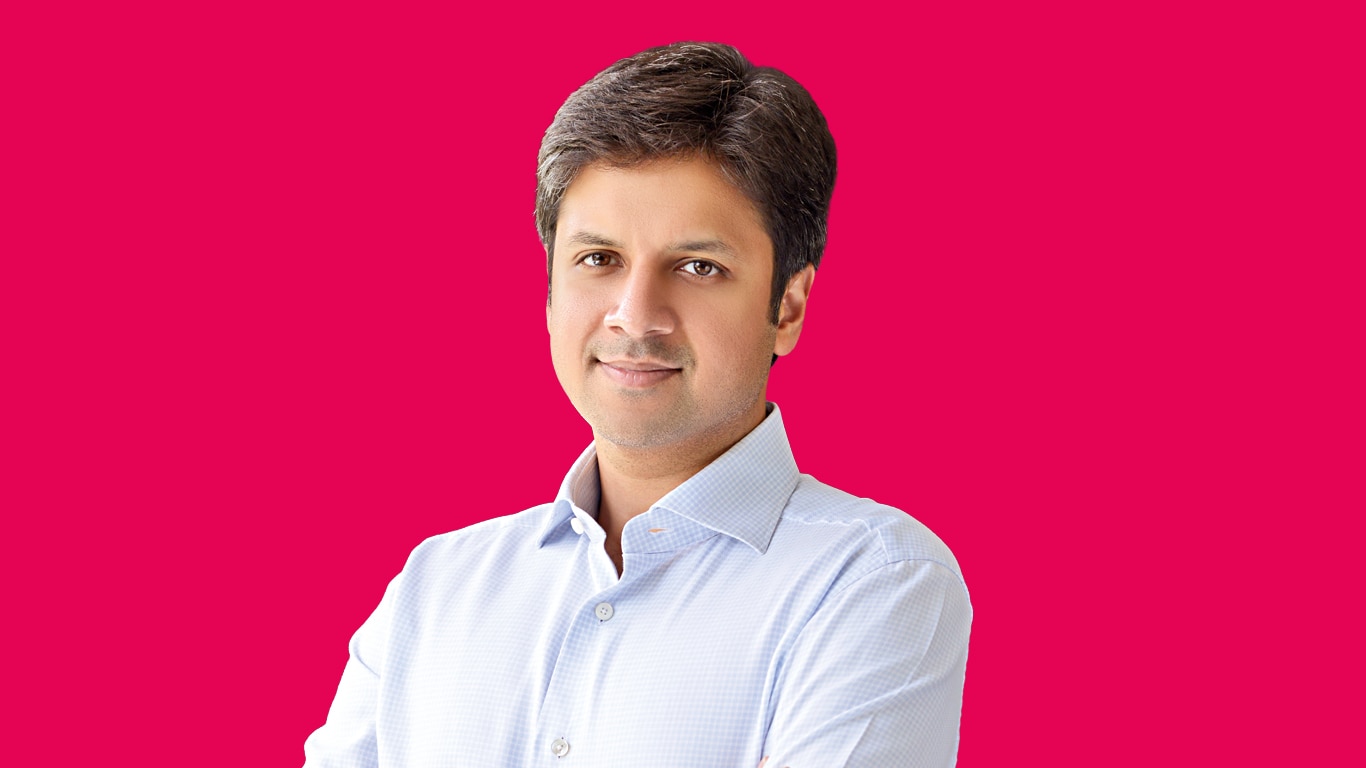
As for industry, what it expects from an MBA is already different. Anant Goenka, Vice-Chairman of RPG Enterprises, recalls how businesses five years ago were largely hiring MBAs for functional competence in finance, marketing or operations, the ability to build a business case and the finesse to present all this well. That has changed.
“Today, our focus is on identifying whether the candidate possesses adaptability: can this person take decisions in a constantly volatile environment? Or how well can he or she integrate relevant digital tools and collaborate with a multi-generational team?” he says.
Diversification and digitalisation are among the primary drivers behind this shift.
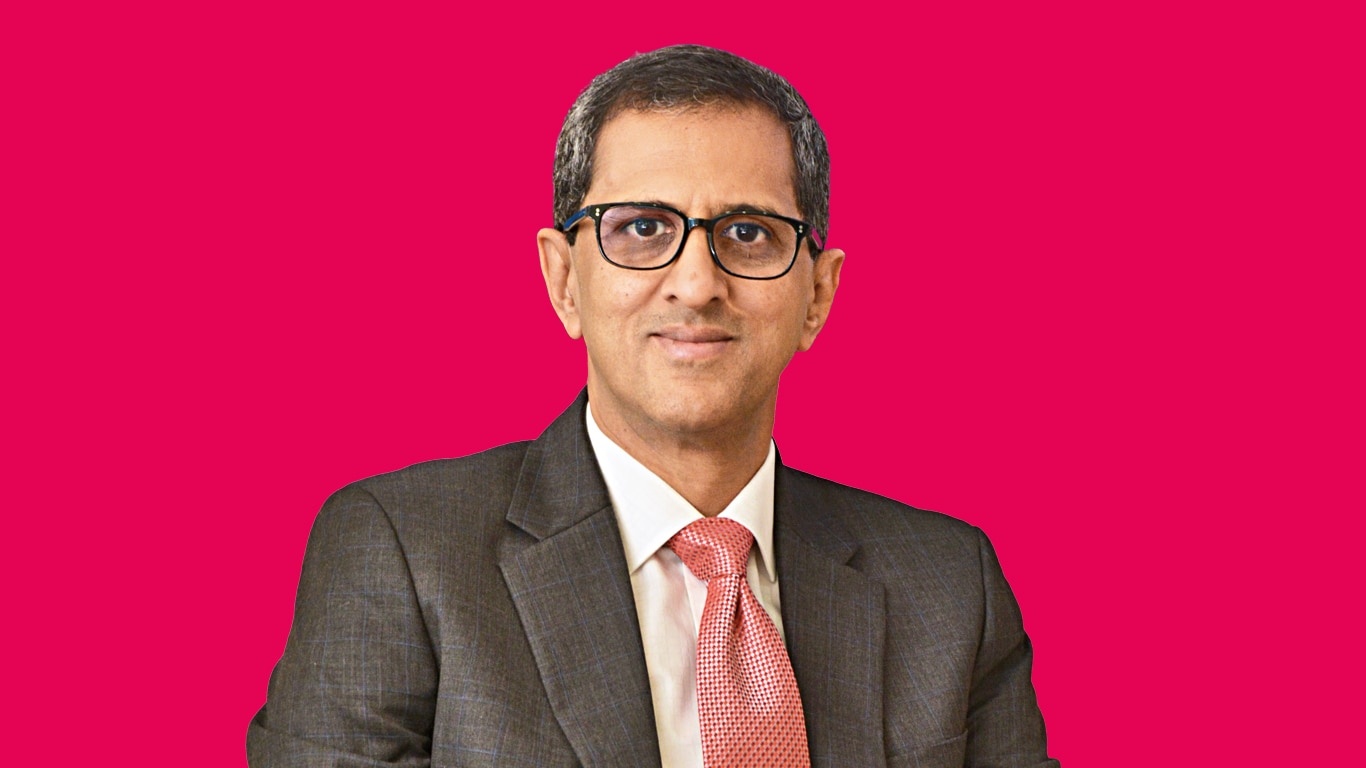
“Someone joining Ceat or Zensar (both owned by RPG Enterprises) today needs a very different toolkit than, say, five years ago,” says Goenka, adding that technology cycles—especially data automation and now AI—have compressed the shelf life of technical skills.
According to Ashok Ramachandran, Director (HR), Aditya Birla Group, businesses are evolving to bring in sharper consumer focus, deeper digital adoption and stronger innovation.
“We increasingly need fungible talent: people who can move across contexts, connect the dots between market shifts and translate strategy into outcomes,” says Ramachandran. Here, a management graduate who understands core business fundamentals with digital fluency is a prized asset. “That person can add disproportionate value early by virtue of operating at the intersection of functions rather than working in silos,” he adds.
The Real Disruption
The question now is: how do companies balance multiple issues to choose the best minds?
According to Saurabh Chhajer, MD & Partner, Recruitment Lead, Boston Consulting Group India, the fundamental skill sets that his company looks for have not changed, but the context in which they are applied has.
What has not changed are intellectual curiosity, structured problem solving, leadership, communication and the ability to collaborate with different people. The big change is the environment where these skills are being applied, and in the levels of expectations.
According to Chhajer, that would mean “being familiar with what technology can do, being able to reimagine processes and business models with AI, apart from anticipating execution challenges as organisations undertake large-scale AI transformations”.
In the consulting business, how the client views and wants measurable outcomes is key. “Therefore, ownership, implementation orientation, and the ability to work across business, technology and people are more important than they were five years ago,” says Chhajer.
The Gen Z Angle
How does all that strike the right chord with Gen Z? RPG’s Goenka is clear that Gen Z and generations after them may not automatically equate an MBA with career security. “There are many pathways to success and with an impetus to entrepreneurship, many want to build their own ladder. They also bring a stronger expectation of purpose, transparency and continuous learning into the workplace,” he says.
Accordingly, the tack to reach out to them must be unique. At IIT Bombay, a large chunk of the class of 2026 opted for a job in place of going to the US for a master’s or joining a B-school in India.
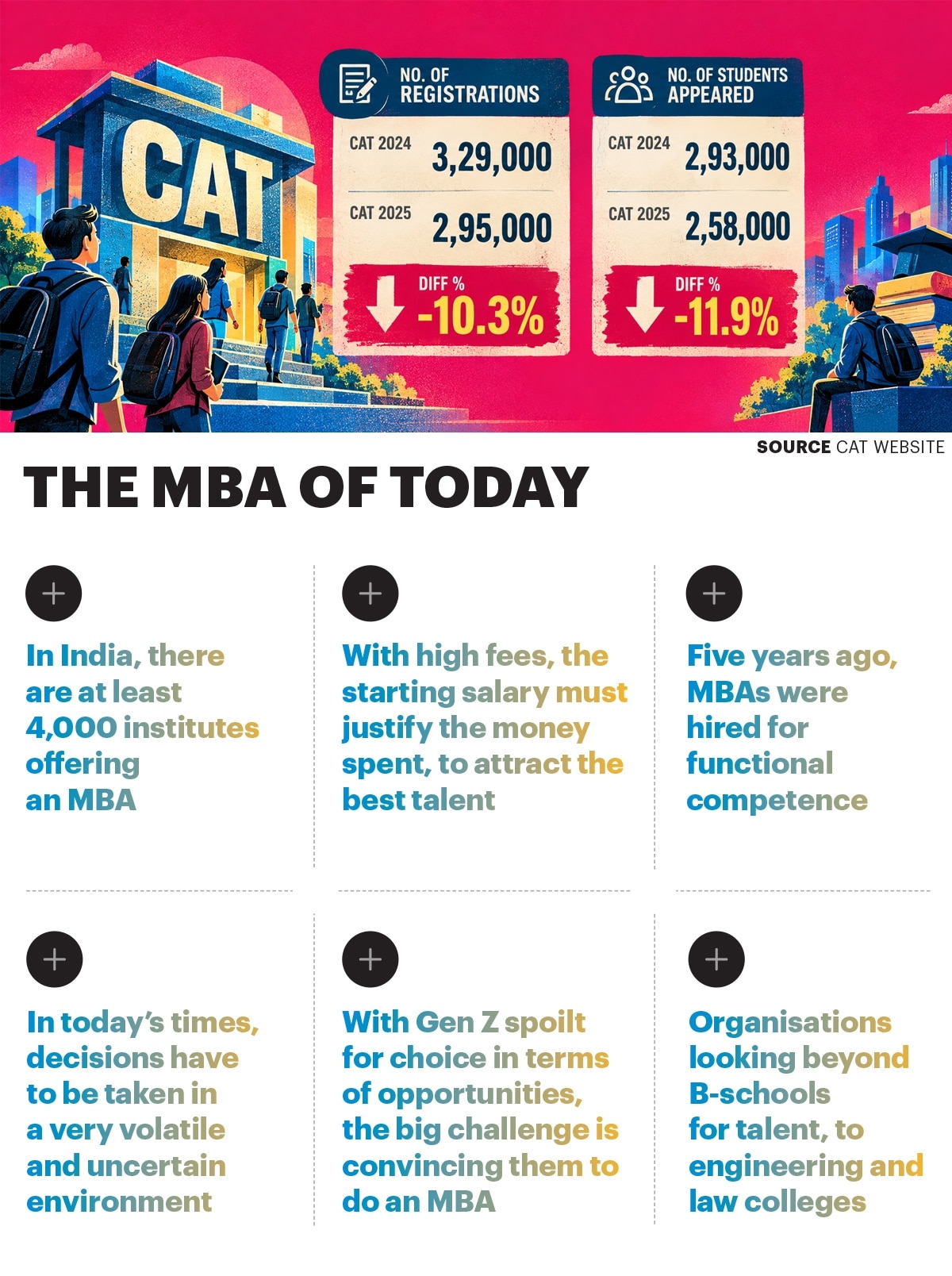
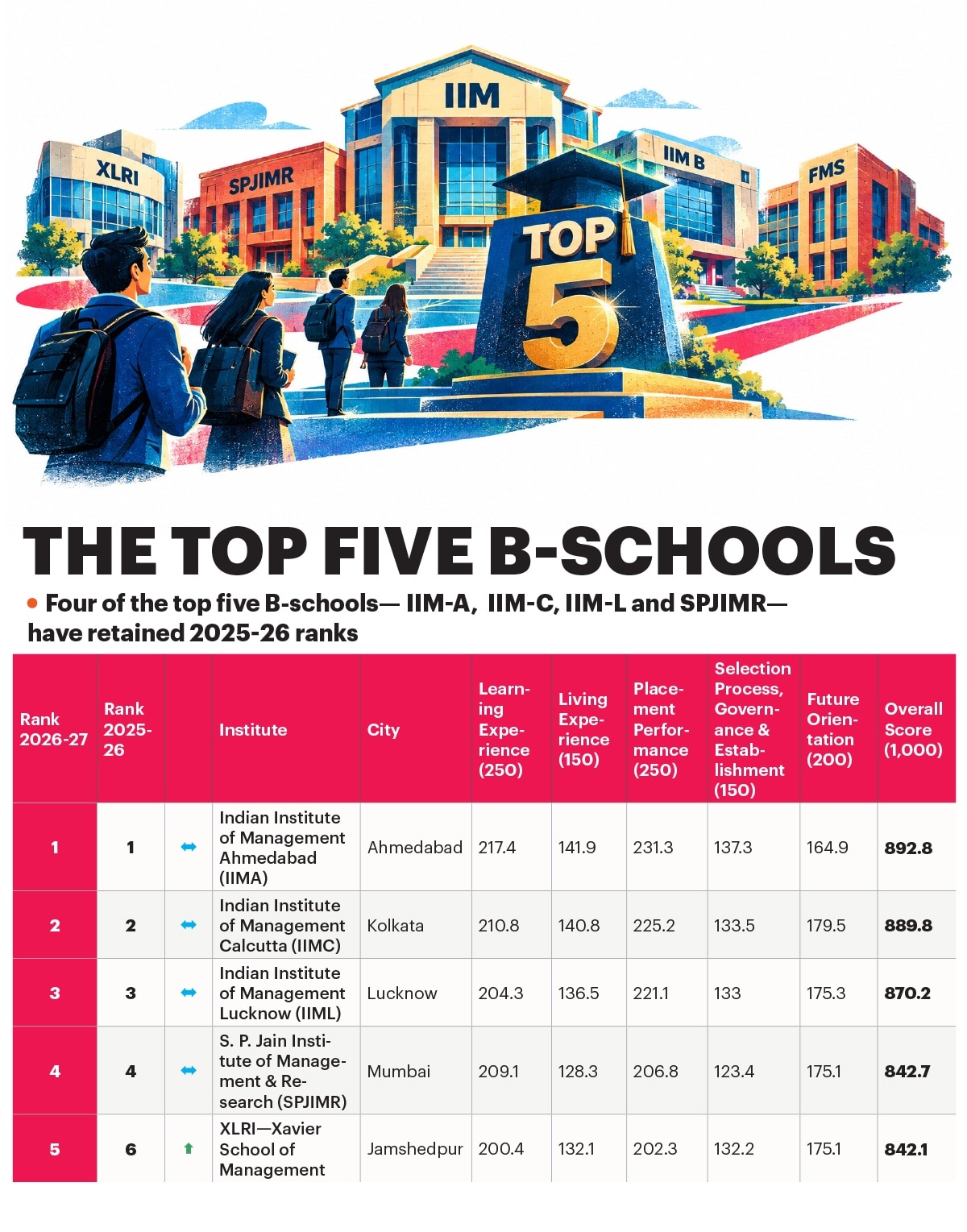
First off, recruiters spanned technology, core engineering, finance and quantitative trading, and consulting. A quick look at the list of companies on campus seals the discussion – Google, Microsoft, Amazon, Apple, Texas Instruments, Goldman Sachs, Barclays, Accenture, McKinsey and BCG, among others. Quite predictably, the number of students who took the Common Admission Test (CAT) to join the best B-schools dropped in 2025 compared to 2024 (see accompanying graphic).
“This cohort is pragmatic: they evaluate learning RoI, expect flexibility and care deeply about purpose, values, wellbeing and speed of growth,” says Birla’s Ramachandran. “Besides, they have more credible alternatives amongst which are micro-credentials, specialised masters, gig/creator pathways and early-stage start-ups.”
The AI Challenge
AI presents another challenging frontier for B-schools and MBA programmes. When information and analysis are available at the click of a finger thanks to AI, what will students look for? Nothing seems difficult to access, and knowledge is perceived to be omnipresent. But there are counters to this argument.
Rishikesh T. Krishnan, Vice Chancellor, Ashoka University, thinks AI can only provide detailed analysis and recommendations. “The responsibility to decide which problem is worth solving, balancing competing interests and mobilising people to act on decision remains human,” he says.
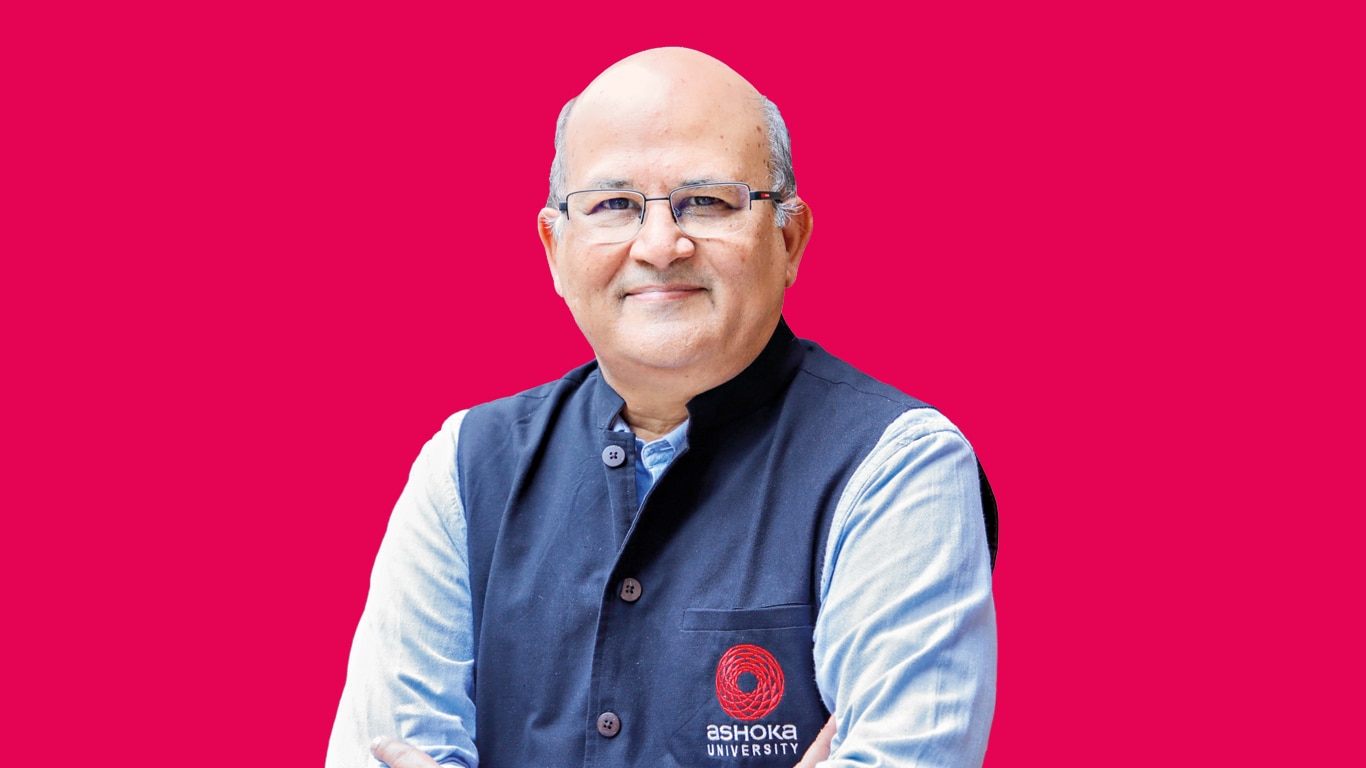
Last February, Ashoka launched the Havells School of Management & Leadership to teach students human capabilities that technology will not be able to replace at least in the near future.
“It is clear that the MBA needs to be revamped to become more interdisciplinary and experiential,” he says. It must make students understand technology and AI as also economics, entrepreneurship, psychology, ethics, public policy and human behaviour. “The question is not whether AI will make an MBA obsolete, but whether business schools are willing to reinvent the MBA for an AI-enabled world.”
The issue is about talent availability beyond just B-schools. Harsh Chhapria, Senior Partner at McKinsey & Company, believes there is no single pathway, be it an MBA or technology background, to develop capabilities required in today’s changing business environment.
“This includes understanding how businesses create value, balancing competing priorities, navigating ambiguity and leading diverse groups of people towards impact,” he explains. In the case of McKinsey, the approach to talent, says Chhapria, has continued to evolve. “We have broadened the profiles and sources from which we recruit as our clients’ needs have changed. At the same time, our commitment to attracting the best talent and giving them exceptional development opportunities has remained steadfast.”
The search for talent has gone beyond B-schools at the diversified Aditya Birla Group as well. Ramachandran speaks of hiring from over 60 campuses spanning multiple courses. “That includes design, fashion, law, engineering, analytics and data science campuses. We also hire specifically for sectors such as e-commerce, hospitality and jewellery,” he points out.
To most people, an MBA in the era of AI needs to be viewed differently, but Ramachandran believes it is not a choice between the two.
“AI is a powerful enabler but leadership still requires the ability to ask the right questions, identify which problems matter, derive meaningful insights and make decisions with accountability,” he says. An MBA, to his mind, continues to provide a strong foundation in business understanding, structured problem-solving and decision-making.
“However, we look beyond degrees and evaluate candidates for the cognitive, behavioural and leadership capabilities required to succeed in our organisation,” adds Ramachandran.
Anupam Kaura, Chief Human Resources Officer at Kotak Mahindra Bank, does not view technology talent and management talent as competing priorities but complementary capabilities. “AI can process information, automate workflows and generate insights at scale. But organisations still need people who can define the right problems, understand customer contexts, make judgement calls and translate insights into business outcomes,” he says.
At this point, all stakeholders in the MBA ecosystem—students, B-schools and recruiters—are trying to put their best foot forward. It is really a case of doing the little things well and being flexible through this challenging journey.
“A slice of management or a full-fledged MBA always helps,” says M.P. Gupta, Director of IIM Lucknow.
“In the world of AI, where automated shopfloors and connected factories are par for the course, a general management degree may be limited in terms of scope. A strong appreciation of technology is necessary in line with what industry needs,” he says.
In recent times, India’s top B-schools have also started offering undergraduate programmes. This year, IIM Lucknow welcomed its first batch of the four-year BS (Bachelor of Science) in AI and Business Analytics.
“AI is about management technology and business technology. We need to offer a high-quality programme to cover computer vision, cyber security, real-time business stimulation, and language processing, among other things,” says Gupta.
By all counts, it is an indication of the direction management education is taking in India.
It may not be a replica of how it is playing out in other parts of the world, but the change is evident. And as always, in a very unique Indian way.
@krishnagopalan


