













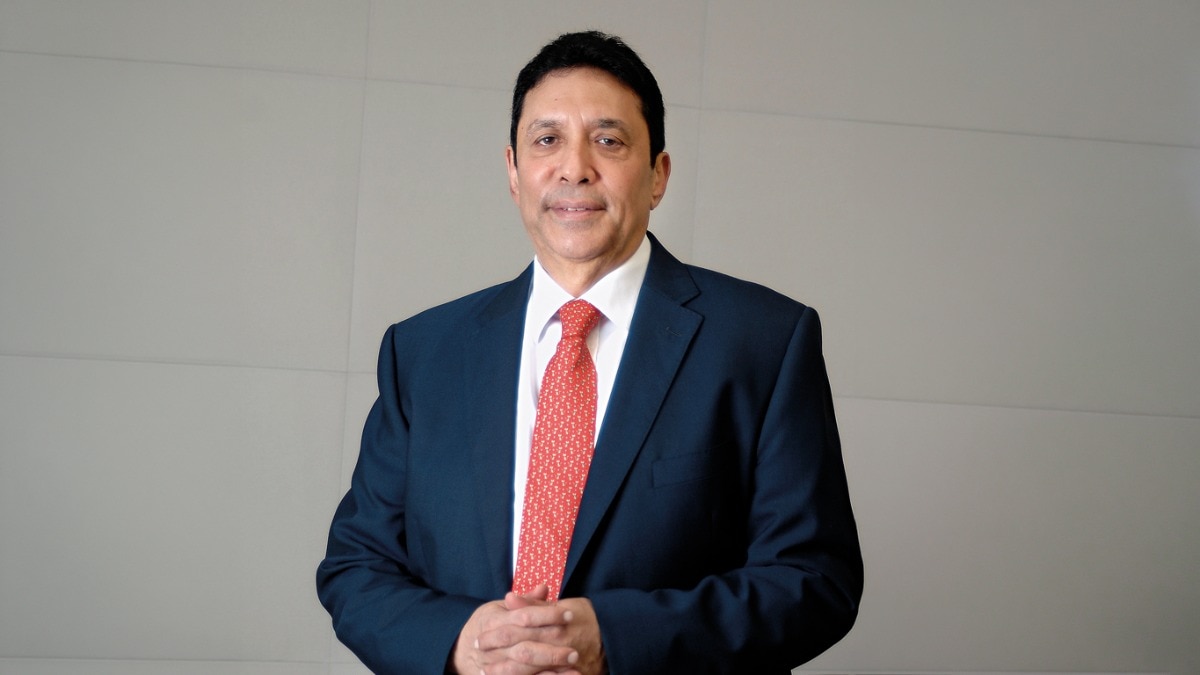
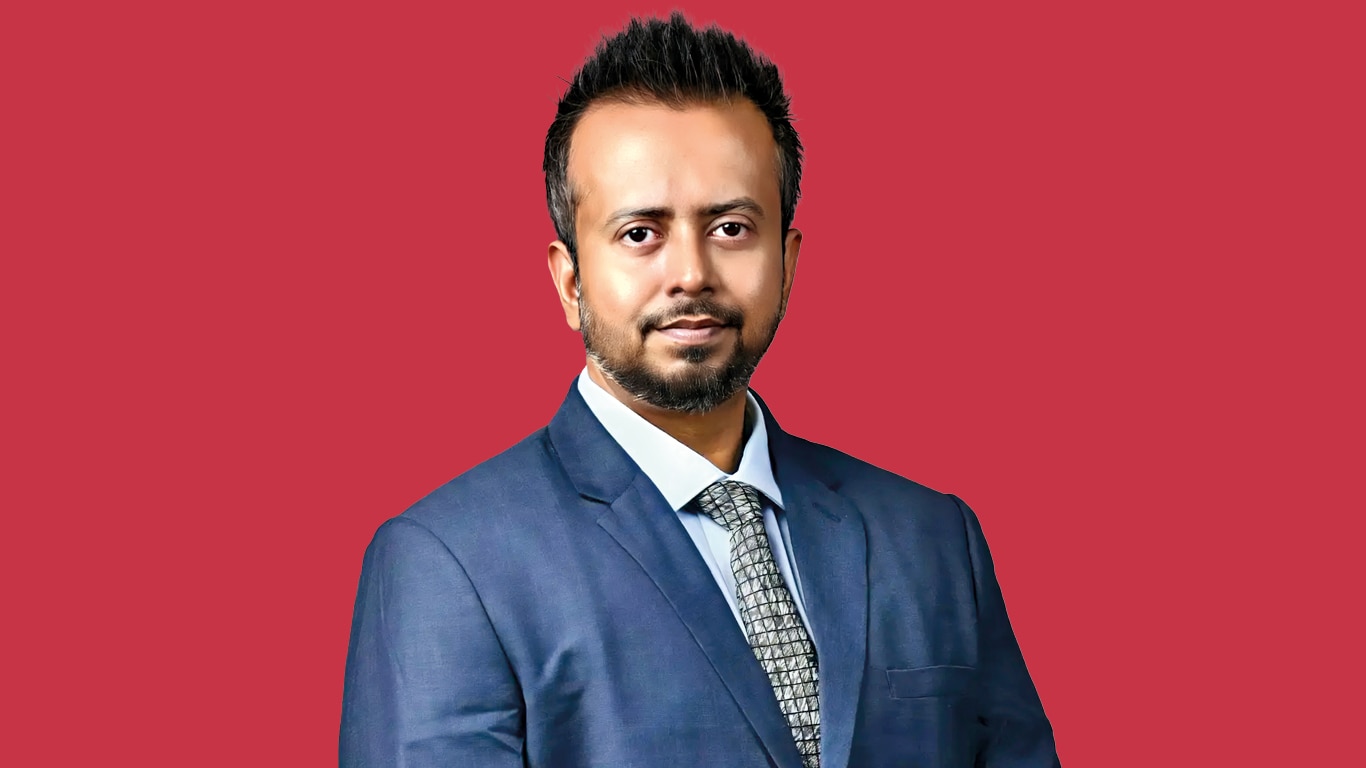
Keki Mistry, who stepped down as Vice Chairman and CEO of Housing Development Finance Corp (HDFC) following its merger with HDFC Bank two years ago, has been hoisted back into the hot seat at the country’s most valued lender following the sudden resignation of part-time chairman Atanu Chakraborty.
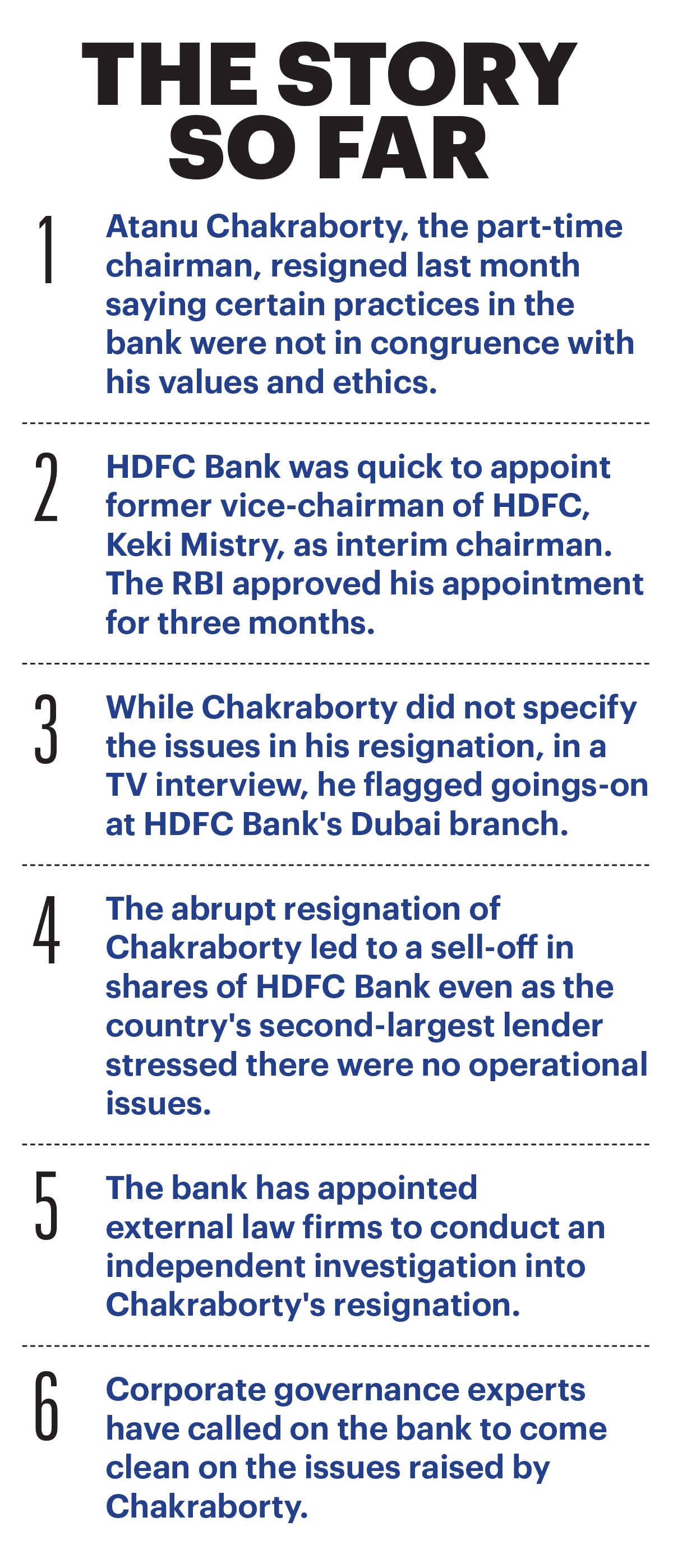
Mistry, as interim chairman, will have to restore confidence among shareholders, accountholders and the financial market community. Chakraborty’s resignation letter had cited differences over values and ethics. “Certain happenings and practices within the bank, that I have observed over last two years, are not in congruence with my personal values and ethics. This is the basis of my aforementioned decision,” he wrote in his resignation letter, disclosed by the bank in a late stock exchange filing on March 18. He said there were no other material reasons for his decision.
“Given the specific context of a bank, that too India’s largest private sector bank, these words carry weight. Banks are by nature opaque and leveraged. The near-automatic instinct to assume the worst is understandable,” says Santanu Chakrabarti, Director and Head of Research for Banking and Financial Services at BNP Paribas Securities India.
At the March 18 board meeting where Chakraborty quit, some members tried to persuade him to elaborate his concerns or change some of the language of his resignation letter. After the meeting, two whole-time members and two independent directors headed to the Reserve Bank of India (RBI) to inform the regulator of the developments. Given that HDFC is one of several systemically important banks, RBI acted swiftly; Mistry was appointed for three months.
The banking industry runs on trust. When the chairman of the country’s top private bank quits over values and ethics, it’s bound to shake investor confidence. The swift appointment of veteran banker Mistry and the board’s unequivocal backing of the lender’s governance practices got a thumbs-up from analysts but failed to calm investors. Since March 18, HDFC Bank shares have slumped 13% (as on March 30), underperforming the NSE Nifty 50, which has fallen 5.4%, and the Bank Nifty, down 9%.
The management, including the directors, say Chakraborty did not point out anything specific. “In an institution as large as the bank, small issues keep cropping up, but there is nothing substantive enough to understand why Chakraborty resigned and issued the letter,” Mistry said, trying to assure stakeholders that governance is the most important priority for the HDFC Group. “There was no clarity from the chairman. If you are saying things as serious as lack of ethics, you have to give specific instances. That’s the disconnect,” says a senior banking industry executive.
There have been murmurs of differences between the chairman and MD & CEO Sashidhar Jagdishan over various issues. Industry sources say Chakraborty perhaps also wanted a review of Jagdishan's tenure, coming up for renewal later this year. Analysts say it was more a clash of personalities. “We acknowledge a statement does not materialise out of thin air or precedent. It is likely that the outgoing chairman had differences of opinion with the management group. From a mega-merger that weighed heavy on balance sheet optimisation to lacklustre stock performance of HDB after listing, large issues are at stake,” says BNP’s Chakrabarti.
Ravi Varanasi, founding partner at SPRV Consultants, a boutique consultancy focusing on corporate regulation and governance, does not see “any structural or financial problem at HDFC Bank.” But “there seemed to be some simmering discontent,” he says. Mistry says there was no power struggle. “Differences due to power issues do come up from time to time but there was nothing material whatsoever,” he said recently.
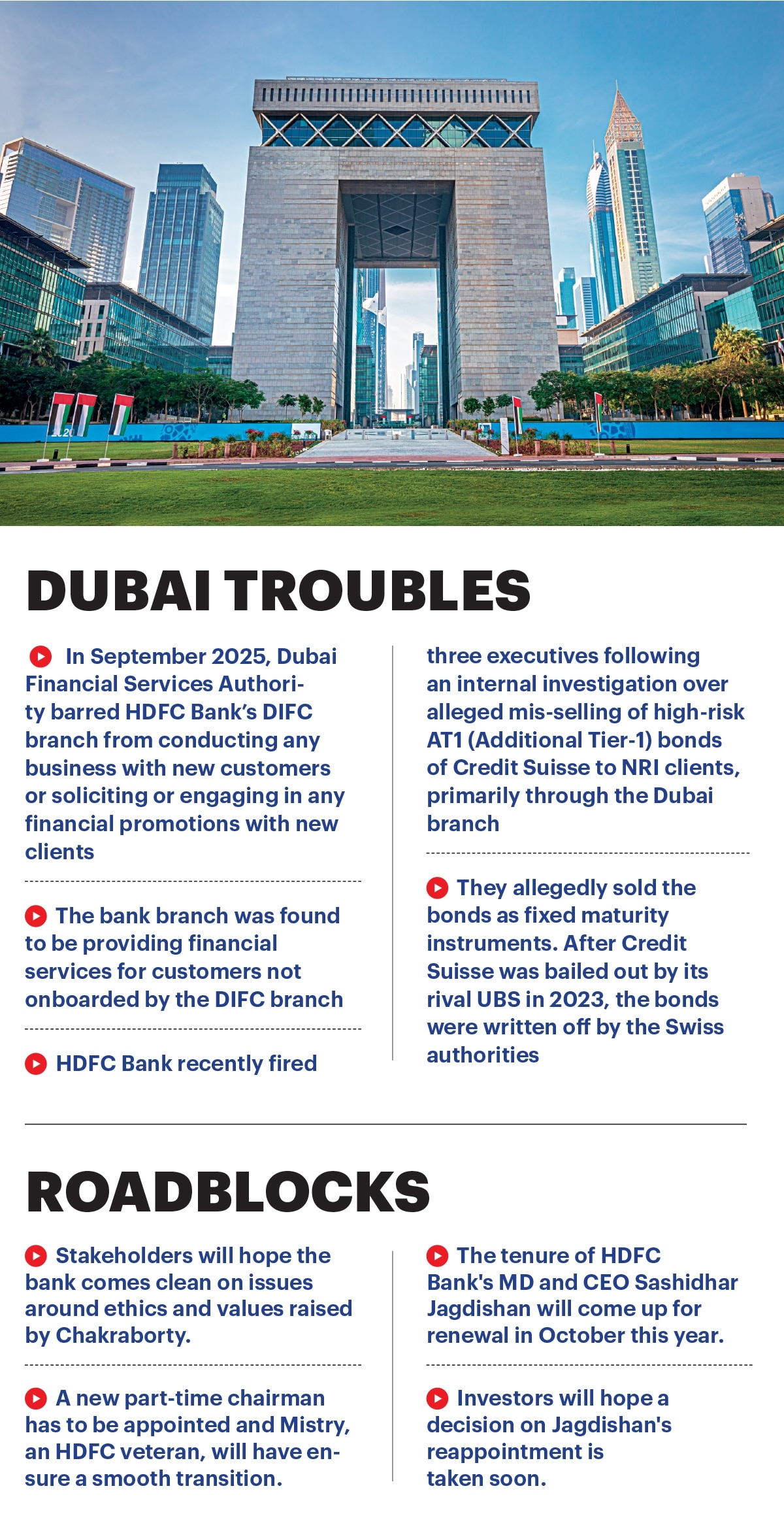
However, in a television interview on March 30, Chakraborty reiterated the problem of values and ethics. One issue he raised was developments in the Dubai branch. Earlier this month, the bank fired three executives following an internal investigation over alleged mis-selling of high-risk AT1 (Additional Tier-1) bonds of Credit Suisse to NRI clients, primarily through the Dubai branch. The action came after the Dubai Financial Services Authority barred HDFC Bank’s DIFC branch in September 2025 from conducting business with new customers or soliciting or engaging in financial promotions with new clients. It was alleged to be providing financial services to customers not onboarded by the DIFC branch. Credit Suisse faced liquidity issues and had to be bailed out by rival UBS in 2023. The AT1 bonds were written off. The sacking of the three executive was a “posterior reaction”, and these conduct issues should not arise in the first place, Chakraborty said in the interview, perhaps hinting that the action had been delayed.
Other Issues
HDFC Bank has also been facing other issues. A month after Jagdishan took charge as MD & CEO in 2020, the RBI barred HDFC Bank from issuing new credit cards and launching new digital products in the wake of multiple glitches on the digital banking platform. The ban on issuing cards was lifted in August 2021. The restrictions related to the digital launches were lifted in March 2022. Last year, RBI imposed a penalty on HDFC Bank for several lapses, including those related to KYC (know your customer) norms.
HDFC Bank has for years been a favourite stock of domestic as well as foreign institutional investors for steady earnings and management stability. The lender reported a net profit of Rs 18,654 crore in the October-December quarter, up 11.5% from a year ago. The net interest income stood at Rs 32,620 crore, up 6.4% YoY. As of December 2025, foreign portfolio investors held 47.75% stake in the bank. Domestic institutions held around 37.25%.
Restoring their confidence and ensuring stability will be the key tasks for Mistry.
People will need a transparent disclosure of what went wrong, says Varanasi, who spent nearly three decades at the National Stock Exchange, where he held key positions, including group president and chief business development officer. “(From Mistry’s point of view), coming clean will be most important now. They have to demonstrate they are transparent. Otherwise, doubts will linger,” he says.
HDFC Bank has hired three law firms to conduct a review of Chakraborty’s resignation. Varanasi hopes they will speak to Chakraborty and be given full access to the entire proceedings of the board meetings.
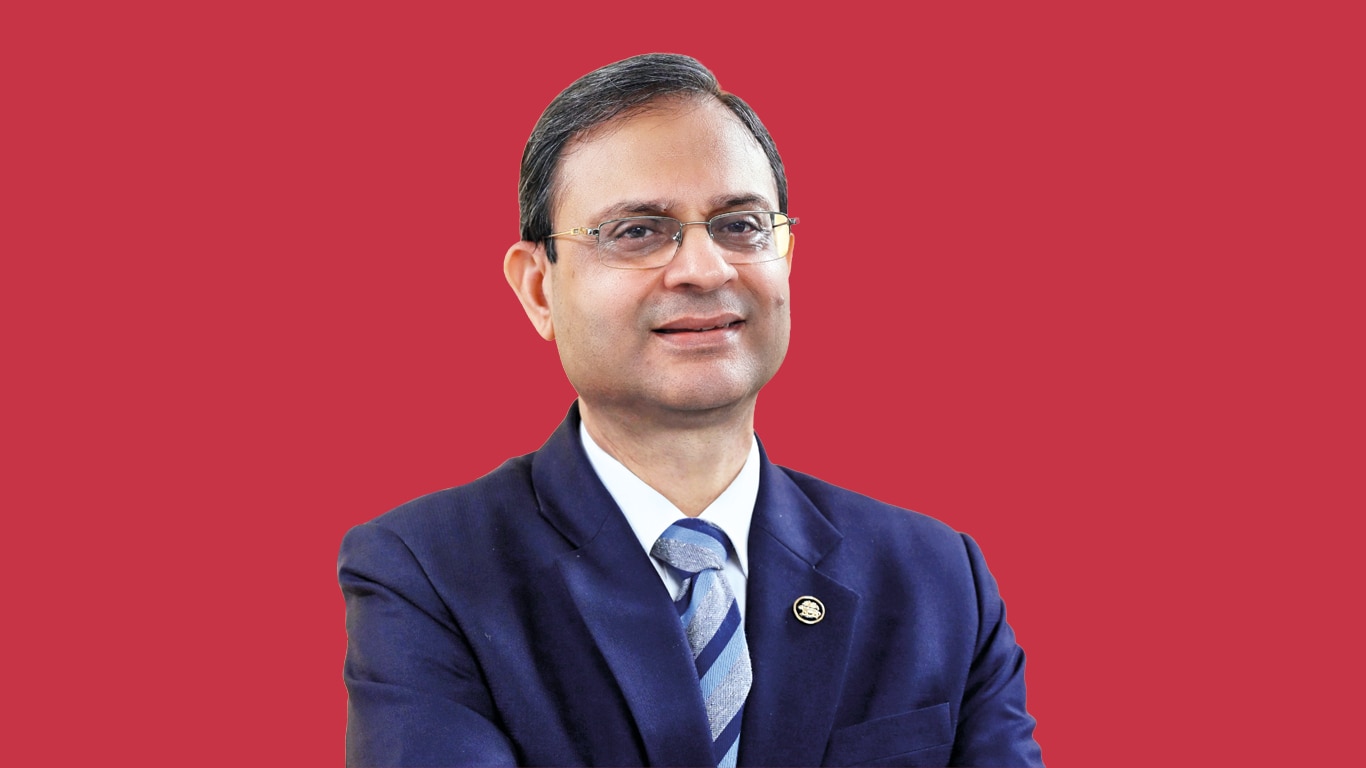
RBI Governor Sanjay Malhotra clarified on April 8 that the central bank has not found any material concern around governance or conduct in their general supervision, where the minutes (of the board meeting) are also seen. “In our supervision we have not come across any such matter related to governance or conduct,” he said.
Meanwhile, market regulator Sebi is understood to have started an inquiry to check if there were any violations, whether board members were aware of the issues raised by the chairman and if any action was taken on his complaints. Experts say the regulator may seek the minutes of the previous board meetings.
If there is one man who can restore faith in the institution, it is Mistry, say industry executives. Mistry joined HDFC in 1981 and played a key role in its rise to the country’s largest mortgage lender. Mistry was appointed MD of HDFC in 2000 and vice chairman and MD in 2007. In the year ended March 2022, HDFC Ltd had assets under management of over Rs 6.5 lakh crore. HDFC announced a merger with its then subsidiary, HDFC Bank, in April 2022. This time, Mistry has just three months to bring stability and lift investor confidence. In his parting letter, Chakraborty also mentioned that the benefitsof the merger were yet to fully fructify.
Deepak Sanchety, a former chief of surveillance at Sebi, doesn’t see significant risks from a banking perspective, but stressed on two immediate priorities for Mistry. “First, to proactively clarify, what those happenings and practices refer to, so as to remove uncertainty and restore investor confidence. Second, to demonstrate that the bank’s internal governance and disclosure standards are robust and that any gaps, if they existed, are being addressed transparently and decisively,” he said.
Another key task for Mistry will be providing clarity on the succession. Apart from the new chairman, the stakeholders will be keen to see if Jagdishan’s tenure is renewed. Jagdishan had succeeded Aditya Puri as MD and CEO of HDFC Bank in 2020. The 60-year-old has been with the bank for close to three decades. His appointment was renewed in 2023.
Mistry says the bank’s nomination and remuneration committee will meet in the “near future” and take a call on Jagdishan’s future. In the backdrop of the recent developments, the RBI may also look harder before taking a call on his reappointment, say industry executives.
One key executive expected to play a larger role going ahead is deputy managing director Kaizad Bharucha. Bharucha, also 60, has been with the bank since its inception in 1995 and is the longest serving executive board member. Bharucha oversees corporate banking, emerging corporates group, business banking–working capital, investment banking, and rural banking group, among other things. “He will get more responsibilities as we move forward,” says Jagdishan.
Prakhar Sharma, an analyst at Jefferies, says clarity on board issues, rollover of the CEO’s term and appointment of chairman could lead to a rerating of HDFC Bank shares. Ankit Bihani, an analyst at Nomura, agrees. “Governance uncertainty and leadership visibility gap are likely to keep the stock under pressure,” he says.
A senior banking industry executive says stability is important. “You need to ensure management continuity. Also, as a depositor, as a stakeholder, as a market participant, you want complete clarity around the issues raised,” he says.
For now, analysts remain confident that HDFC Bank remains financially strong. For now, analysts remain confident that HDFC Bank remains financially strong and following the fall in the price find valuations attractive. Jefferies, for instance, sees it as a top pick in the sector following the sharp fall in the price making valuations attractive.
HDFC Bank will announce its earnings for the fourth quarter on April 18. The commentary around the top management will be closely watched to see if the bank is still a worthy of its solid legacy.
@TheNachiket


