













India’s states present a differentiated and diverse landscape not only in terms of geography and culture but also in socio-economic development parameters, including population size, economic growth, fiscal health, and industrial progress.
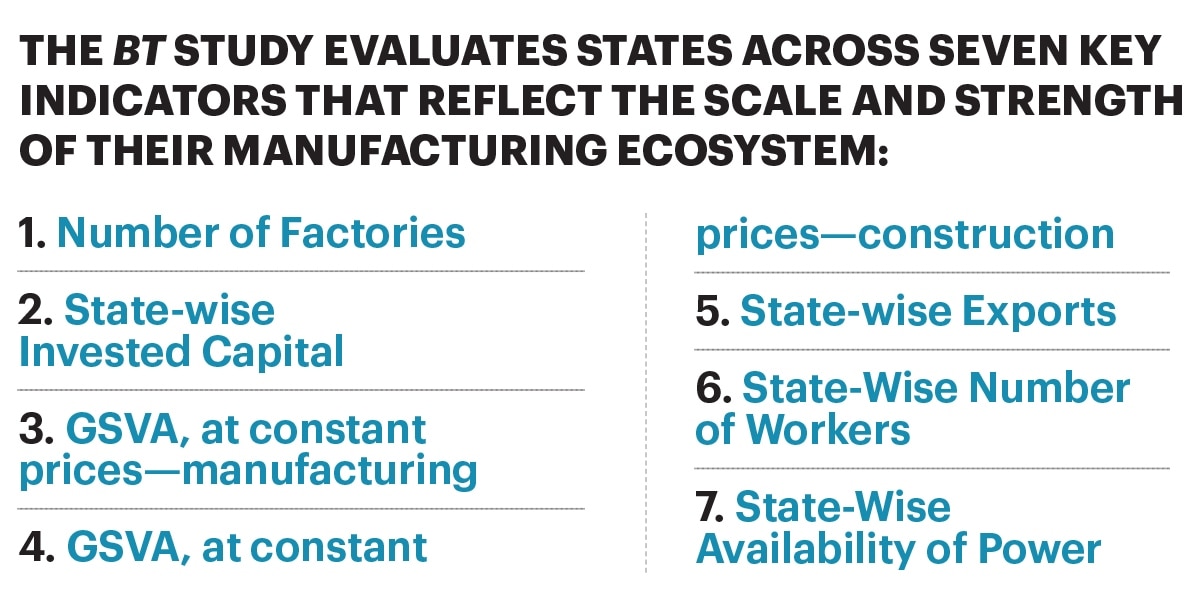
With this in mind, Business Today conducted a study to identify India’s top-performing manufacturing states and assess the strength of their manufacturing ecosystem. The rankings were prepared using the latest available state-level data from the Annual Survey of Industries (ASI) and the Reserve Bank of India (RBI), which compiles data from the Ministry of Commerce and other official government sources.
A total of 33 states and Union Territories (UTs) were considered for the study. However, the UTs of Dadra & Nagar Haveli and Daman & Diu, Ladakh, and Lakshadweep were excluded as data for several parameters were unavailable. (Table 1).
Top Performing States
For each parameter, the latest available annual data (FY25 or FY24, depending on availability) was used. State-wise data on the Number of Factories, Number of Workers, and Invested Capital was available only up to FY24. For Gross State Value Added (GSVA) – Manufacturing, Gross State Value Added (GSVA) – Construction, State-wise Exports, and Availability of Power, the latest available data was up to FY25.
States were ranked based on their absolute values for each parameter, with the state recording the highest value being recognised as the top-performing state in that category.
Fastest Growing States
To capture both long-term structural progress and recent momentum, the study identified the fastest growing major state and the fastest-growing emerging state for each parameter over two different time horizons:
• 10-year growth, reflecting sustained long-term development since the inception of Make in India in 2014
• 5-year growth, highlighting recent momentum and medium-term progress since the Covid-19 pandemic and the focus on domestic self-reliance
For the exports parameter, long-term growth was calculated over a seven-year period (FY18–FY25), as comparable state-wise historical data was available only for this duration.
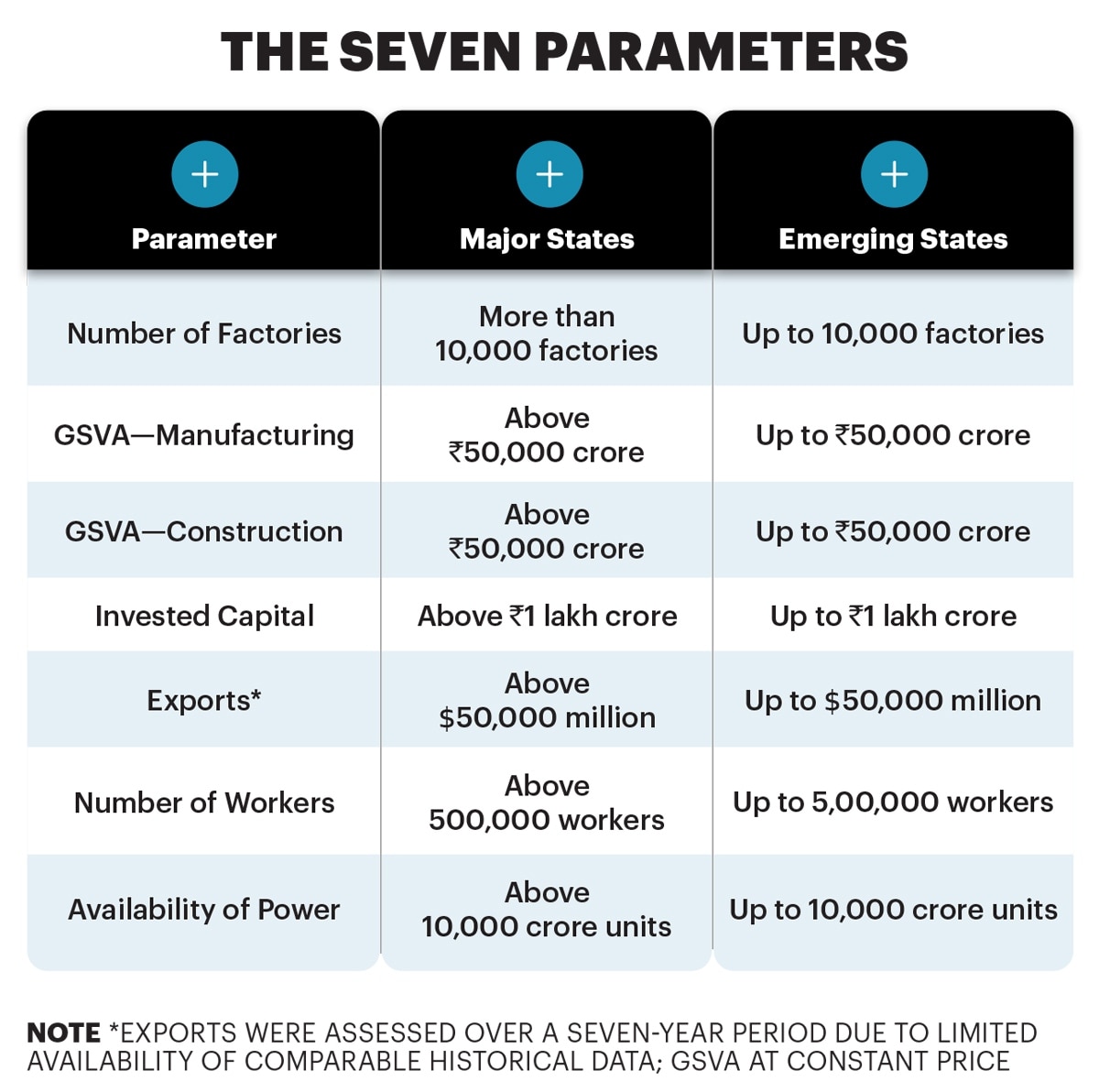
To ensure meaningful comparisons, states were first classified into Major and Emerging categories using parameter-specific thresholds based on the latest available data. Growth rates were then compared only among states within their respective categories, ensuring that smaller states were assessed against comparable peers rather than larger, more established manufacturing economies.
For each parameter, the state recording the highest growth rate within the Major category was recognised as the fastest-growing major state, while the state with the highest growth rate within the Emerging category was recognised as the fastest-growing emerging state.
Separate recognitions were awarded for both 10-year and 5-year growth periods. Outlier states with very low base have been excluded.
@PrinceinMedia


