













India's big hospital chains are raising capital, adding beds and, in some cases, preparing to go public. Yet few of them began as businesses in the conventional sense. They began with a problem.
Most started as a doctor’s complaint about something that was not working, a patient who could not get treated in time, a procedure that only the rich could afford, a city with no hospital worth the name. The businesses came later.
The scale of that transformation is easy to miss because it happened gradually, hospital by hospital, over four decades. Along the way, the ecosystem around them changed too. Insurance penetration has widened considerably in that time, private equity funds now treat hospitals as long-term infrastructure assets rather than difficult, slow-return businesses, and government schemes such as Ayushman Bharat have brought millions of families into the formal healthcare system for the first time, with more than 120 million families now covered under the scheme and the government reporting treatment worth `1,80,435 crore delivered as of June 2026 across over 36,000 empanelled hospitals.
None of that demand would have mattered, though, without a generation of doctors willing to step out of clinical practice and build the institutions capable of absorbing it. They did more than create hospitals. They also showed that doctors could become entrepreneurs, inspiring a new generation to build their own healthcare businesses.
The First Corporate Hospital
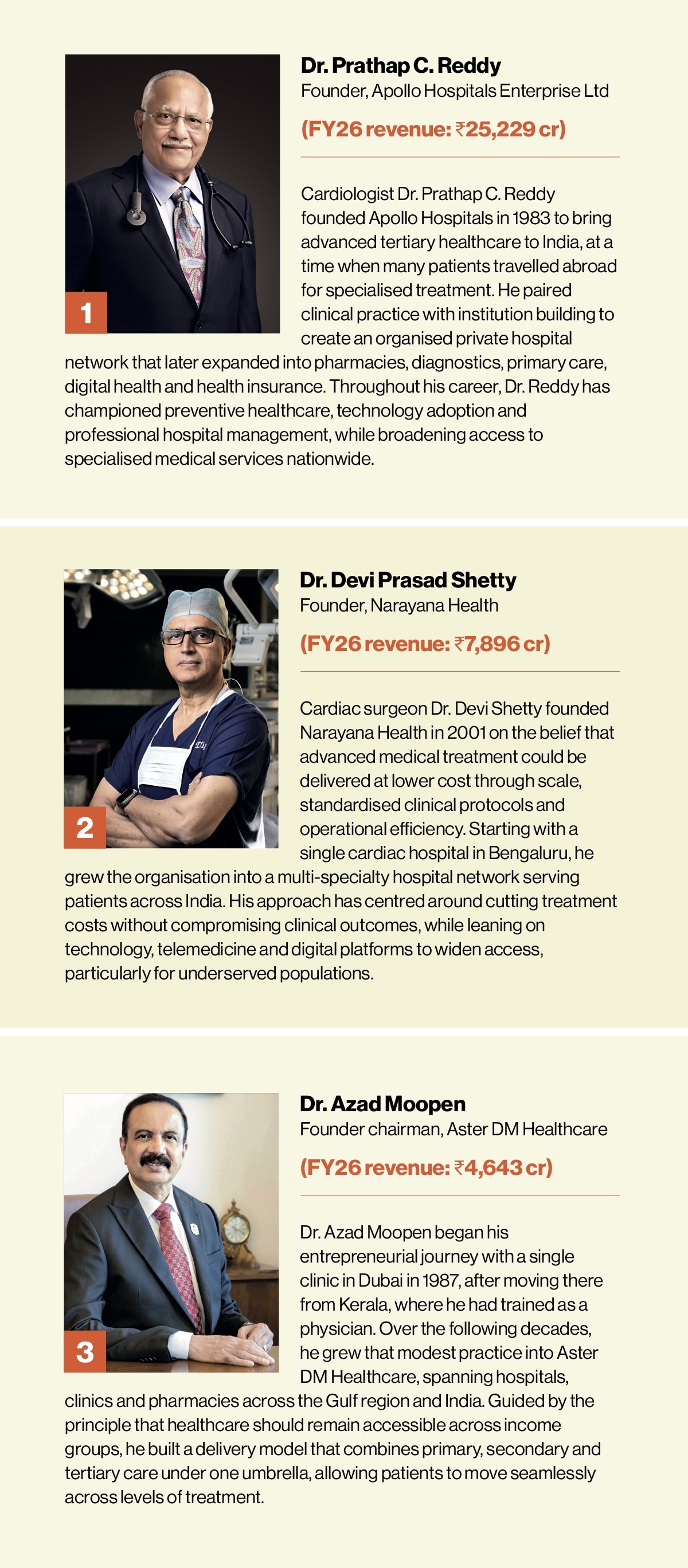
Dr Prathap C. Reddy, Founder Chairman of Apollo Hospitals, was a practising cardiologist in the United States before he moved back to India in the early 1970s. What he found on his return bothered him: there was almost nowhere in the country to send a patient who needed complex heart surgery. He kept referring cases abroad, often to the pioneering heart surgeon Dr Denton Cooley.
In 1979, a patient he had referred could not raise the money to travel in time and died at the age of 38. That is the moment Dr Reddy points to when he talks about why he decided to build a hospital in India instead of only practising in one.
“I was shocked to witness the stark lack of medical infrastructure,” he says of his early years back in the country. There was no corporate hospital model in India then, and hospitals could not even get bank loans because they were not recognised as an industry. Medical equipment was taxed as a luxury item. Getting Apollo built in Chennai took years of meetings with bureaucrats, and Dr Reddy eventually secured the backing of the government at the highest level, including a meeting with Prime Minister Indira Gandhi. Apollo opened in 1983.
Since then, the group has grown into more than 70 hospitals, nearly 6,000 pharmacies, and a network of clinics, diagnostic centres and a medical college. The group crossed `25,000 crore in consolidated revenue for the first time in the year ended March 2026, up 16% from the year before, with Apollo HealthCo, its pharmacy and digital arm, turning profitable for the first time. Dr Reddy has also spent much of the last four decades campaigning for policy change, pushing for mandatory health insurance and preventive check-ups.
On the philosophy that has carried him through, he is fond of repeating a line he once heard, that “medical expenditure is not an expenditure; it is an investment in your health”. That, along with the Padma Vibhushan he was awarded for his contribution to healthcare, sums up the way he talks about his own legacy.
Dr. Devi Shetty, Founder and Chairman of Narayana Health, came at the problem from a different angle. A cardiac surgeon who had worked in England, he returned to India in 1989 with a specific irritation. He had watched even a country as rich as the United States fail to make healthcare affordable, and he did not see why India should assume its own growing wealth would fix the problem on its own. “My only objective was to bring down the cost of heart care for the common man in the country,” he says of the decision that shaped the rest of his career.
Narayana’s first hospital, the Rabindranath Tagore International Institute of Cardiac Sciences, opened in Kolkata in 2000 with a modest initial investment of `1.6 lakh. A larger, 225-bed cardiac hospital followed in Bengaluru the next year. The arithmetic worked on volume: a high number of surgeries, standardised processes, and a sharp reduction in the cost per procedure. A heart surgery that can run to `30 lakh or more in the United States costs between `1 lakh and `2 lakh at Narayana.
Dr. Shetty is characteristically blunt about why the group grew as fast as it did. “When the sea level rises, big ships go up, and so do the small boats,” he says.
In January 2024, Narayana Health Insurance received its licence from the insurance regulator, making the group the first Indian hospital chain to launch its own insurance arm. Dr. Shetty has also flagged a growing worry about India’s dependence on imported medical equipment, given how quickly the rupee has been depreciating against other currencies, and has pushed the group into partnerships with Indian manufacturers to build equipment domestically.
The group runs 42 facilities today with just over 5,000 operational beds, and is looking at further expansion in the Caribbean, where it already has a presence. That expansion has already reached further than the Caribbean: in November 2025, Narayana completed the acquisition of UK-based Practice Plus Group Hospitals, and by the year ended March 2026, its group revenue had risen 44% to nearly `7,900 crore, with the UK business contributing for the first time. As Dr. Shetty puts it, the work so far is “nothing compared to what we can and should do.”
Different Visions, One Goal
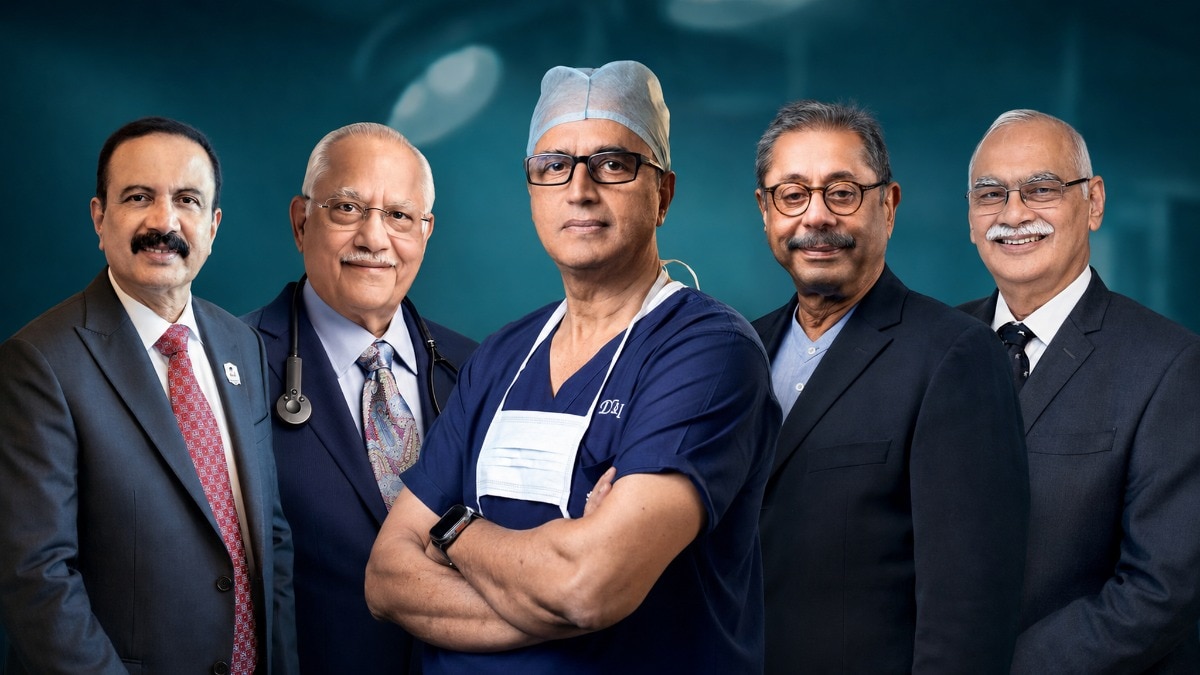
If Dr. Prathap C. Reddy laid the foundations of India’s corporate hospital sector, those who followed built on them in very different ways. They shared an entrepreneurial instinct, but not the same vision. Some focused on making complex healthcare affordable. Others set out to build integrated institutions, expand organised healthcare into underserved regions, or consolidate hospital networks through acquisitions. Different paths, but a common purpose: making quality healthcare more accessible to millions of Indians.
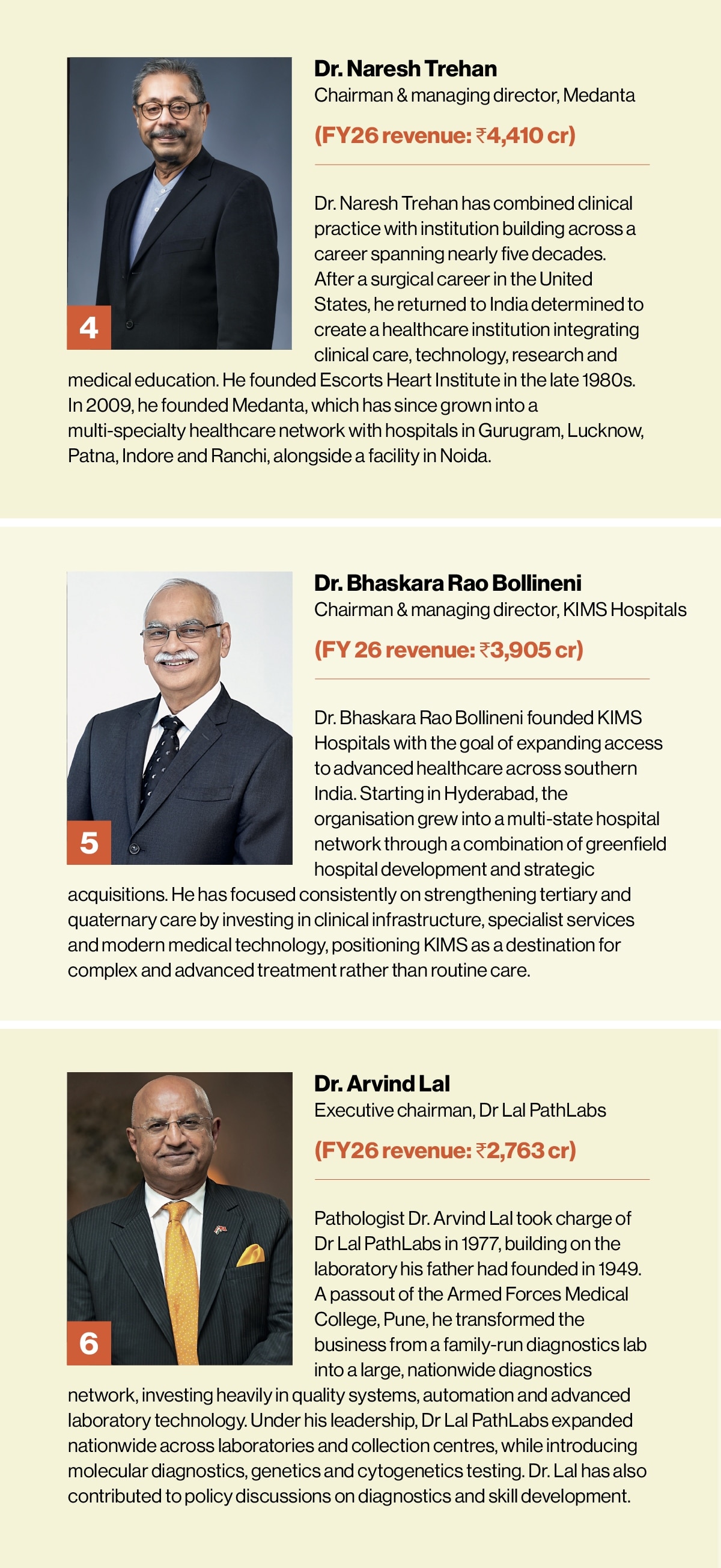
Dr. Naresh Trehan, Chairman and Managing Director of Medanta, returned to India after spending nearly 20 years in the United States with a clear vision of the kind of institution he wanted to build. “My focus was not simply on adding hospital capacity, but on creating an integrated healthcare institution that combined advanced clinical care, research, medical education and multiple specialties under one roof,” he says.
Even as India’s hospital sector expands rapidly, Dr. Trehan believes the country’s biggest challenge lies elsewhere. The healthcare workforce, he says, remains one of India’s most pressing concerns.
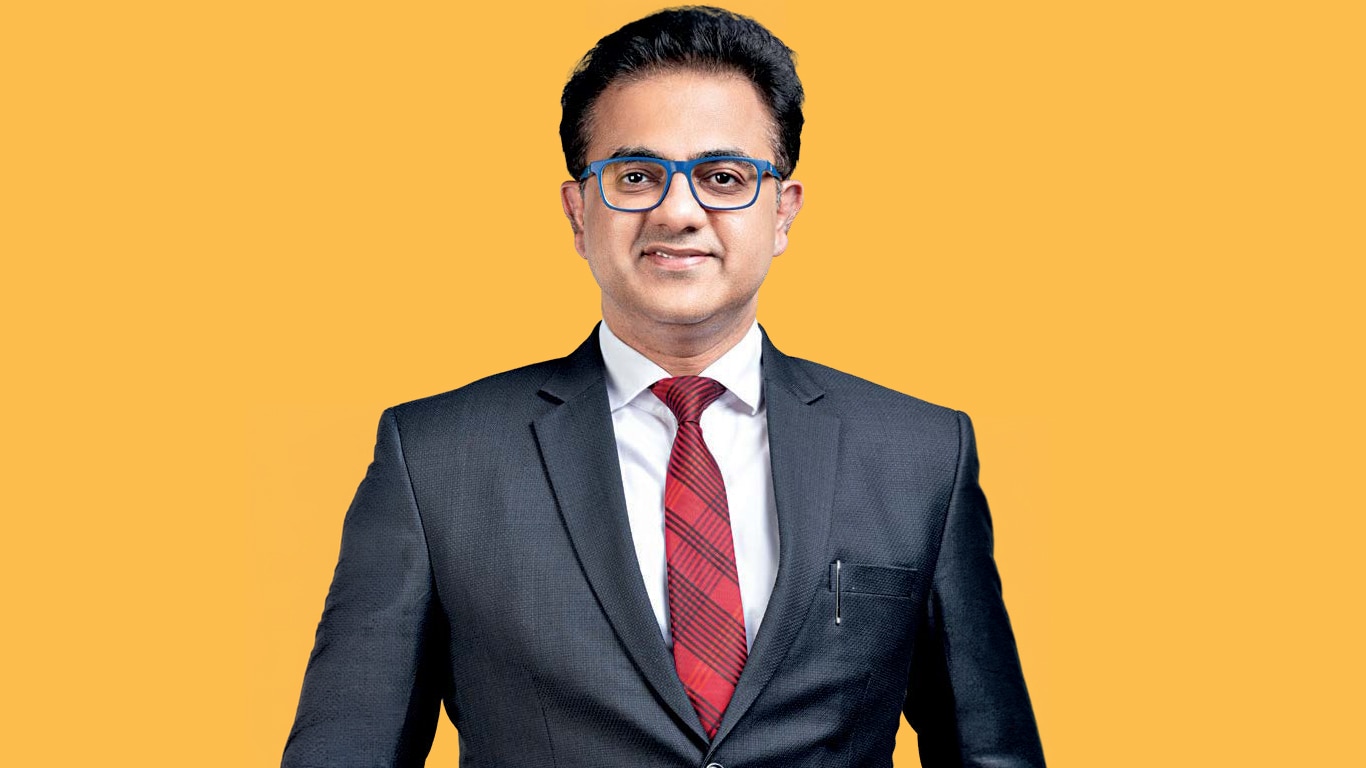
Dr. Dharminder Nagar, Managing Director of Paras Health, picked a gap that none of the above were particularly interested in filling: North India outside the metros. “The market in North India was severely underserved," he says, pointing out that the region accounts for roughly 60% of the country’s population but a much smaller share of its organised healthcare capacity.
When his first hospital opened in Gurugram at the end of 2006 with 200 beds, the largest existing hospital in the city had 30. He went on to build in Patna, then Darbhanga, then Srinagar and Kanpur, cities most hospital chains still consider too small to be worth the effort.
His argument, repeated in nearly every conversation he has on the subject, is that “healthcare has to be delivered where you live,” and that the assumption smaller cities could not pay for good treatment was never true. “The issue is that you do not have the availability of the service.”
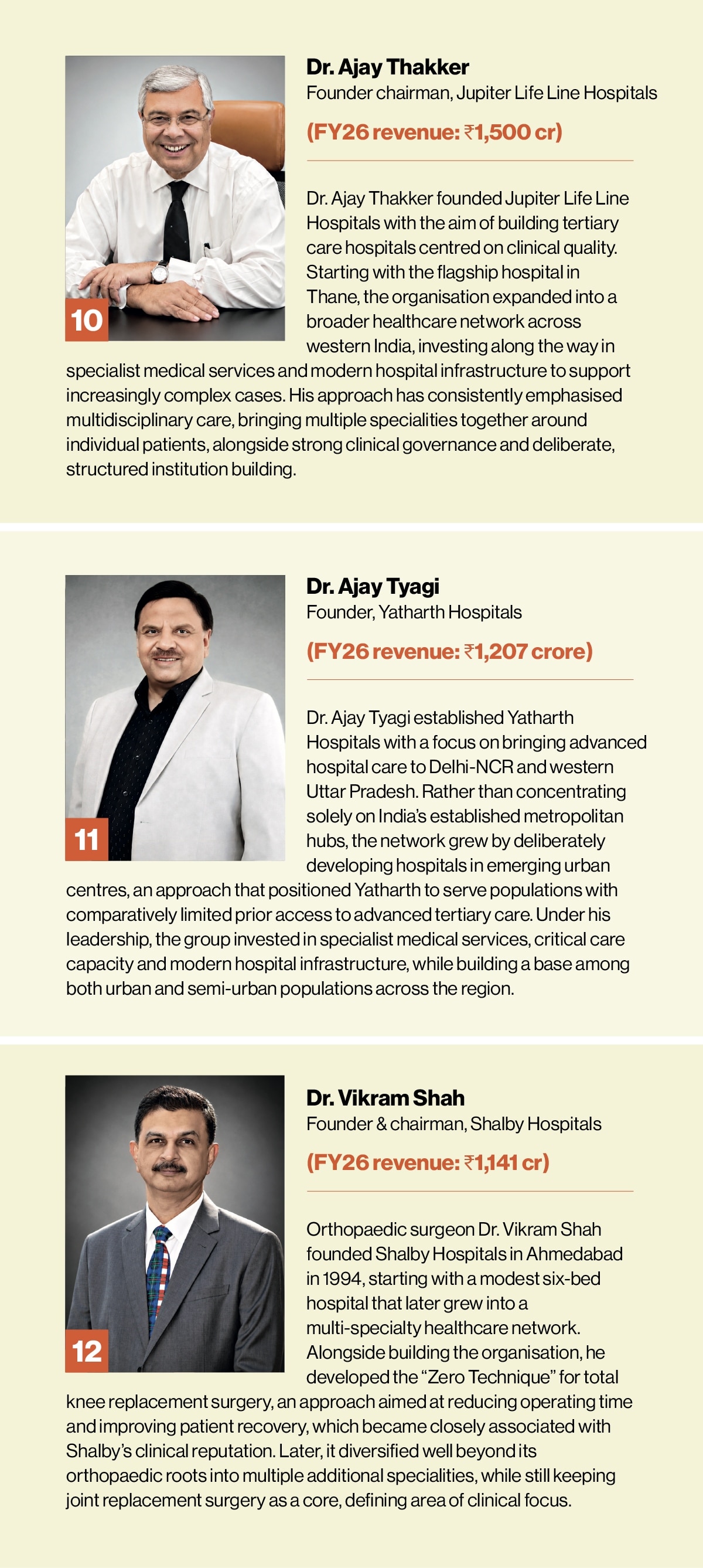
Paras now runs around 2,100 beds across eight hospitals, with another 800 due in Ludhiana and an expanded Gurugram campus. Dr. Nagar has spent years preparing the company for a public listing by bringing in institutional investors such as Creador, 360 ONE and Axis AIF, building an independent board with senior figures from other large corporations, and running external audits well ahead of any formal requirement to do so. That preparation reached a formal milestone in June 2026, when Paras refiled its draft prospectus for a roughly `1,800 crore IPO, its second attempt after an earlier `400 crore filing cleared SEBI in 2024 but lapsed before the company could launch it. He still holds more than 70% of the business himself.
Nagar has stayed regional by design. “Healthcare will always be a regional play,” he says. “It is not a national play. India is not a country, India is a subcontinent.” Even on acquisitions, an avenue Paras has not used so far unlike many listed rivals, Dr. Nagar is selective about what he calls brand-stamping, saying flatly that he does not believe in “stamping buildings with our brand name”without first bringing the infrastructure, equipment and culture up to standard.
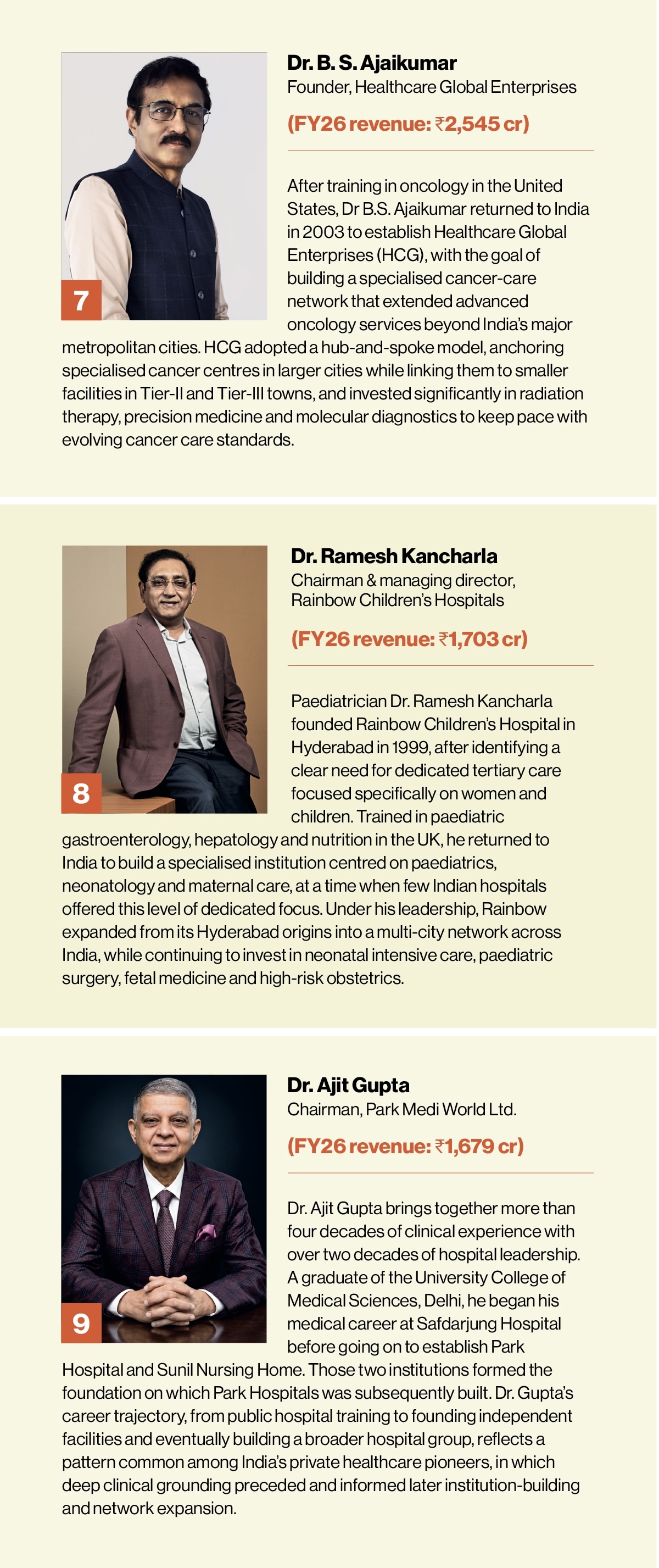
A doctor by training, Dr. Ranjan Pai, Chairman of Manipal Education and Medical Group (MEMG), has overseen the transformation of Manipal Hospitals from a single hospital into one of India’s largest private healthcare networks through a combination of greenfield expansion, acquisitions and long-term institutional capital. While his father, Dr. Ramdas Pai, laid the foundation by building the Manipal education and healthcare institutions, Dr. Pai expanded the group's healthcare business by introducing professional management, attracting private equity and pursuing strategic acquisitions.
Under his leadership, Manipal Hospitals acquired Columbia Asia and, more recently, Sahyadri Hospitals. Dr. Pai believes clinical leadership must eventually be complemented by professional management. “Most of the large hospital chains started with doctors, and I think that can be a strength initially. Over time, though, it should not become a hindrance.”
The New Guard
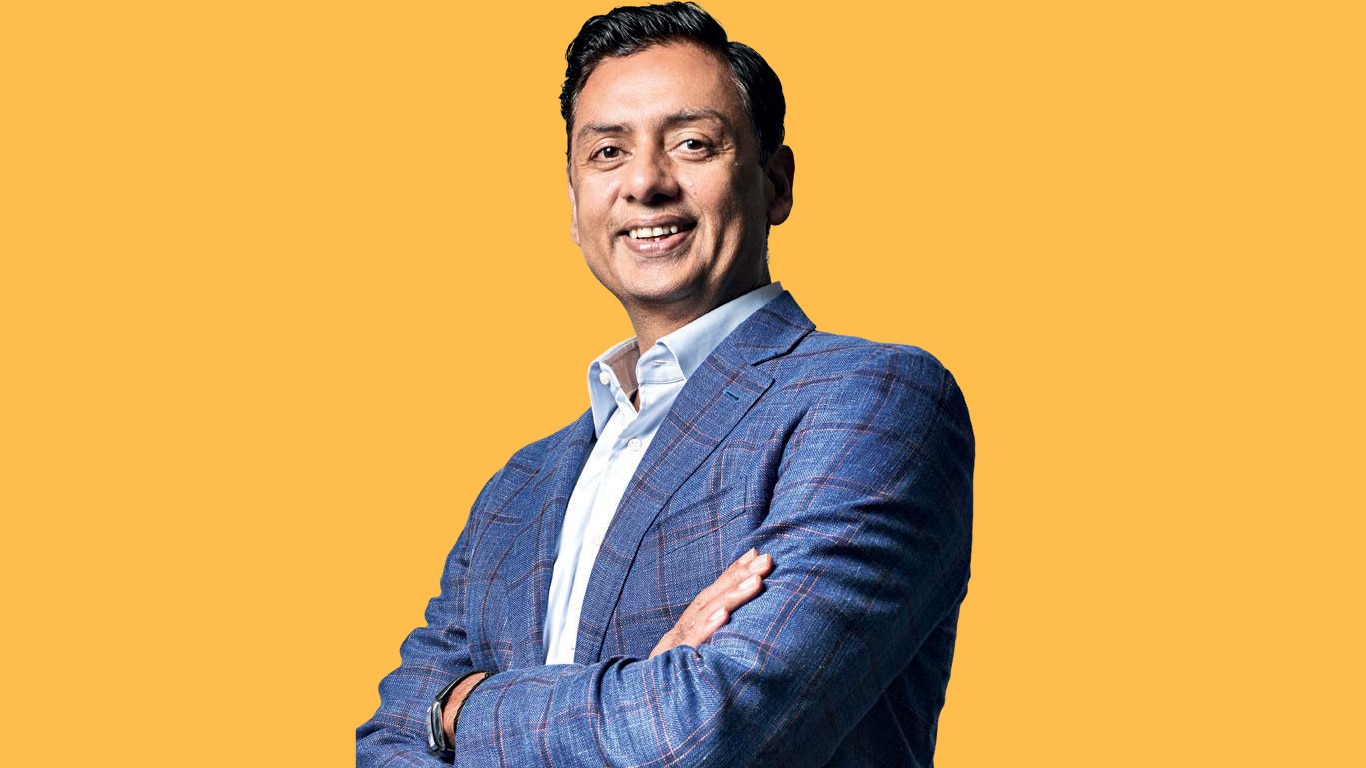
As India’s first corporate hospital chains took root, a new generation of doctors embraced entrepreneurship in its own way. Some built focused hospital chains around a single specialty. Others created institutions centred on advanced tertiary care or diagnostic excellence. They built different kinds of healthcare businesses, but were driven by the same instinct as those who came before them: to solve a problem they believed the healthcare system had overlooked.
Alongside these multi-speciality builders, a separate set of doctors chose to go deep into a single field rather than run general hospitals.
Dr. Ramesh Kancharla, Chairman and MD of Rainbow Children’s Medicare Ltd, spent close to eight years working at children’s hospitals in the UK before returning to India convinced that paediatric care could not simply be treated as a smaller version of adult medicine. It needed dedicated infrastructure, specialised doctors and hospitals designed around newborns, infants and children. That conviction led him to establish Rainbow Children’s Hospital in Hyderabad in 2000 with just 50 beds. Rainbow expanded over the next two decades by replicating that model across southern India before turning to the North.
The network today runs 24 hospitals and six clinics across nine cities, with a combined bed capacity of over 2,500, built around a hub-and-spoke model of large tertiary centres supported by smaller satellite units. In FY26, the company reported a revenue of `1,703 crore, up 12%, and it now plans to add more than 2,500 beds over the next five years, taking the network toward roughly 5,000 beds. Partnerships with global investors, including the UK’s British International Investment, helped fund that expansion, and the company went public in 2022.
Dr. Aashish Chaudhry, Managing Director of Aakash Healthcare, represents a younger generation of doctorpreneurs who entered healthcare after corporate hospitals had become an established industry. Rather than building a sprawling hospital network from the outset, he focused on creating a tertiary-care institution in Delhi centred on advanced clinical care, medical technology and patient experience. He founded Aakash Healthcare with the belief that clinical excellence, technology, affordability and compassionate care should come together under one roof. “I never wanted to build just another hospital; I wanted to build a healthcare institution,” he says.
Since opening Aakash Healthcare in Dwarka in 2017, he has expanded its clinical footprint while adding speciality services. His ambitions have also extended beyond India. In November 2022, Aakash Healthcare became the first Indian hospital brand to acquire and operate a hospital overseas, taking over a 50-bed multi-speciality facility in Tashkent, with an initial investment of $3.5 million. The company has said it plans to invest up to $10 million in the venture over three years and is exploring opportunities in markets including Bahrain, Mongolia, and Fiji.
For Dr. Chaudhry, growth is “not just about adding beds, but about building institutions that combine advanced treatment with operational efficiency and a strong clinical culture.” The group also plans to expand its capacity to more than 1,500 beds by the end of 2028.
Dr. Arvind Lal, Chairman of Dr Lal PathLabs, took a related but distinct path, transforming his father’s single pathology laboratory into a nationwide diagnostics network. He joined the family business in 1977 after teaching at the Armed Forces Medical College and led the company’s expansion through a hub-and-spoke model, home sample collection, and digital reporting.
A Different Choice
Not every senior doctor of the previous generation chose to become a doctorpreneur, and Dr. Ashok Seth is a case in point. The Chairman of Fortis Escorts Heart Institute in New Delhi established Max Heart Institute from the ground up in 2004, but unlike many of his contemporaries, he consciously chose not to build a hospital enterprise. Several of his colleagues went on to do so; he decided his greatest contribution lay elsewhere.
Whether they built hospital chains or remained focused on clinical practice, each was responding to a shortcoming they had personally encountered in India’s healthcare system. The buildings, the beds and the balance sheets are recent. Long before hospitals became an investment story, they were a doctor’s answer to a problem that needed solving. That is the legacy this generation leaves behind.
“I felt that my clinical leadership would be better utilised in practising cardiology, advancing patient care, teaching and training generations of interventional cardiologists, and furthering innovative techniques rather than in building hospital businesses,” says Dr Seth.
@neetu_csharma


