
Punjab, known for textile manufacturing, is diversifying into sunrise sectors such as electronics, semiconductors, electric mobility, defence and aerospace, and medical devices. The Industrial and Business Development Policy 2026, launched early this year, supports this transition through incentives for modernisation, automation, quality certification, research and development, and deeper integration with global value chains.
Since 2022, Punjab has attracted around Rs 1.5 lakh crore in investments with the potential to generate over 500,000 employment opportunities across manufacturing, chemicals, healthcare, logistics, IT, food processing and emerging sectors.
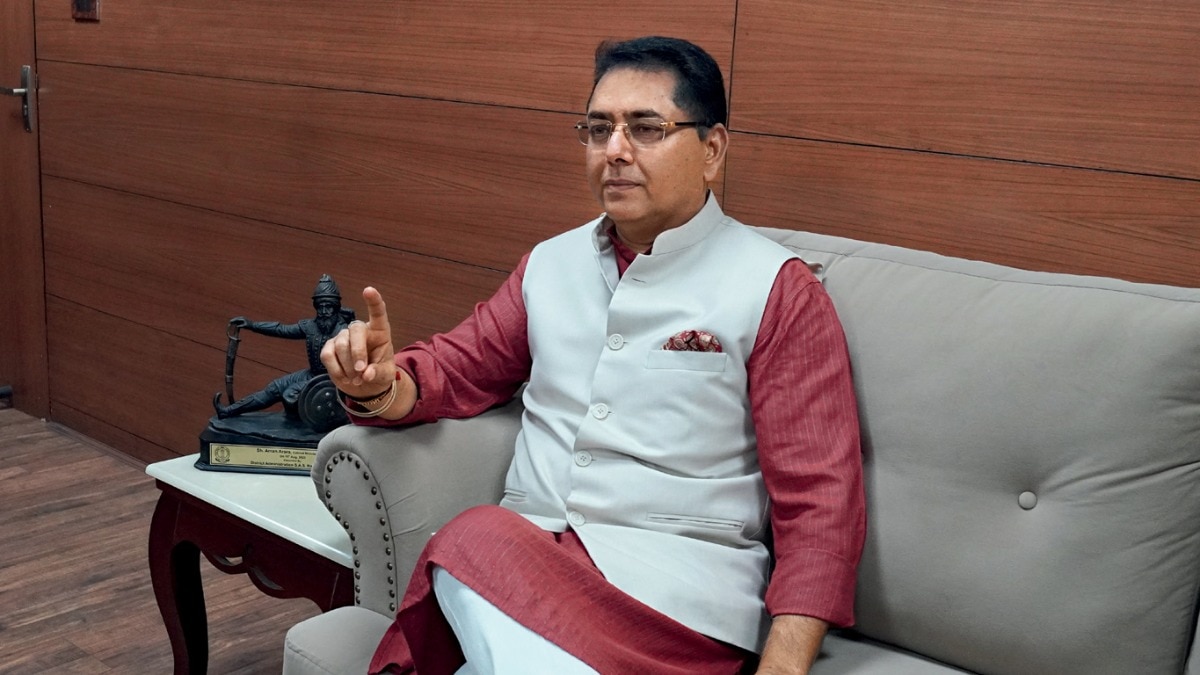
Minister for Industries & Commerce, Aman Arora, tells Business Today about his government’s vision to transform Punjab from a strong manufacturing state into India’s leading centre for innovation-led manufacturing where research institutions, start-ups, micro, small, and medium enterprises (MSMEs) and global investors work together to create high-value products and quality employment.
Punjab was the fastest-growing major state in invested capital in the five years from FY19 to FY24.
Arora says in the future, Punjab will continue leveraging international roadshows, sector-specific partnerships and the Progressive Punjab Investors Summit to deepen engagement with global investors. The objective is to position Punjab as a destination where global companies find manufacturing excellence, skilled talent, innovation capacity and trusted long-term partnerships. Edited excerpts:
Q: How is Punjab looking to ramp up its manufacturing capacity and capabilities?
Punjab has adopted a decisive strategy to transform itself into one of India’s most competitive manufacturing destinations. Our focus is not merely on expanding industrial output, but on building a future-ready manufacturing ecosystem driven by world-class infrastructure, policy stability, ease of doing business, and a highly skilled workforce.
Through the Industrial and Business Development Policy 2026, we are prioritising high-growth sectors, ensuring faster approvals through FastTrack Punjab, and providing targeted incentives to accelerate industrial investments.
Punjab is consciously moving beyond traditional volume-led manufacturing towards high-value, technology-driven production. While the state continues to enjoy a strong presence in textiles, engineering goods, bicycles, sports goods and food processing, our vision is to position Punjab as a leader in agritech, defence, aerospace and electronics system design and manufacturing (ESDM).
The results of this approach are already visible. The Vardhman-Aichi partnership is bringing advanced Japanese manufacturing technology to Punjab, while industries across sectors are expanding capacities and diversifying production.
Q: What is the roadmap for industrial infrastructure development to support growth?
The government recognises that globally competitive manufacturing requires globally competitive infrastructure. Accordingly, Punjab is building an investment-ready industrial ecosystem by ensuring industries have access to modern industrial land, integrated logistics, world-class connectivity and future-ready industrial townships.
A flagship initiative in this direction is the Integrated Manufacturing Cluster (IMC) at Rajpura along the Amritsar-Kolkata Industrial Corridor. The project will offer plug-and-play infrastructure, integrated utilities and multimodal connectivity, enabling Punjab to attract large manufacturing investments while strengthening exports.
Simultaneously, the government is pursuing long-term regional planning to support sustained industrial growth. Master Plans for Ludhiana, Jalandhar, Bathinda and SAS Nagar (Mohali) are facilitating planned industrial expansion, improved connectivity and balanced urban development. Existing industrial focal points are being upgraded simultaneously through improved infrastructure, logistics, and last-mile connectivity.
Q: What are the incentives and policies for MSMEs?
MSMEs remain the backbone of Punjab’s industrial economy, and their growth, modernisation and competitiveness are at the centre of its industrial strategy. Nearly 160,000 MSMEs form the foundation of Punjab’s manufacturing ecosystem, and the Industrial and Business Development Policy 2026 provides a comprehensive support framework to help them scale and compete globally.
The policy offers capital subsidies, support for technology upgradation, SGST (state goods and services tax) reimbursement, electricity duty exemption, stamp duty reimbursement, employment generation incentives, export promotion assistance and marketing support.
Beyond financial incentives, Punjab is strengthening cluster-based industrial development through Common Facility Centres across sectors including garments, oil expellers, sewing machines, printing and packaging, cutting tools and metal manufacturing. These centres provide MSMEs access to advanced machinery, testing facilities, design support, research infrastructure and skill development without requiring large capital investments.
A major priority is improving quality standards through advanced testing and certification infrastructure, including partnerships with institutions such as the National Test House.
Q: What are the plans for taking manufacturing clusters across the state?
Every region of Punjab possesses unique industrial strengths that should be nurtured through specialised manufacturing ecosystems rather than a uniform development model.
Accordingly, Ludhiana is being strengthened as a leading textile and apparel manufacturing hub, Jalandhar as a globally recognised sports goods centre, and Bathinda as a petrochemical and downstream manufacturing cluster.
To support these regional strengths, the government is developing Common Facility Centres, technology centres, testing infrastructure and cluster-specific industrial facilities. This strategy enables industries to benefit from shared infrastructure, skilled manpower and well-established supply chains while ensuring balanced industrial growth across the state.
Q: What is the roadmap for entering sunrise sectors?
Punjab is at the forefront of India’s next generation of industrial growth by actively promoting sunrise sectors including electronics, semiconductors, electric mobility, defence and aerospace, medical devices, advanced manufacturing, renewable energy, technical textiles and logistics technologies.
Punjab’s greatest competitive advantage lies in its world-class innovation ecosystem. Institutions such as the Semiconductor Laboratory (SCL), CSIR-CSIO, IIT Ropar, NIPER, the Institute of Nano Science and Technology (INST) and TBRL provide a strong foundation for advanced manufacturing, electronics, defence technologies and precision engineering.
Complementing this, the Startup Punjab Policy 2026 aims to support over 1,000 start-ups through incubation centres, innovation hubs and accelerator programmes while strengthening industry-academia collaboration.
Punjab is positioning itself to participate in emerging semiconductor and electronics supply chains, while industrial ecosystems such as Cycle Valley demonstrate the state’s strengths in precision engineering and component manufacturing. Investments by companies such as Tata Steel further strengthen Punjab’s capabilities in advanced materials and next-generation manufacturing.
Q: How does Punjab plan to attract investments and global investors?
The government has fundamentally changed the way Punjab engages with investors. Our investment strategy is designed not only to attract capital but also to bring technology, innovation and long-term industrial partnerships to Punjab.
Since 2022, Punjab has attracted around Rs 1.5 lakh crore in investments with the potential to generate over 500,000 employment opportunities across manufacturing, chemicals, healthcare, logistics, IT, food processing and emerging sectors. These investments reflect growing investor confidence in Punjab’s governance, industrial ecosystem and skilled workforce.
Punjab’s international outreach has already begun yielding tangible results. During engagements in Japan, Toppan Speciality Films announced an additional investment of around Rs 400 crore along with a Skilling Excellence Centre in Punjab. Likewise, the partnership between Vardhman Special Steels and Japan’s Aichi Steel has resulted in a landmark Rs 1,116 crore advanced forging and machining project that will bring cutting-edge manufacturing technology to the state.
The state’s appeal extends well beyond Japan. Germany’s Freudenberg Group has invested around Rs 339 crore in advanced automotive component manufacturing, while companies such as Yanmar, Nestlé and De Heus continue to expand their presence in Punjab, reaffirming the state’s growing reputation as a preferred investment destination.
Q: What are the skilling and job creation targets for the youth?
Industrialisation and employment generation are inseparable. Every major industrial policy and investment initiative is being aligned to create high-quality employment opportunities for Punjab’s youth.
Under the new policy, industries receive Employment Generation Subsidies to encourage local hiring, while the Punjab Hunar Portal connects employers, training institutions and skilled youth through a statewide digital platform. Our objective is to ensure that skills translate into sustainable employment, entrepreneurship and greater participation in modern industry. The government is also modernising Punjab’s skilling ecosystem to meet the requirements of emerging manufacturing sectors. Partnerships with the Tata Indian Institute of Skills and T-Works are helping upgrade industrial training infrastructure, modernise ITIs, promote deep-tech innovation, strengthen startup incubation and provide practical exposure to advanced manufacturing technologies.
Importantly, the Aam Aadmi Party government is directly linking industrial investments with skill development. Beyond manufacturing, Punjab is investing in Startup Punjab, artificial intelligence adoption, Industry 4.0 readiness, logistics digitisation and entrepreneurship development.
@richajourno













