













Ramesh Pathak, 40, who works as a clerk at a law firm in Delhi, was advised a coronary stent implant last year after doctors found an artery blockage, one of the symptoms of an impending heart attack. Pathak, who had a Rs 1 lakh medical insurance policy, was recommended a locally made stent that was 30% cheaper than the imported version. His family was thinking of selling gold to pay for the imported stent but Pathak opted for the local model. A year later, he is fine, says Pathak.
The initial hesitation felt by patients such as Pathak may be one of the reasons for the low adoption of locally made medical devices in the country of 1.4 billion people.
The government wants to change this. In order to meet demand, boost manufacturing and cut import dependence, it has extended its Production-Linked Incentive (PLI) scheme to 55 high-end medical devices, offering a 5% incentive on incremental sales for four years.
So far, 22 projects have come up from scratch to produce such devices, generating Rs 12,344.37 crore in sales and Rs 5,869.36 crore in exports.
Even so, India continues to import critical components like X-Ray tubes and detectors, the main parts of imaging equipment, limiting value addition to 40-50%. Cardiovascular complications are driving demand for implantable devices, yet stent price caps have narrowed margins.
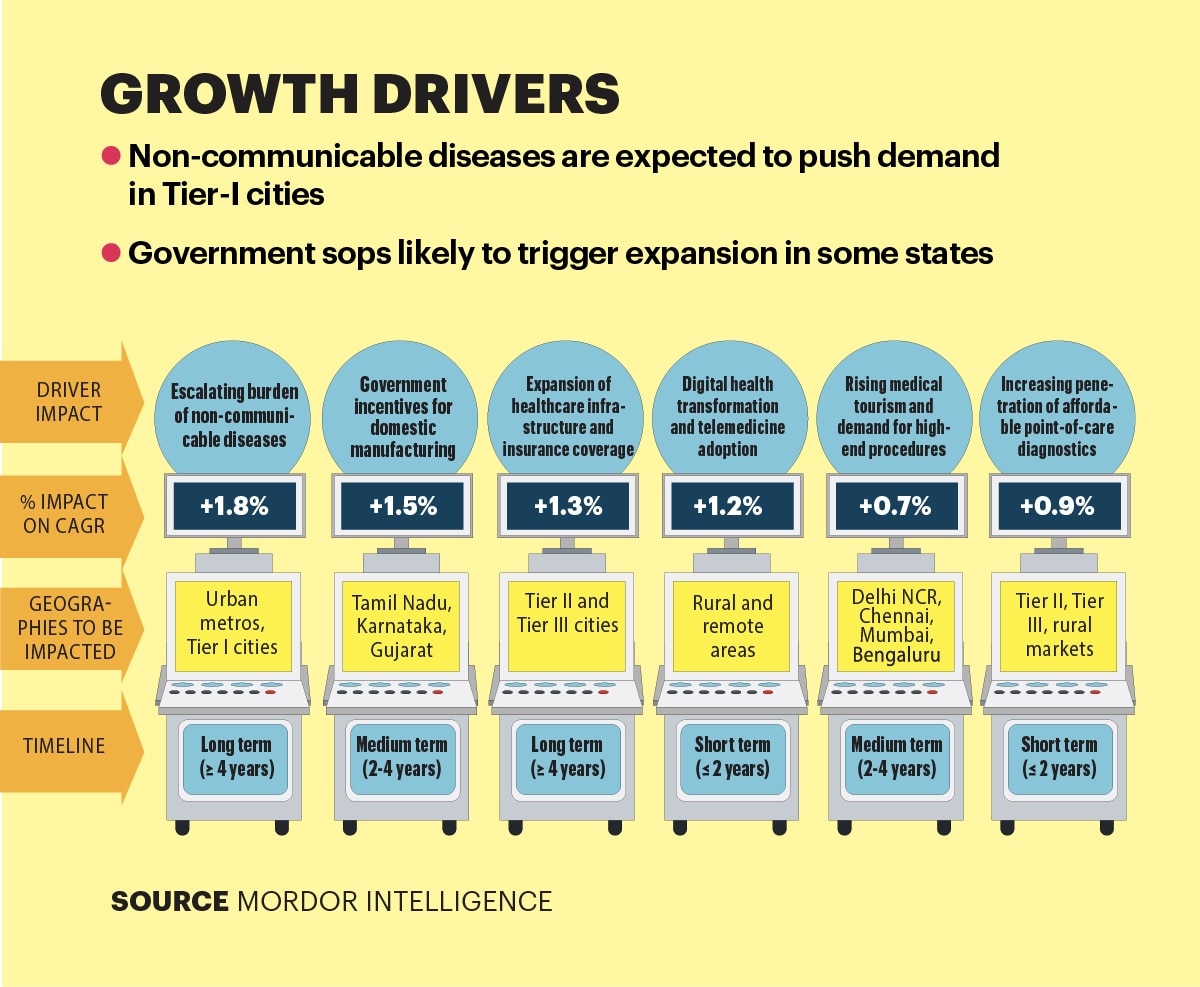
“Manufacturers are therefore pursuing growth in Tier-2 and Tier-3 centres with affordable product lines. Continuous glucose monitors are gaining urban traction, but rural uptake hinges on reimbursement pathways and point-of-care infrastructure,” says market researcher Modor Intelligence.
Deteriorating health
India’s health statistics are alarming. Cardiovascular disease is the biggest killer of people aged 30 years and above. The disease, which affects the heart and blood vessels, is responsible for one out of every three deaths.
India is home to over 101 million diabetics, around 315 million patients of high blood pressure and nearly 254 million people who are obese or unhealthily fat. And chronic kidney disease has put more than 300,000 patients on maintenance dialysis, says the 2024 India Diabetes study of the Indian Council of Medical Research.
The rising burden of non-communicable disease and rapid adoption of digital healthcare products has triggered galloping demand for medical devices like glucose monitors, blood-pressure cuffs, insulin pumps and kidney dialysis machines.
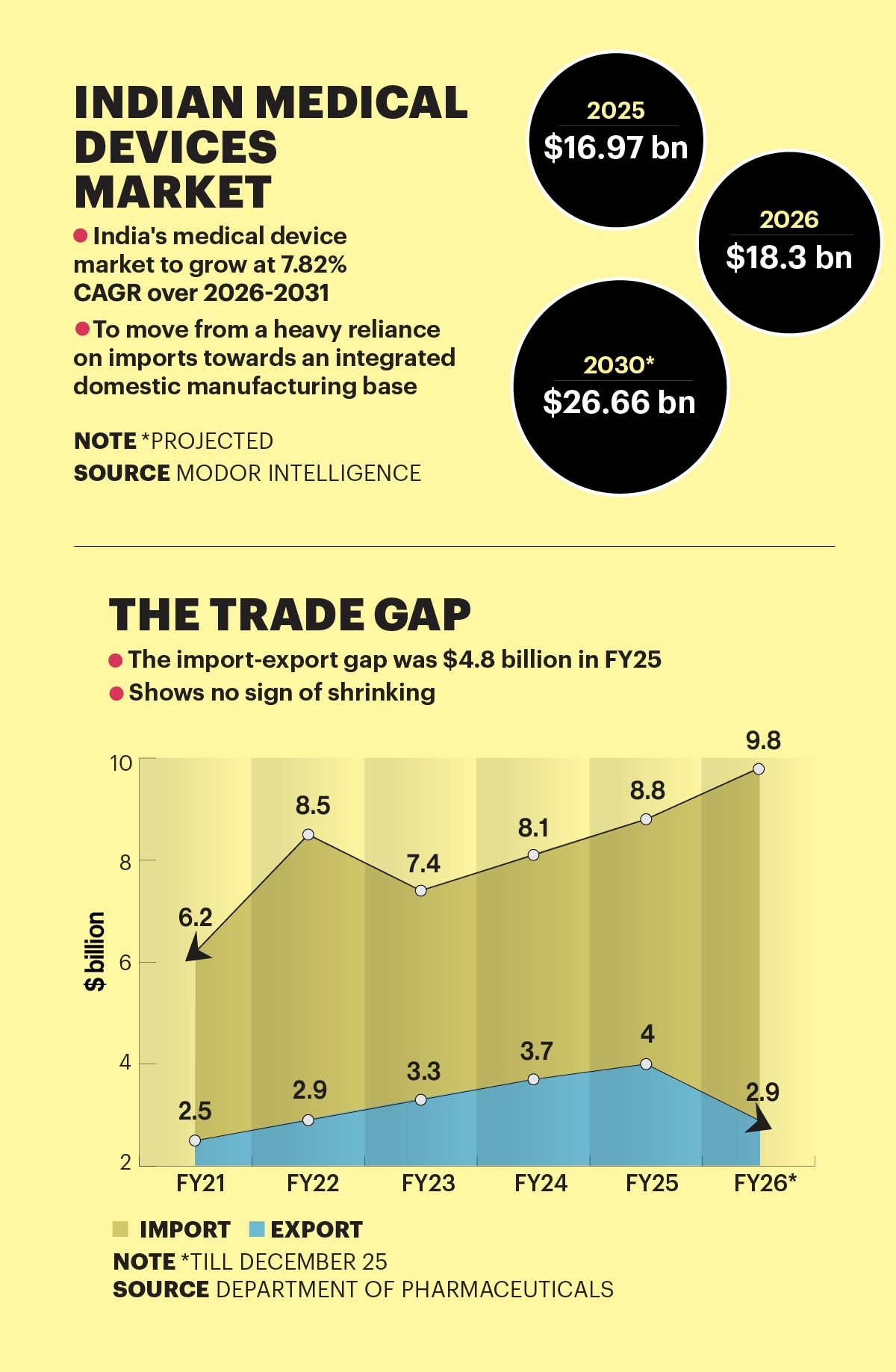
India’s medical devices market is estimated to be $18.3 billion in 2026, up from $16.97 billion last year, and projected to grow to $28.85 billion by 2035.
A large chunk is imported. A parliamentary committee report in March 2026 flagged the import-export gap of $4.8 billion in FY25 ($8.8 billion imports versus $4 billion exports). This exposes the country to geopolitical risks, currency volatility, and global supply chain disruptions, raising costs and delaying procurement.
“With demand rising and the Make in India thrust, there is an opportunity to reduce import dependence and build global competitiveness. But this requires bold reforms, targeted investment and procurement systems that reward quality,” says Rajiv Nath, forum coordinator, Association of Indian Medical Device Industry (AIMED).

The Incentives
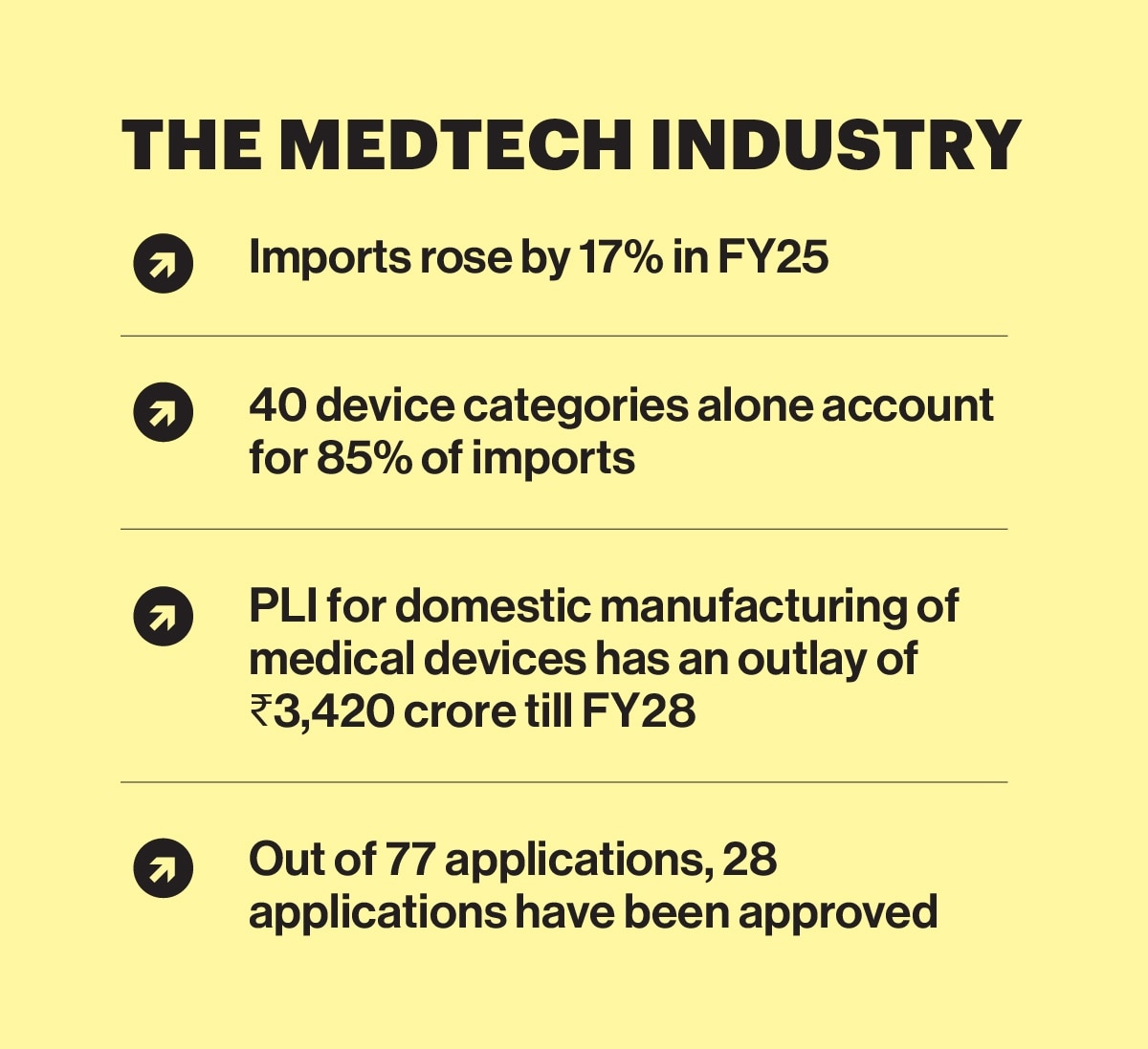
The government has extended the PLI scheme, applicable to new projects, to medical devices. It is operational from FY21 to FY28. Out of 77 applications, 28, have been approved.
“The next phase of growth will require a stronger policy framework focused on innovation, advanced manufacturing and global competitiveness,” says Himanshu Baid, Managing Director of Polymedicure Ltd, a device manufacturer. “A key priority is support for manufacturing and innovation through investments in advanced medical technologies, a stronger component ecosystem and incentives for R&D and technology commercialisation.”
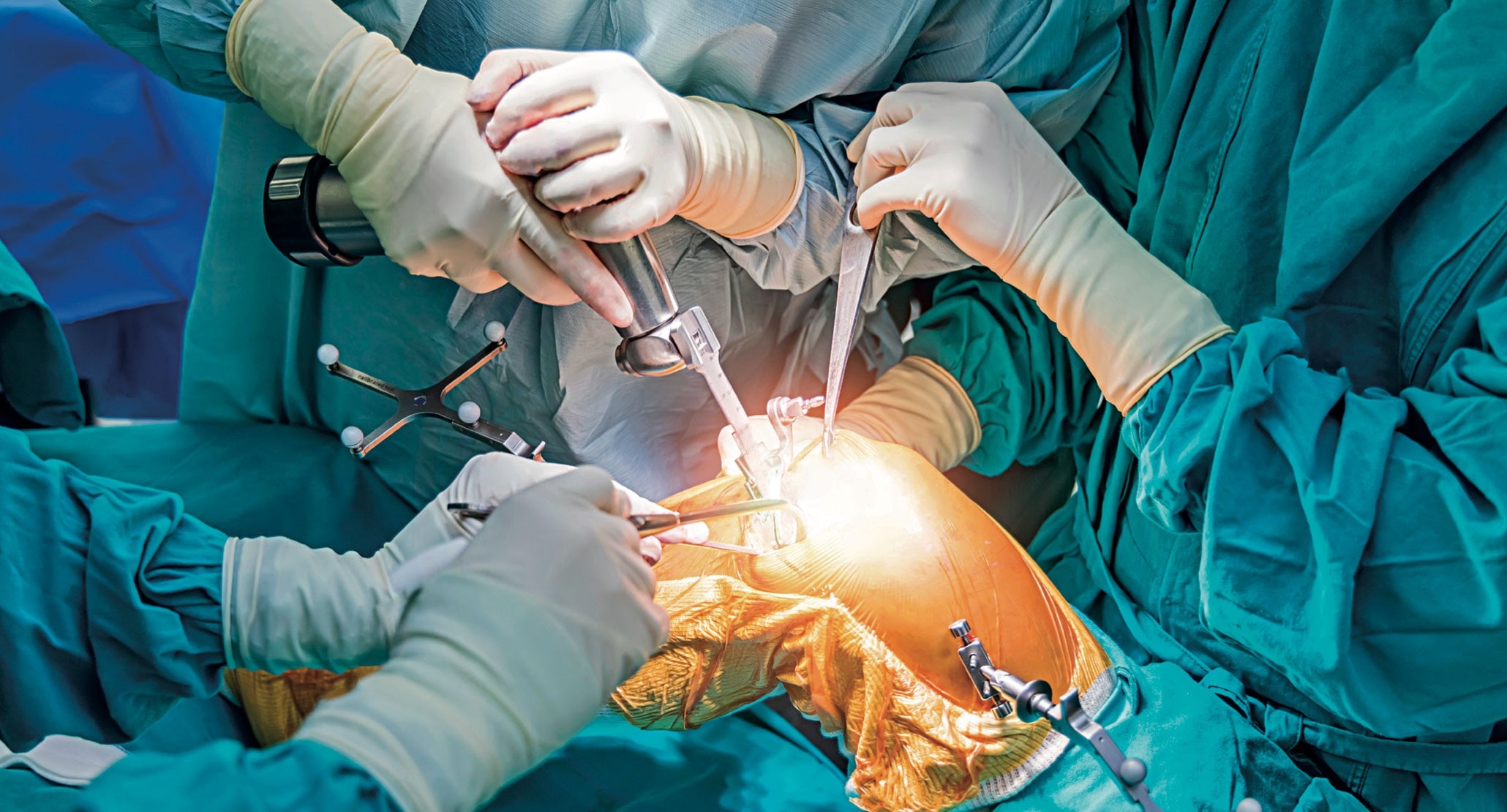
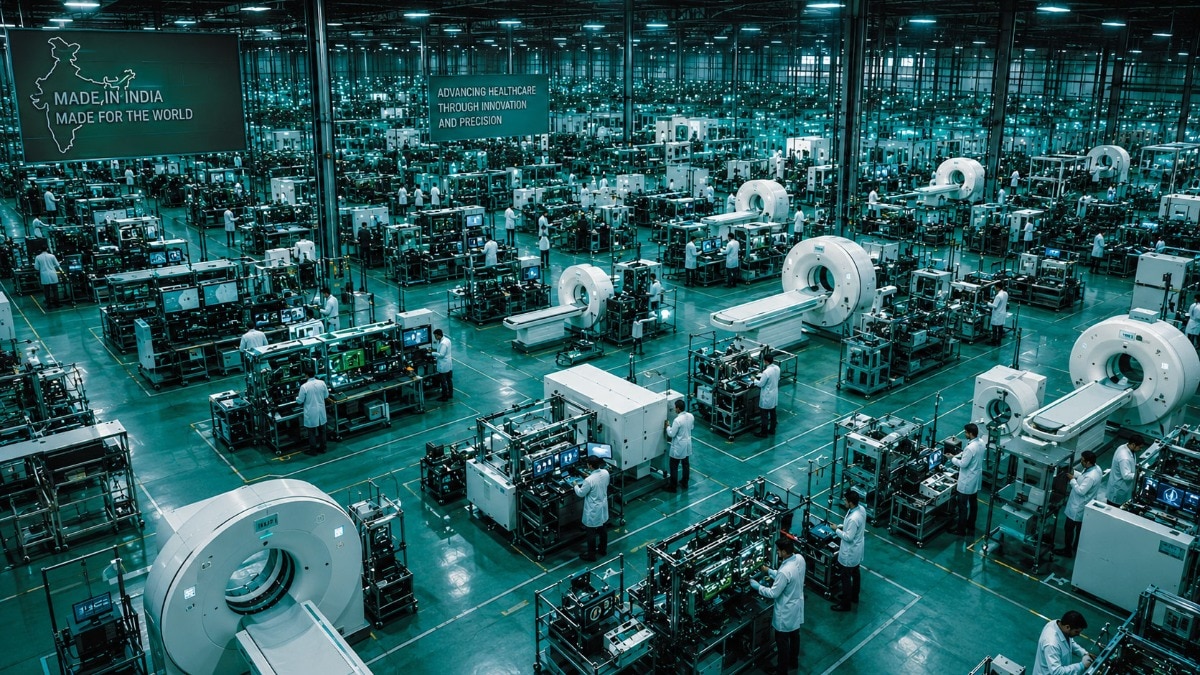
Priority has been given to devices used in cancer treatment (linear accelerators and cobalt machines); imaging devices (MRI and CT scanners, mammography and ultrasound machines); cardiac devices (heart valves, drug-eluting stents and defibrillators); respiratory support devices (ventilators); dialysis machines for kidney care; and orthopaedic implants (knee and hip implants). “Locally made coronary stents, and knee and hip implants are 25-30% affordable without compromising on quality, safety, or clinical outcomes,” says Baid.
The parliamentary committee cited above, however, observed only 30% local content, indicating that a substantial proportion of components is still imported. Nath says the challenge is stark; imports rose 17% and exports stagnated in FY25. “India applies 160 HS codes (Harmonised System codes used in international trade to classify products) to medical devices but 40 HS codes account for 85% of imports,” he says. “Policy must focus on these 40 categories to maximise impact. The steps should include tariff rationalisation, preference to India‑made devices, and clinical validation infrastructure to build trust in indigenous products.”
Baid says while most medical devices attract 5% GST, many inputs and job work services continue to be taxed at 18%, creating an inverted duty structure, blocking working capital. Lowering GST on inputs and job work services to 5% in line with the pharmaceutical sector will improve cost competitiveness and support domestic manufacturing, he says.
The Opportunity
“India’s opportunity is stronger than ever. Global healthcare systems are looking to build resilient and diversified supply chains, while Europe and other regions are exploring alternatives beyond traditional geographies. Indian MedTech companies that combine innovation, manufacturing excellence and global quality standards are well-positioned to benefit,” says Baid.
The industry says the government must encourage clustering to achieve economies of scale, simplify approvals and reduce overlaps between the regulator, the Central Drug Standard Control Organisation, and other agencies.
“A critical challenge lies in private healthcare procurement. Ethical manufacturers often lose out because hospitals prioritise mark‑up margins over patient outcomes. There should be competition based on transparent, value‑based procurement that encourages hospitals to adopt outcome‑linked procurement models, aligning incentives with patient safety and long‑term value,” says Nath.
Multinationals like GE Healthcare, Siemens Healthineers, Royal Philips, Medtronic Inc. and Abbott Laboratories collectively earn 40-45% revenue through technology leadership and hospital partnerships. Domestic firms such as Meril Life Sciences, Trivitron Healthcare, BPL Medical, and Molbio Diagnostics are scaling rapidly via PLI incentives and lower cost structures, says Modor Intelligence.
Structural shifts
Strategic alliances—for example, GE Healthcare with Indian Institute of Technology-Madras on algorithms and Siemens with Apollo Hospitals Enterprise on remote diagnostics—signal a convergence of hardware and software capabilities.
Bharath Sesha, Managing Director of Philips (Indian Subcontinent), says the next decade will be driven by three shifts—workforce shortages and clinician burnout, increasing use of AI and data to improve decision-making, and movement of care to homes and communities.
“Today, one in every two AI-enabled healthcare devices sold by Philips has software developed in India. As healthcare becomes digital, connected and AI-driven, India will continue to shape innovations for both the domestic market and healthcare systems worldwide,” he says. India also has a significant opportunity to move up the value chain through import substitution in high-end medical technologies.
“While the country has strong capabilities in consumables and low and medium technology medical devices, the future lies in developing advanced, innovation-led products such as cardiac implants, interventional devices, orthopaedic implants, robotic-assisted technologies, advanced diagnostics and AI-enabled medical devices,” says Baid.
Enabling conditions
“As Indian companies continue to invest in R&D, technology partnerships and manufacturing capabilities, we expect the industry to transition from being primarily a manufacturer of consumables to becoming a global hub for high-value technologies and innovations,” says Baid.
AIMED says the government should ensure enabling conditions such as capital subsidies and affordable credit for MSMEs and start-ups, infrastructure support through MedTech parks with shared testing and certification facilities, technology transfer partnerships with global leaders and clear regulatory pathways that reduce compliance burden and litigation risk.
For domestic players, international expansion is a key growth driver. Polymedicure says its international business contributed nearly Rs 1,280 crore in FY26, accounting for close to 68% of revenue. “We have set ourselves the ambition of growing this at a CAGR of 20% for the next five years. This growth will be supported by a pipeline of more than 50 products under development, expansion of our manufacturing footprint with two new upcoming facilities, expansion into new markets, stronger direct-market operations, and deeper engagement with healthcare providers globally,” says Baid. Philips has invested about €174 million in India over the past six years across R&D, manufacturing, digital capabilities and innovation infrastructure.
“India is also a key manufacturing hub within Philips’ global network. Our Pune facility exports to more than 100 countries and serves as the global manufacturing site for certain specialised product categories,” says Sesha.
@richajourno


