
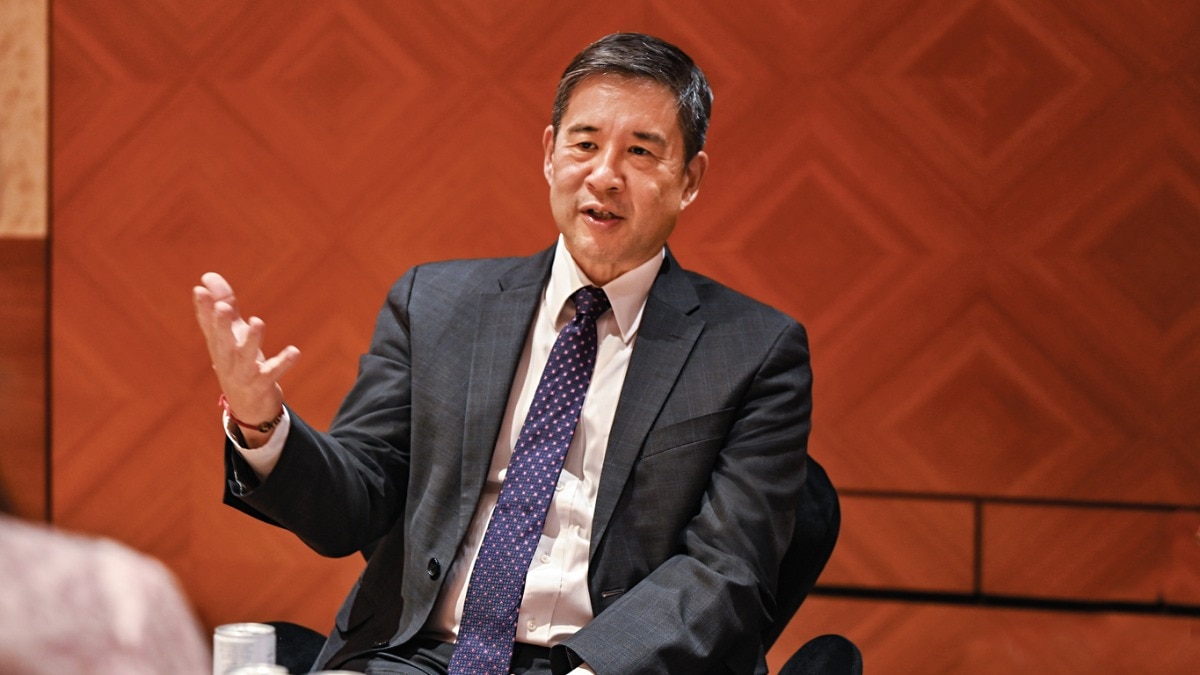
Albert Park, Chief Economist at the Asian Development Bank, says India needs to continue reducing tariffs on intermediate inputs to become more competitive in global value chains. Edited excerpts:
Unemployment, especially youth unemployment, is turning into a global challenge. How are countries expected to address this?
Job creation is related to growth. How do you generate good jobs? In India, it’s also an issue related to formalisation, as almost all employment is informal. A lot of issues such as urbanisation, spurring investment and growth and creating jobs in productive sectors, are still about deregulation, matching skills training to job opportunities, financing, and factor markets like land.
India also has a lot of differences among states in terms of businesses being able to move easily across states and deal with governments with different regulations and priorities. Continued reform will promote better job creation. But it’s a challenge. Now with artificial intelligence (AI), there’s also a lot of concern about how it will affect the demand for different workers. The concern that workers will be displaced is maybe overly fearsome because AI will also promote productivity. Our research on AI exposure suggests that in a lot of developing countries, tasks that workers do are not as easily replaced as is widely kind of discussed.
A key issue for India is urbanisation. The ADB recently approved $1 billion for urban reforms in India. How big a challenge is this for India’s goal to become a developed economy by 2047?
It’s a challenge, of course. Most people live in urban areas, which account for most economic growth and employment. Urban development is overall development. The Indian government has an urban challenge fund to invest in the healthy development of cities.
Flooding and how cities can weather these increasing climate shocks is another resilience agenda for infrastructure and planning that is important. But to promote more private sector investment, which is the key to generating higher rates of economic growth, cities need to be planned in an integrated way. In India, sometimes the governance is a bit siloed across ministries and between central and local governments.
What are the other reforms that India needs to undertake?
To achieve the ambitious growth targets, continued progress in reducing tariffs for intermediate inputs is necessary, so that India can be more competitive in global value chains, increase exports, and attract foreign direct investment. For a lot of firms in India, there are still constraints related to factor markets. For instance, getting access to land is still very problematic, even for small firms. There’s also often difficulty in raising finance for different things and cities.
How are fuel prices and supply shocks playing out for Asian economies?
The longer the Strait of Hormuz remains closed, the bigger the impact on the region. In July this year, we downgraded our growth outlook for Asia Pacific to 4.9% this year from the April outlook that predicted 5.1% growth for the region. Right now, we are still holding to that, though the region has been resilient. Although the conflict has created inflationary pressures in a lot of countries, some countries, including India, have tried to protect their consumers as well as farmers.
With the conflict in West Asia and US tariff action continuing, what is your view on the global economy? El Niño is also turning into a big risk.
This year we have been spending quite a lot of time trying to understand the impact of the West Asia crisis on Asia. While US tariffs were a big issue last year, they are a little less prominent now. It is one of the larger shocks to climate and agriculture and will also affect India. But we are somewhat optimistic that the Indian economy has enough drivers of growth and this will not prevent India from achieving a pretty good rate of growth this year. Our forecast for India is GDP growth of 6.6% in FY27 and 7.3% in FY28.
@surabhi_prasad













