
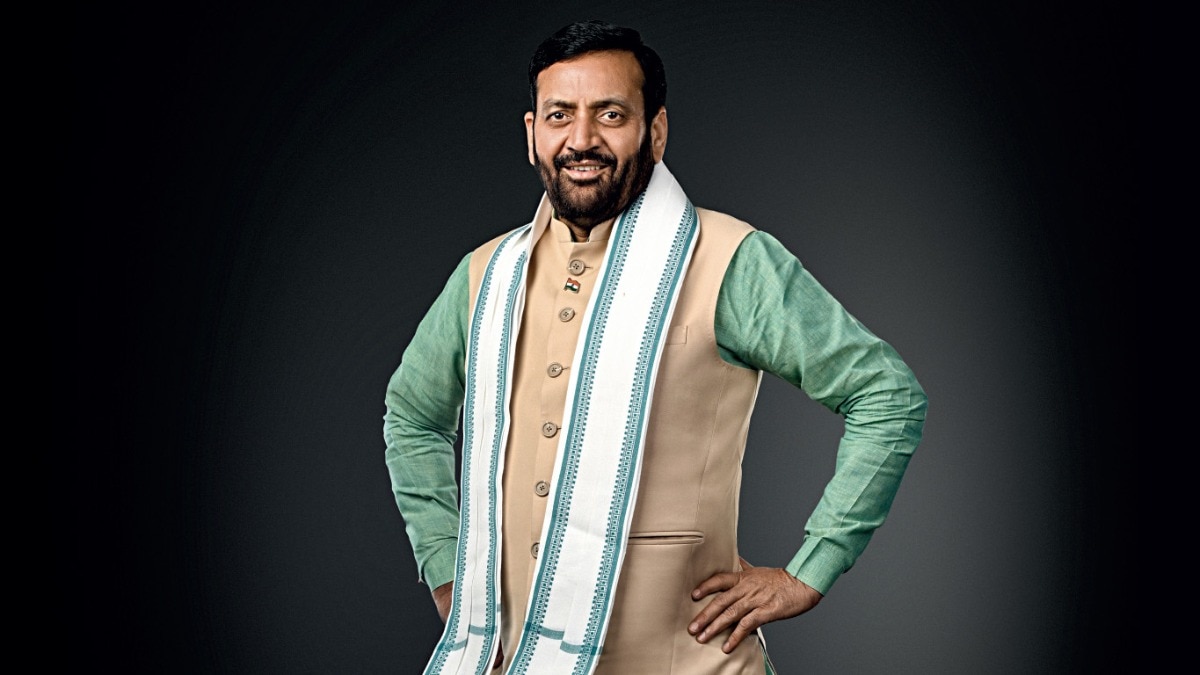
Haryana Chief Minister Nayab Singh Saini recently unveiled the ambitious Make in Haryana Industrial Policy 2026, positioning the state as a leading global investment destination aiming at `5 lakh crore investment and creation of one million jobs.
Saini says Haryana has established itself among the country's leading manufacturing economies on the strength of entrepreneurship, and the state government is continuously working to take the state towards the next phase of industrial development. “Our message to investors is very clear; Haryana offers connectivity, infrastructure, skilled manpower, a strong industrial ecosystem and a government committed to ease of doing business,” he tells Business Today. Edited excerpts.
Q: What is your roadmap for making Haryana a manufacturing hub? A: Our approach is to create world-class industrial infrastructure before the investment arrives. Haryana State Industrial and Infrastructure Development Corporation Ltd (HSIIDC) is developing industrial townships and clusters across the state. Two major examples are Kharkhoda and Sohna. The Make in Haryana Industrial Policy 2026 envisages 10 additional IMTs (Industrial Model Townships) over the policy period.
The policy seeks to strengthen Haryana’s position as a preferred investment destination by promoting manufacturing competitiveness, attracting large-scale investments, fostering innovation and research, supporting exports, and generating employment opportunities.
The focus will be on ready-to-use industrial land and plug-and-play infrastructure, reliable power, water and waste management systems, better road, rail and logistics connectivity, integrated industrial townships, common facilities for MSME clusters and digital infrastructure for modern industries. We want industrial infrastructure to extend beyond traditional NCR locations and become an engine of balanced development across Haryana.
Haryana has always been one of India’s leading manufacturing states, particularly in automobiles and auto components. Our next objective is not merely to expand manufacturing, but to move up the value chain—from being a manufacturing hub to becoming a high-value manufacturing and technology hub. Maruti Suzuki is an excellent example. Its expansion at IMT Kharkhoda, along with the emerging supplier ecosystem, demonstrates how one large investment can create opportunities for hundreds of ancillary and MSME units. The Maruti project at Kharkhoda is expected to catalyse a substantial Tier-1 and Tier-2 supply chain. Our approach is, therefore, to attract anchor investments and simultaneously develop the entire ecosystem around them—suppliers, logistics, skilled manpower, R&D and technology.
Q: What are the kind of incentives and policies offered for small and medium clusters?
A: MSMEs are the backbone of Haryana’s industrial economy, and our objective is to help them start, survive, scale and become globally competitive. The state has a comprehensive framework covering access to finance, infrastructure, technology and markets. Under the existing policy framework, incentives include interest subsidies, investment/SGST-linked incentives, employment-generation support, stamp-duty and electricity-duty benefits, depending on the enterprise and location.
We are also strengthening cluster-based development. Haryana has identified clusters ranging from auto components and engineering to textiles, food processing and electronics, while the Programme to Accelerate Development for MSME Advancement (PADMA) launched this year provides support for capital investment, cluster infrastructure, branding, marketing and exports. Our philosophy is simple—an MSME should not remain small because of lack of access to finance, technology, markets or infrastructure.
We have launched the Haryana Progressive MSME and Export Promotion Policy 2026 to attract over `55,000 crore in manufacturing investment, create over five lakh new jobs and double the state’s exports by 2031. The policy has been prepared with ‘Make in India’ and ‘Make in Haryana’ at its core and introduces 60 transformative initiatives designed to strengthen the sector and enhance Haryana’s export competitiveness.
Q: Haryana is a key auto manufacturing hub. What is the roadmap for going beyond NCR?
A: This is one of our major priorities. Haryana’s industrial growth cannot remain concentrated around Gurugram, Faridabad and the NCR. We are pursuing a balanced regional industrialisation model, using the strengths of different parts of the state.
Look at different districts—Ambala for engineering and electronics, Panipat for textiles and home furnishings, Karnal for agro-processing and food-related industries, Hisar for textiles and engineering, Rohtak and Rewari for engineering and auto-related industries, Sirsa and Fatehabad for agriculture and allied manufacturing and Kurukshetra and Kaithal for agro-based industries
The state has already identified cluster projects across these regions. Our aim is to create multiple industrial growth centres, so that investment, employment and economic opportunities reach every region of Haryana.
Q: What are the new manufacturing sectors that the state is looking at?
A: The next phase of Haryana’s industrial growth will be driven by sunrise sectors and advanced manufacturing. Our identified thrust sectors already include electronics and IT/ITeS, defence and aerospace, renewable energy and solar, pharmaceuticals and chemicals, besides our traditional strengths in automobiles, engineering, textiles and food processing.
We are particularly looking at areas such as electronics and semiconductor-linked manufacturing, electric vehicles and advanced batteries, renewable energy and clean-tech manufacturing, defence and aerospace, pharmaceuticals and medical technology, Industry 4.0, robotics and automation and AVGC-XR and technology-enabled services. AVGC-XR technology encompasses the integration of Animation, Visual Effects, Gaming, Comics, and Extended Reality into a single ecosystem.
For example, Haryana’s Electronics System Design and Manufacturing Policy 2026 provides additional support to electronics manufacturing, including support linked to the government of India’s PLI and semiconductor programmes. So, our vision is clear, that Haryana should not only manufacture today’s products; it should manufacture the products that India and the world will need tomorrow.
Q: How do you plan to get investments and global investors?
A: Our message to investors is very clear. Haryana offers connectivity, infrastructure, skilled manpower, a strong industrial ecosystem and a government committed to ease of doing business. We are moving from a traditional approval-oriented approach to a facilitation-oriented approach. Haryana’s enterprise-promotion framework provides mechanisms for time-bound clearances, while recent reforms have further simplified approvals and reduced regulatory burdens.
We also believe that investors today look beyond incentives. They want a mix of policy stability, infrastructure, skilled manpower, speed of approvals, quality of life and dependable government. That is what we are building. And our invitation is not limited to Indian companies. We want to attract global companies looking at India as part of their global supply chains. Our message is: Come to Haryana, Make in Haryana, and from Haryana, Make for India and the World.
Q: What are the opportunities for youth in Haryana?
A: For us, industrialisation is ultimately about employment and better livelihoods for Haryana’s youth. We are, therefore, moving from generic skill development towards industry-linked, demand-driven skilling. Haryana Skill Development Mission is already working with industry, and the state’s policy framework specifically envisages cluster-specific skill centres and programmes in areas such as EVs, ESDM, logistics and Industry 4.0, including AI, data analytics, IoT, robotics and cloud technologies. We want our ITIs, universities, Shri Vishwakarma Skill University and industry to work as one ecosystem. Our focus will be on three things – skill, certification and placement. We are also encouraging industry participation in training and placement; the state skilling system has provisions for industry partners to train candidates with a placement requirement.
@richajourno













