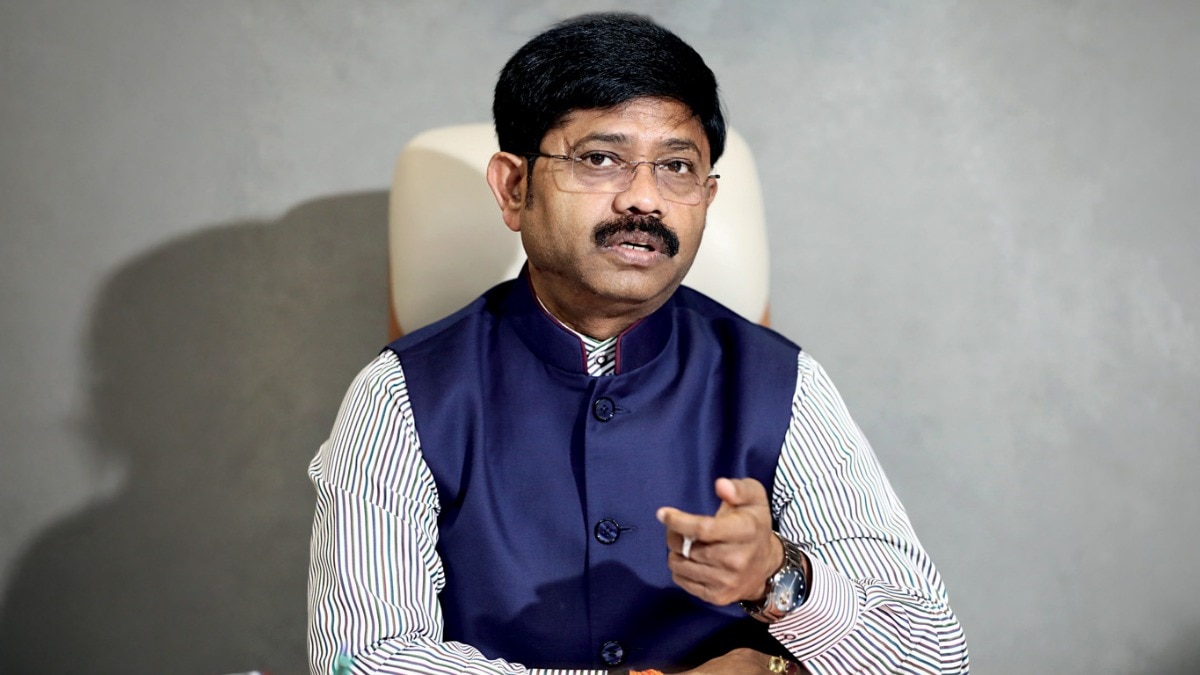
Nand Gopal Gupta, the industrial development, export promotion, NRI and investment promotion minister of Uttar Pradesh (UP), has his agenda set as the state pursues its ambitious goal of becoming a $1-trillion economy by 2029-30. A senior minister in the government, Gupta has been closely associated with efforts to position the state as a major manufacturing, logistics and investment destination.
UP was the fastest-growing major state in number of factories and total factory workers in the five year period from FY19 to FY24.
In an interview with Business Today, he discusses how the state government is overseeing policies to improve ease of doing business, attract capital, and accelerate industrial infrastructure development. Edited excerpts:
What kind of trade promotion, business activity, and industrial corridors have come up in the state? What changes are you seeing in business?
UP has emerged as one of the best industrial destinations due to better law and order and ease of doing business. It has attracted top companies and MNCs.
The state’s economy has grown from Rs 13.30 lakh crore in 2016 to Rs 30.80 lakh crore and created job opportunities for more than 37,00,000 individuals. The Prime Minister recently inaugurated the Ganga Expressway and India’s largest airport at Jewar. We have a rail network of about 16,000 km. UP is the first state in the country with 16 domestic and five international airports. We have also built the Varanasi-Haldia waterway, which we plan to extend to Ayodhya via the Saryu and Ganga rivers, up to Prayagraj.
You mentioned ease of doing business and several industrial corridors, including a defence corridor. Can you tell us about the policy and planning behind these?
Along our expressways, we are creating large land banks and have allotted land to many companies, many of which have already started operations. For example, BrahMos. In Kanpur, there is an Adani facility where every bullet carries a barcode, so that if there is a terror incident, we can trace where and when it was made and its full movement. There is also Bharat Dynamics in Jhansi.
And here is something you will be pleased to hear — after 50 years, we are building something bigger than Noida: The Bundelkhand Industrial Development Authority, spread across roughly 60,000 acres between Kanpur and Jhansi, with Jhansi as the main district. It’s such a large industrial area that several districts of Madhya Pradesh are being connected to it as well.
What kind of investment can we expect to see there?
In Lalitpur, we have built a Pharma Park with companies like Sun Pharma, Ranbaxy, and Mankind. We held a conclave for pharma stakeholders—Indian and international—who are keen to set up facilities there. We’re building world-class infrastructure. AB Mauri has started production in Pilibhit. Major packaging companies—the kind that make cans for Coke, cold drinks, or milk-based drinks—are also setting up plants in UP.
We have created an umbrella Industrial Development policy with more than 32 sector-specific policies under it—for tourism, textiles, and more—so that companies can pick whichever sector suits them.
Invest UP is attracting a lot of investments into these industrial corridors. States across India are competing to attract the top corporations in the world. Where does UP stand amid this competition?
Investment is coming through Invest UP, and honestly, there is healthy competition among Indian states over which one lands the big global brands. That competition is good as it pushes everyone towards better quality and deals. When CM Yogi’s government formed in 2022, we set up nine teams for the Global Investors Summit—a senior minister with a few junior ministers and officials in each—and they travelled to countries like England, France, Sweden, and Germany. We ran roadshows in 17 major countries and 21 major cities worldwide, in 10 major Indian metros, and in all 75 districts of Uttar Pradesh.
Where does the state stand on the $1-trillion economy by 2029-30 target?
This was never just a slogan—we have worked towards it, engaging firms like Deloitte, EY, and KPMG to identify bottlenecks and blockages. For instance, in Ease of Doing Business rankings, we were 14th; we have jumped to 2nd. In areas like business entry, labour regulation, and land administration, we are now recognised as a top achiever.
Under ‘Deregulation Phase One,’ we brought in the Uttar Pradesh Sugam Vyapar Sanshodhan Adhiniyam, 2025 (Ease of Doing Business Amendment Act), to reduce compliance burdens. For example, earlier, if a factory boiler burst, the usual response was to send someone to jail. We have moved towards decriminalisation instead, converting such situations into penalties rather than criminal cases. Previous governments seemed more focused on finding ways to jail industrialists or squeeze money out of them. We have pushed firmly in the opposite direction.
We identified the roadblocks and worked to clear them so we can hit our targets. We are constantly asking: where do we need to be by 2030, by 2029, by 2028, by 2027? We just came out of a review meeting where we found we are at 78-80% of a particular target, so the approach is: push the remainder to 100%, and if we hit 90% in one month, the next month’s target should be 110%. I would say we are moving firmly and quickly towards a $1-trillion economy.
What is the roadmap for attracting companies that are in the business of AI, semiconductors and electronics manufacturing?
About 50-60% of India’s mobile phone production happens in UP. It’s a huge electronics hub, home to companies like Haier, Amber, Samsung, Lava, and Vivo. In emerging sectors—semiconductors, data centres, defence manufacturing, global capability centres (GCCs), and logistics—we are recognised as a leading state. Foxconn has made a major investment here.
There’s a large UP diaspora abroad, in places like Mauritius. Are they looking to return, given how much UP has changed?
During Covid, many people walked back to their villages on foot. We quarantined them, housed them, fed them, and gave them money before they moved on. We did skill-mapping, and as new factories and industries came up, we supplied them as manpower accordingly.
Our NRI department also helps people who want to work abroad, matching their skills and language training to the destination. For instance, if someone wants to go to Japan, we train them in Japanese language first. Our labour department is driving this. Law and order used to be the biggest problem. We have cracked down on criminals. As a result, people’s trust and confidence in UP has grown, and that is drawing in industry.
As Industries Minister, what investment do you expect over the next 5-10 years?
At our Global Investors Summit, we received MoUs worth about Rs 33.5 lakh crore. That figure has since crossed Rs 50 lakh crore. Signing an MoU isn’t a legal commitment; there’s no penalty if a project does not go ahead. But even so, a substantial share of that Rs 33.5 lakh crore has converted into real, on-the-ground projects.
@eyeshwaryapatil













