
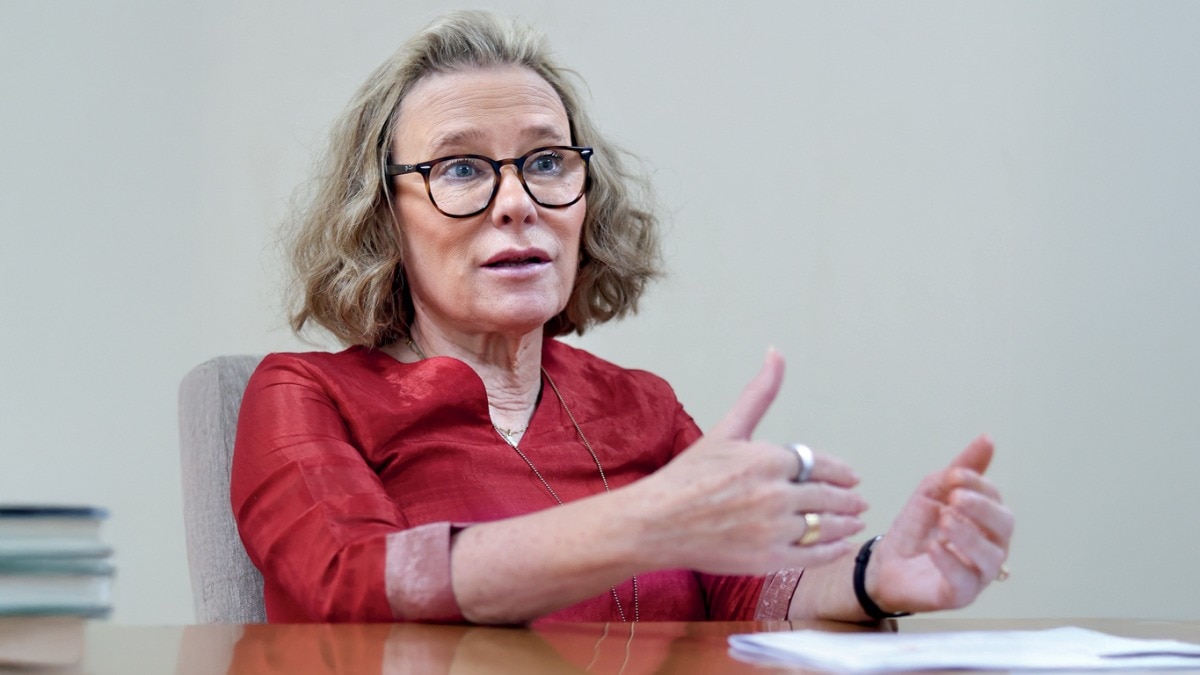
Looking comfortable in a kurta, Belen Garijo, Chair–Executive Board and Chief Executive Officer of the German Science and Technology Giant Merck Group, smiles whenever India is mentioned. At the company’s office in Bengaluru, the global chief of the €21-billion business that is present in life science, healthcare and electronics, thinks long term and speaks eloquently of Merck’s history and its thirteenth generation in charge. Garijo has been at Merck for nearly 15 years now and moved into her current role in 2021.
Under her, the company is betting big on growth areas in the country, as seen by its recently signed memorandum of understanding with Tata Electronics to strengthen its semiconductor capabilities here. As part of the deal, Merck will offer products and services to Tata Electronics for its upcoming semiconductor fabrication unit in Dholera in Gujarat. Garijo says more such deals are in the pipeline. Edited excerpts from an interview with BT’s Krishna Gopalan:
Q: What makes India a strategic market for the Merck Group?
A: India is the third-largest by way of workforce for us, after the US and China. We have the talent and capabilities to manufacture for our operations globally and through our IT centre in India, which provides data and automation capabilities worldwide.
Life science and healthcare have been big in India. The agreement with the Tata Group is an indication of our interest in a big growth opportunity here.
Q: To your mind, what stands out about India and makes it unique?
A: First, the operational excellence that we gain when working here makes it extremely attractive for certain capabilities that we cannot have outside India. It is a big challenge to recruit talented individuals in other countries. Now, we come to India looking for talent, competence and super-specialisation.
India is a long-term democracy and very stable politically. Obviously, every country goes through bumpy times, but we see India as a predictable country, and we have very good relations with the government. We see the willingness of the government to attract international investment.
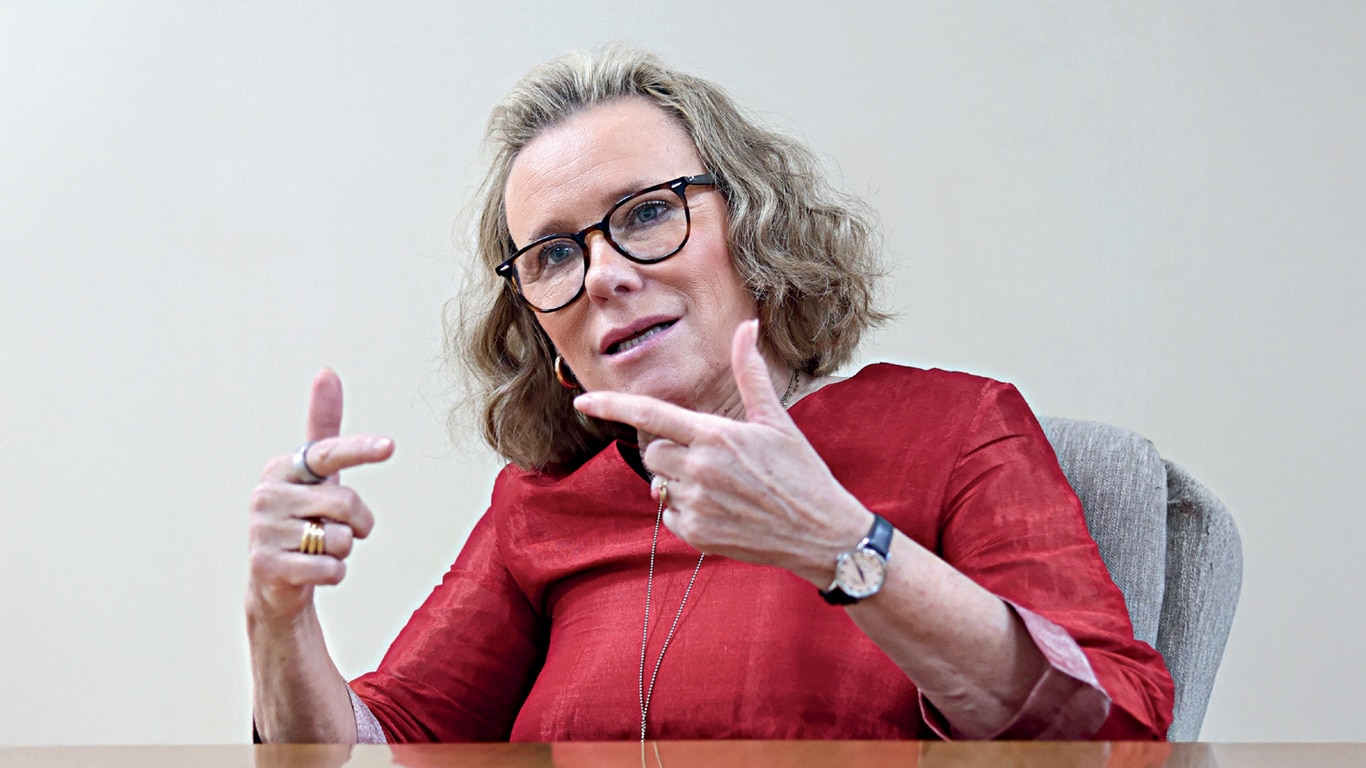
Last, but not least, our position in India will make us a preferred partner for major companies. Our agreement with the Tata Group is an example, but we have some more in the pipeline.
Q: You have taken a long-term view of India…
Long-term thinking is part of our culture. We entered China through our electronics business and, today, have a big footprint there. We entered healthcare from scratch and shifted the focus of that portfolio, which at the time was with essential medicines for China. We built a billion-dollar business in just five years.
Now, China has become a developed market driven by innovation. We anticipate something similar in India, and as we speak, we have a team working on a long-term strategy.
Q: Your letter to Merck’s shareholders for 2024 spoke about artificial intelligence (AI) as a transformative force. Tell us a little more about that.
A: We have come a long way since we started our digital transformation. When GPT (generative pretrained transformers, or a family of large language models) was commercialised, our team moved quickly. We created our own GPT, available to every employee, who can operate through a mobile app.
We use AI in multiple ways. We use it to build our smart factories. We have automated these sites to make them much more efficient, bring products faster to market and increase quality and reliability of manufacturing operations. AI comes into play in many of our HR processes to make the right decisions on people with the right level of information. Plus, it is also used to make our research and development (R&D) more productive based on data.
We have a framework for AI to create additional growth, generate innovation, and make us work more efficiently. We use it for customer insights, to get sharper with our marketing strategy, and understand customer expectations.
I look at AI as a revolution. I have spent a lot of time training myself in AI.
Q: Does that mean Merck is thinking like a technology company?
A: We are a global science and tech company. Both are interrelated and, at this point, technology is being powered by science. When I say we are using AI to improve drug discovery, that is about science and tech. That means both have converged quickly. We also use AI to predict the success of some clinical trials. I believe the revolution is already underway.
Equally, we need to be aware of the potential risks. Obviously, like other companies, there is cyber security risk. We must be mindful of how to use AI to benefit us as a company. Besides, there is a need to protect our systems to minimise liabilities towards employees, the company and our customers.
Q: Given your presence in electronics, does it help in understanding the AI story better?
A: Absolutely. I take pride in the fact that Merck is tapping into major macro trends driving the world.
Take bio-electronics (merging biology and electronics), where we are extremely well-positioned to tap into the new frontier of innovation, once bio-convergence becomes a tangible reality. That can create future value for our companies.
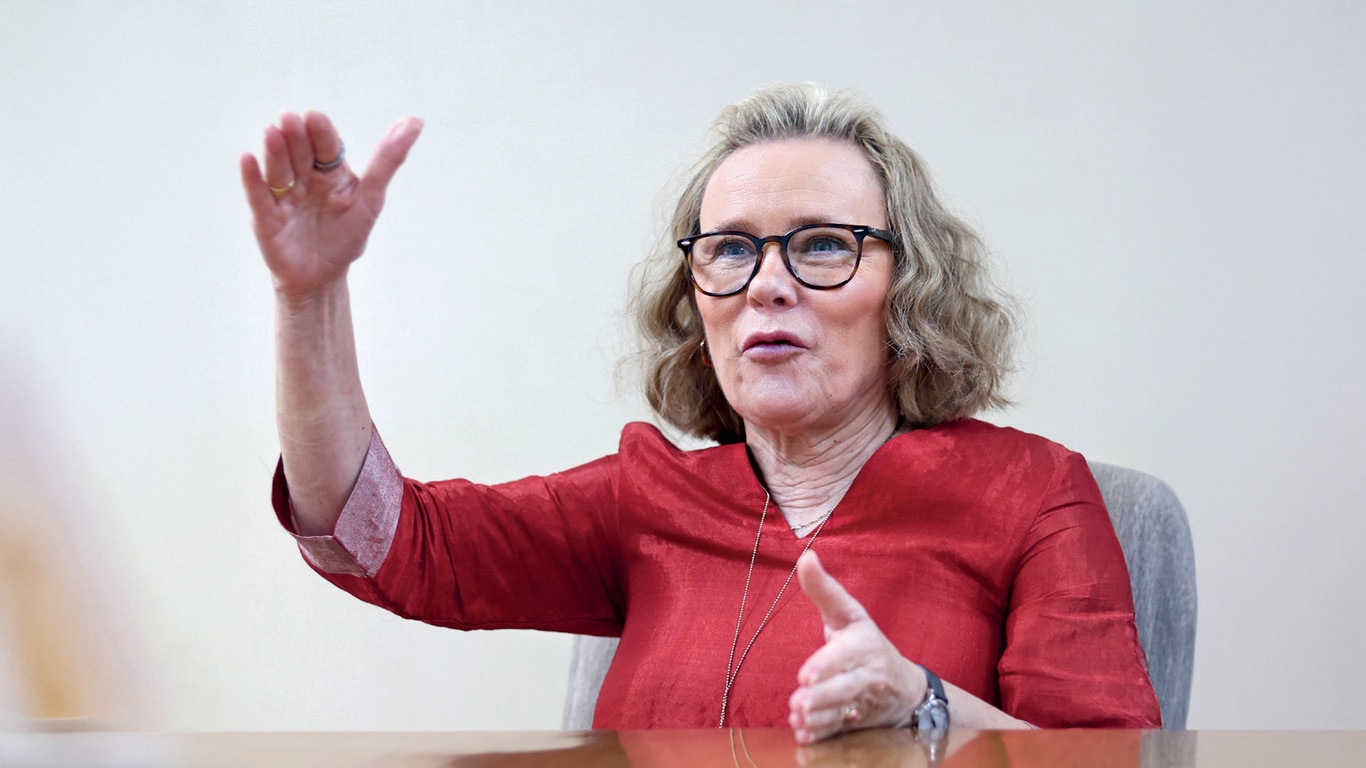
Q: Future planning is more critical now than it ever was. How do you go about that?
A: As a family-owned company, we operate on a long-term basis. However, we also have public shareholders, who evaluate the company every quarter. We have the best of both worlds. One is the long-term thinking of our ownership structure, where the Merck family still owns 70% of the company; we are now in the 13th generation. Then, there are financial markets and investors, who expect us to generate value in the short term.
During Covid, we had to deal with the fire of the day, the crisis of the week, and make sure our supply chain stayed resilient. We did not lose sight of potential mergers and acquisitions (M&As) that would help us fill technology gaps or accelerate growth and innovation. The M&A environment has changed since. What we are looking at now is not only practical innovation but also acquiring innovation through M&As.
For example, Unity-SC, gets us into the metrology, which we believe is the next wave of growth or HUB Organoids, that allows us to reduce the use of animals for basic research, or Mirus Bio, for offerings in process solutions for cell and gene therapy.
I'm very proud of Springworks (a $3.4-billion acquisition that Merck completed in July 2025).
Q: How have you gotten better with M&As over time?
A: In the past 15 years, Merck has grown at a compound annual growth rate of 8%—5% of that is organic and the rest inorganic. The competitive landscape in the sectors where we operate is intense. In life science, we continue to be in a podium position—far away from the other two players, but well-placed to compete in today’s environment.
Healthcare is a tremendous and unique business. Half its portfolio lies in general medicine, cardiometabolic, and fertility franchises.
We built the business from scratch in China, and today, the Asia-Pacific is our main source of revenue. We are strong in the US in life science and electronics, which came largely from inorganic moves.
As a company, we are now at an inflection point, where scale is no longer a problem, but we need innovation. We need to rejuvenate our portfolio and participate in the next technology frontier. The company has gone through a period in which our organic growth was solid enough for us not to be in a hurry.
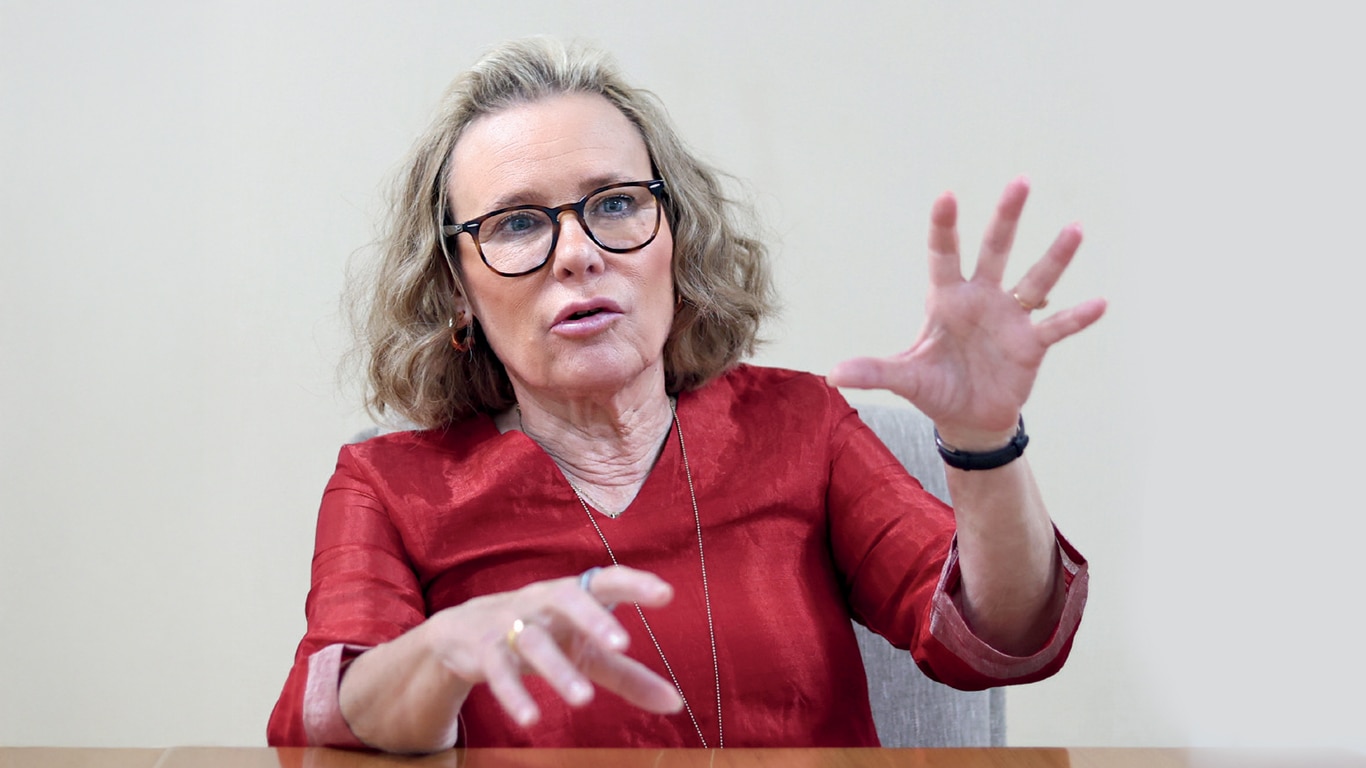
In life science, the multiples became absolutely outrageous during the pandemic. Now, the value has come down. If the business case does not work, we will be patient. If you look at the growth that we have generated, why should we be in a hurry? That’s our philosophy. The next frontier is continue tapping into new technologies and build the business of the next decade.
We are also diversifying our sources of innovation. Traditionally, we have acquired innovation from North America and the US, which we will continue to do. But now we have executed several licences in China. India is now becoming an innovation-led country, and we are very closely looking at what is emerging here, to make sure we can position ourselves for the growth over the next few years.
Q: Is it important for a company like yours to be little conservative in today’s volatile global environment?
A: I wouldn’t call us conservative. I think we are disciplined and have taken risks over the years. Those are clearly paying off.
The family ownership has allowed us the space to be creative and bold. In the current environment, we are prudent and not at all risk-averse. As you have seen, we continue to not only have a very consistent delivery of organic, profitable growth, but we also tap into new technologies that will give growth.
@krishnagopalan









