
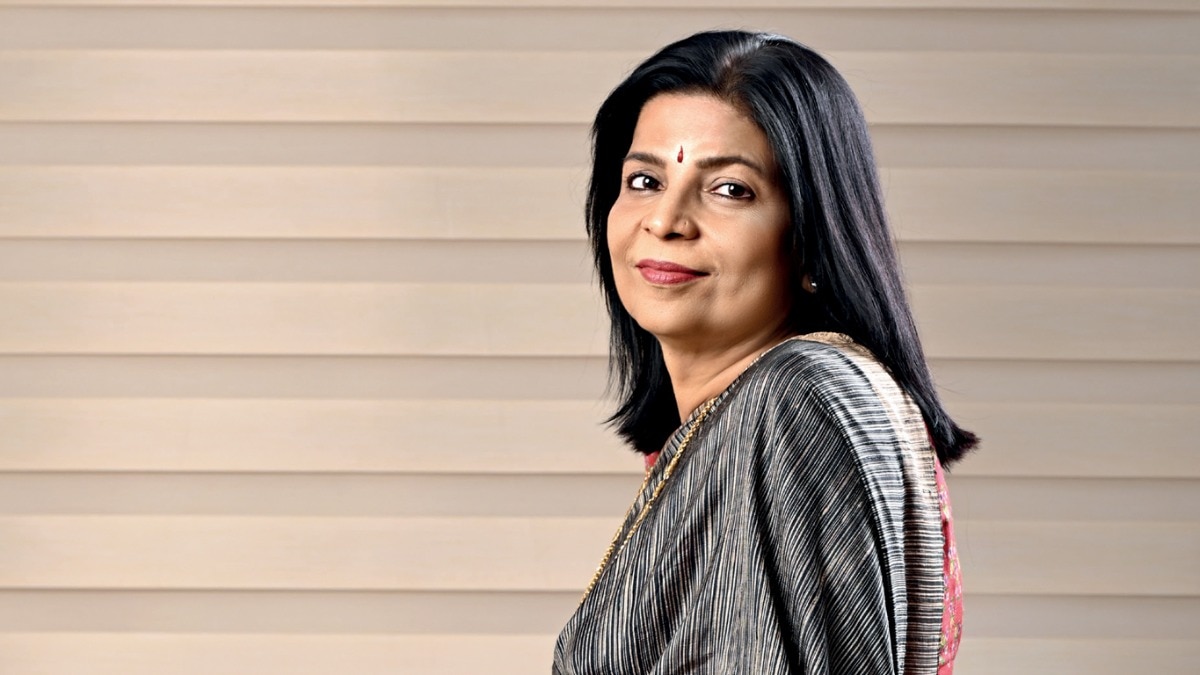
Balancing the demands of an established pharmaceutical business with the pursuit of new opportunities in healthcare defines Madhurima Singh’s approach to leadership.
As Executive Director of Alkem Laboratories, she is focused on building new capabilities and aligning teams to expand the company’s ambitions beyond its core business, while ensuring its legacy remains a foundation for growth rather than a constraint.
That means investing in new capabilities, bringing different teams together, and ensuring that the company’s legacy does not limit its ambitions. “A strong legacy should be a foundation, never a ceiling,” she says.
Last year, Alkem expanded its presence in medical technology through the acquisition of a majority stake in Switzerland-headquartered Occlutech, which specialises in minimally invasive cardiovascular devices. Its biotechnology arm, Enzene, has expanded its international presence with a contract development and manufacturing facility in the US. The company has also created a dedicated subsidiary for its trade generics business.
For Singh, these moves are part of a broader effort to build on the pharmaceutical business while developing expertise in other areas.
“The defining decision of the year was to widen Alkem’s field of play: to build new engines of growth beyond our established strengths, without loosening our grip on the core pharmaceutical business,” she says.
The challenge, she says, is to identify opportunities that fit the company’s strengths and can create lasting value, rather than expand simply for the sake of it. Her approach is to assess whether Alkem has a competitive advantage, can develop capabilities that others cannot easily replicate, and is entering a market with long-term relevance.
“Every new initiative must answer three questions: Do we have a genuine right to win? Can we build a capability that others cannot easily replicate? And will it still matter in 10 years?” she says.
The pharmaceutical business remains central to this strategy. Alkem reported consolidated revenue of Rs14,712 crore in FY26, up 13.5% year-on-year, while EBITDA (earnings before interest, taxes, depreciation, and amortisation) rose 19.6% to Rs 3,005 crore. Profit after tax attributable to shareholders stood at approximately Rs 2,105 crore. Revenue from India grew 9.7%, while international revenue increased 22.5%.
Managing several priorities at once has also tested Singh’s approach to decision-making. Different teams can look at the same proposal from very different perspectives. “The biggest challenge was managing complexity without allowing it to slow us down,” she says. Her response has been to encourage discussion, clarify priorities and give teams the confidence to make decisions. She also distinguishes between decisions that can be reversed and those that require more time and scrutiny.
For Singh, execution depends on how well people across an organisation work together. A strategy may be sound, but it can falter if teams are not aligned on what needs to be done or who is responsible for delivering it.
“A good strategy without alignment is a well-drawn map handed to people walking in different directions,” she says. This emphasis on collaboration has influenced how she leads. Earlier in her career, Singh saw leadership largely as the ability to provide direction, solve problems and drive decisions. With experience, she has come to place greater value on listening, questioning assumptions and encouraging people to arrive at solutions themselves.
Singh believes that the measure of leaderships is the ability to help others make better ones.
@neetu_csharma













