












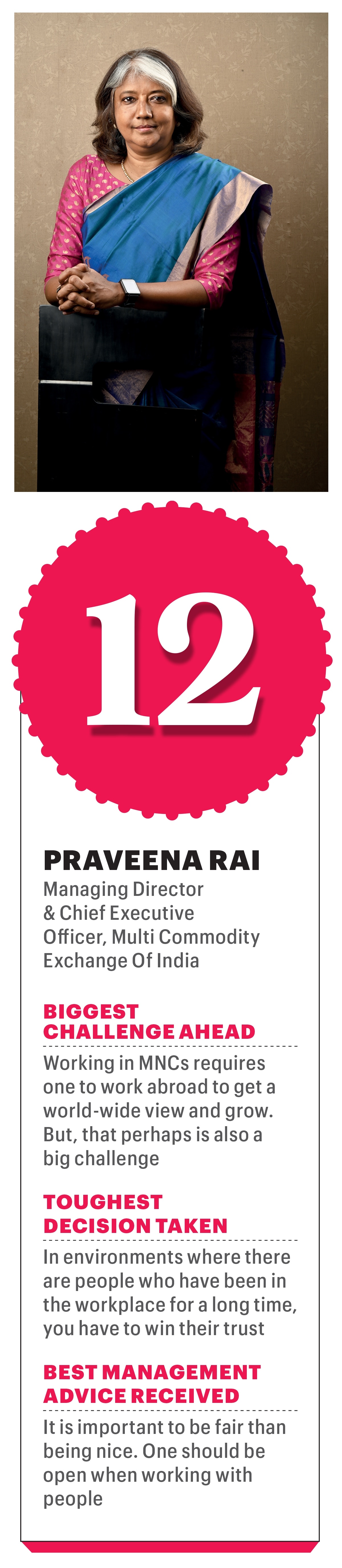

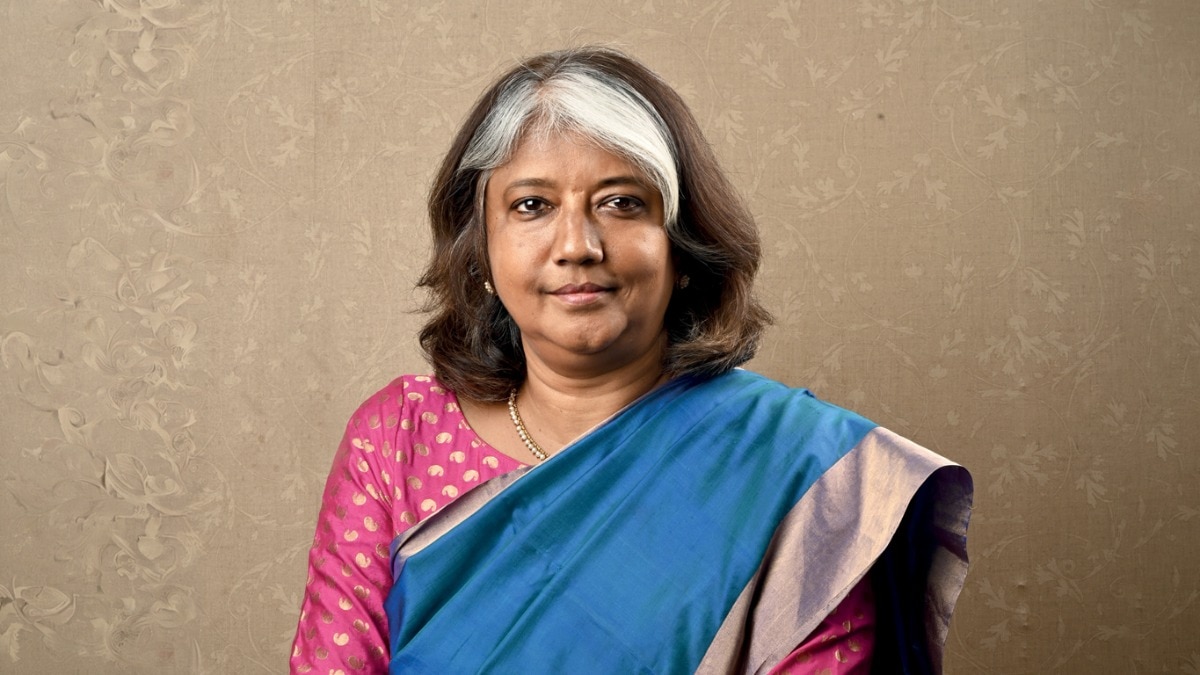
A career spanning consumer goods, multinational banking, and the building of India’s largest digital payments platform has given Praveena Rai a close-up view of how banking and payments have evolved.
Now, as Managing Director and CEO of the Multi Commodity Exchange of India (MCX), she is focused on deepening market participation, increasing liquidity and, ultimately, establishing the exchange as a benchmark for commodity prices in India.
“As the commodity exchange of India, wherever there is a requirement for commodity prices to be managed for the industry, ultimately MCX should play a role there,” Rai tells Business Today. “We need broad participation, several segments of participants and within that several participants, so that we build the liquidity required for hedging to take place. The most important underlying point is to become the price reference. And I think that's one of the big themes that I am currently driving.”
Indian industry has been dependent on international price benchmarks in many commodities. Rai wants to change that. She joined MCX close to two years ago. During that period, trade- and tariff-related challenges came up, commodity prices shot up, and countries became even more protective as a war raged in West Asia. In this backdrop, as the head of a commodity exchange, it’s not just about expansion and new product launches, but also about how it can align with the changing global economic dynamics and India’s needs.
“When I joined, we were looking at what products to prioritise, when you want to increase the portfolio, and bring in some innovation. That whole process was based on where India has scale, where there is some price volatility, and the market needs to manage and hedge that price volatility,” Rai noted.
Energy has been one priority area. In 2025, MCX launched its electricity futures contracts. Earlier this year, it got regulatory approval to launch a coal exchange subsidiary. It also received approval from the Securities and Exchange Board of India to invest in a proposed minerals exchange.
At a time, the rupee was under pressure against the US dollar and the government was pushing for reducing reliance on imported gold, MCX started accepting good delivery norms for the Bureau of Indian Standards (BIS)-certified bullion and also expanded its accredited refiners list, adding more domestic refiners to the delivery list. “We are no longer dependent only on internationally imported standards of bullion, gold and silver,” Rai pointed out.
Her career may have spanned many sectors and geographies; one common thing she has observed is the paucity of women in key roles. “Things have probably gotten better over the years by way of corporate policy and support at the entry to mid-levels. But still at the mid-level, I think we lose a lot of women,” Rai feels.
She attributes this to what she calls a ‘why bother syndrome.’ “When there is some sort of stress in the career, there is a broader pressure to say, ‘you know, why bother,’ especially if you are not the primary breadwinner,” she says. Generally, women are the primary caregivers to children and parents; mobility may be a challenge post-marriage, but these issues, she believes, can be overcome.
Family support is also crucial, she acknowledges. When Rai moved to Hong Kong for a stint in payments at multinational banking major HSBC, her husband took a sabbatical and moved with her before eventually finding work there.
Rai says staying the course and being gritty and resilient has been her forte, and she advises the same for other women.
@thenachiket


