











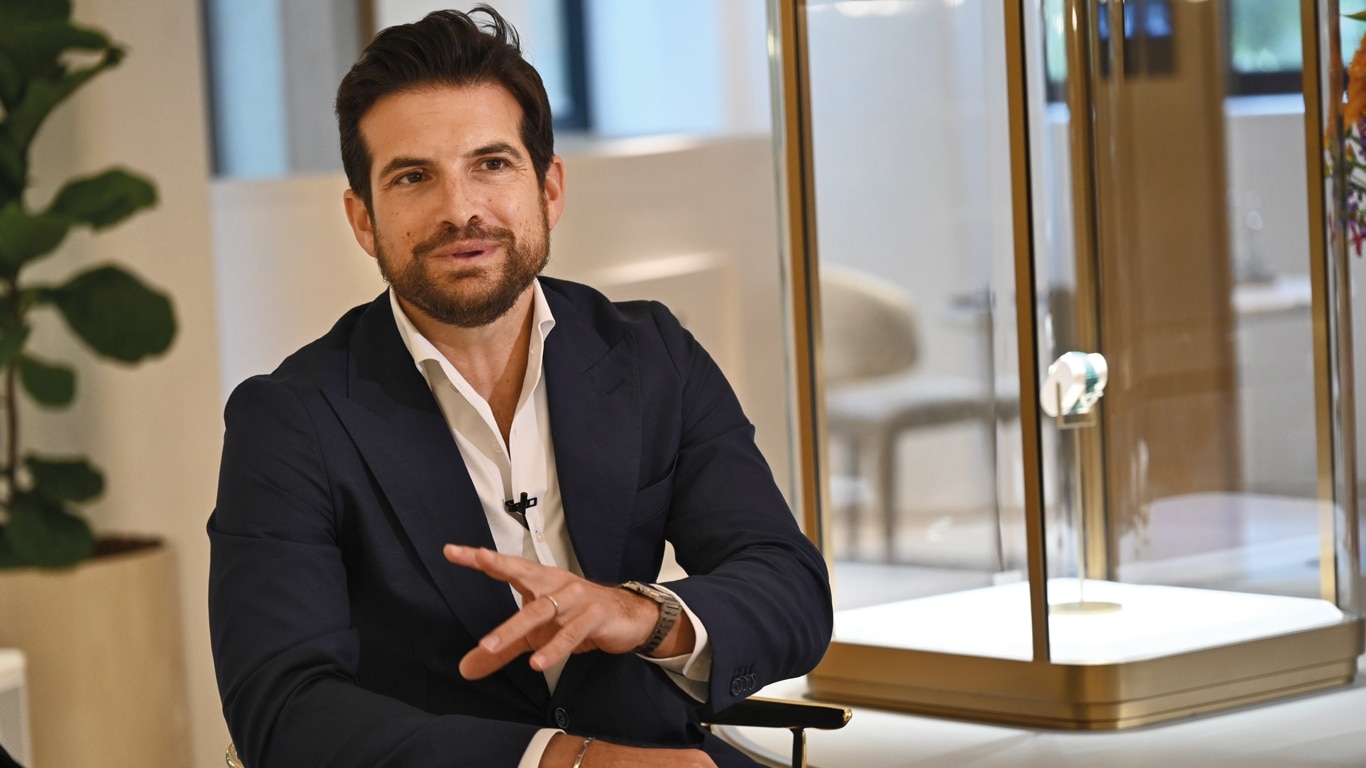

For Jonathan Brinbaum, Managing Director, Watches, Bvlgari, a watch is more than a measure of time. It is a memory, a birthday ritual and, most importantly, a connection with his father.
When he was eight, his father began gifting him a watch on his birthday. As a child, Brinbaum would eagerly await the occasion, sometimes thinking about what he might receive the following year even as he unwrapped the one in his hands. The brand mattered little. What stayed with him was the feeling of owning a timepiece, something that made him feel a little closer to his father.
That childhood emotion has found a professional expression. As the head of Bvlgari’s watch business, Brinbaum now works in an industry where craftsmanship, heritage, and technical ingenuity meet the personal desire to own something beautiful.
On a pleasant morning in Mumbai, Brinbaum talks to BT about the Roman luxury maison’s ambitions for its watchmaking business. Best known for its jewellery and Italian design, Bvlgari wants to build a deeper connection with Indian watch collectors, drawing on its distinctive blend of Roman-inspired aesthetics and Swiss watchmaking expertise. He believes India is a long-term growth engine for the category. With three directly operated stores and more than 10 partners in the country, the brand plans to keep expanding its retail network while adapting to India’s varied consumer preferences. Edited excerpts:
Q: Bvlgari is best known for jewellery. What distinguishes its fine watchmaking business?
A: We were born as a Roman jeweller, inspired by the Eternal City, its architecture and its symbols. Watches have occupied our thoughts for more than 100 years, but our shift towards true Swiss savoir-faire in watchmaking has taken place over the past 25 years.
We acquired the Daniel Roth and Gérald Genta businesses and moved from being a jeweller-watchmaker, primarily associated with symbols such as Serpenti, to a more deliberate Swiss watchmaker. That is our unique DNA today: a brand born as a jeweller that now carries Swiss expertise in watchmaking.
Q: How do you convince serious watch collectors to add a Bvlgari timepiece to their collection?
A: We approach the brand through two distinct strengths. The first is our resonance with women in watchmaking. Serpenti and our jewellery watches appeal through their symbolism, history and design. The emotion behind these pieces comes from their inspiration and heritage.
The second is our technical expertise, particularly through Octo Finissimo collection. For more than a decade, we have pushed the boundaries of thinness, making it our point of difference. The idea was to create an elegant men’s watch that could slip comfortably under a shirt. At the time, there was no calibre thin enough to deliver that design, so Bvlgari decided to craft one.
Q: How do you balance technical ambition with recognisable design, particularly in women’s watches?
A: Unique design is becoming increasingly important. Consumers want something with a specific inspiration and identity. Serpenti has always had a distinctive feminine design. Not every woman will want it, and we understand that. But it is unmistakably a design of its own. We have continued adding technical sophistication to our designs. What interests me particularly today is bringing that level of expertise into feminine calibres. Women are increasingly interested in technical watchmaking. This allows us to bring the expertise developed with Finissimo to our women’s collections.
Q: Moving on to India, what is your strategy for the watchmaking business here?
A: Watchmaking is a unique category because it is about much more than products. It is rooted to a particular savoir-faire and to a region in Switzerland. Our manufacture is in the Vallée de Joux, where we produce our calibres.
There is a very human dimension to this industry. When you visit our manufactures, you realise that our Swiss watchmakers are doing much more than simply making products. This connection with Switzerland and its traditions is something Indian consumers appreciate.
India has had a major jewellery tradition for 3,000 years, while watchmaking is a category that consumers have been discovering more recently. I believe there is a natural connection between Indian culture and Swiss watchmaking because collectors appreciate the local expertise and craftsmanship behind these timepieces. Jewellery already has a long history in India. I am confident that watchmaking can follow a similar trajectory.
Q: What personal touch is Bvlgari bringing to Indian consumers? How do you make the brand relevant to the local market?
A: It is difficult to identify which elements of a brand’s DNA resonate with a local culture. In India, perhaps it is our generosity, our Latin roots, or our connection with architecture. Our approach to the brand and the way we express Roman and Italian creativity can resonate with Indian consumers. We try to come across as who we are as a brand, present our symbols and icons, and hopefully connect with consumers through emotion. We recently introduced a local initiative for the Diwali festive season called Passing the Lights. It brought together 4,500 lights, arranged to echo the shape of a Serpenti.
The idea was to take a distinctive cultural moment, with its diyas and lights, and add a little sparkle and a twist that reflected who we are. Culture and luxury have a deep connection, but that connection works when the maison’s DNA resonates with an element of the country’s culture. We are a Roman brand and will not change our heritage. However, when we can create bridges with local relevance, that is where the magic happens.
Q: India’s luxury market has traditionally been concentrated in cities such as Mumbai, Delhi, and Bengaluru. Do you see Bvlgari’s reach expanding beyond these centres?
A: There are multiple Indias. The cultural roots, approaches to business and types of clientele differ from north to south and east to west. I was in Bengaluru a few days ago, and its approach to business and life is different from Mumbai. Delhi will have a different character again. Bvlgari has different things to offer in each market.
Over the past five years, we have been intentional about building our retail network and clientele in India. We need to acknowledge that a store in Bengaluru may not operate in the same way as one in Delhi because aspirations and approaches to the brand can differ. Delhi may have a more traditional approach, with a stronger connection to jewellery, while Bengaluru may be more technology-oriented and potentially more receptive to men’s
Watches. These are hypotheses, but this is how we are thinking about the market: bringing what Bvlgari stands for while adapting to India’s specific characteristics.
Q: Will the India-EFTA (European Free Trade Association) trade agreement benefit Bvlgari’s watchmaking business?
A: Trade agreements are always positive when they enable brands to reach clientele more freely and improve access to products. The agreement moves in the right direction by offering Indian consumers access to Swiss-made timepieces with the right value for money, without pricing being distorted by other factors. It is certainly good news for Indian clients.
Q: India remains a relatively small market for Swiss-made watches compared with markets such as the US, China, and Japan. What are the biggest challenges?
A: I do not see India as a short-term commercial opportunity. I see it as a long-term growth engine for watchmaking. That is why we are approaching growth with a long-term perspective. For Bvlgari, there are two key challenges. The first is brand awareness. The second is retail expansion. How the retail network develops, and how it creates the right environment for our brand and other watchmakers, will be critical.
Q: Are you targeting younger luxury consumers as well as established collectors?
A: I do not like to talk too specifically about generations. Whether you are a millennial or Gen Z, luxury fundamentally represents craftsmanship, eternity and the transmission of savoir-faire from one generation to the next. When I meet young watch collectors, they are very knowledgeable. They ask precise questions about the technical aspects of watches, where they are made and how they are crafted. When they choose a mechanical Swiss watch over something such as an Apple Watch, they are looking for something that goes beyond a product’s functional benefits. What is changing is how brands communicate with younger consumers: where they communicate, how they communicate, whether they use celebrities, sell online or engage through social networks.
The way brands interact with these consumers is changing, not necessarily the product or the desire behind it. Ultimately, buying a luxury watch is about emotion. You do not need a $20,000 watch for its functional benefits. You buy it because of a desire that comes from within. That emotional connection is what creates the magic.
Q: What are Bvlgari’s priorities for the next five years in watchmaking, particularly in India?
A: We have three core priorities. First, we will continue nurturing our global icons, Serpenti and Finissimo. They are becoming increasingly relevant to a wider clientele. Second, we want to surprise our clients. Innovation is part of Bvlgari’s DNA, including through collaborations in jewellery and watchmaking. Our collaboration with watchmaker Vianney Halter is one example. We will continue bringing unique creativity and innovation to the industry. Third, I strongly believe in women’s watchmaking. It represents a major opportunity, not only through jewellery-inspired designs but increasingly through mechanical expertise.
The expertise we have developed with Finissimo is now being applied to women’s watches, including thinner, more miniature movements. Women are becoming more interested in watchmaking, which is wonderful for a brand that began as a jeweller with a strong connection to women.
Q: Can we expect any collaborations specifically for India or Indian consumers?
A: I will have to come back and talk to you about that. But the deeper a culture is, and the more resonance it carries, the more interesting it can be for a brand like Bvlgari. Indian culture has many symbols that one day the brand could use.
@tweettokarishma


