


 Luxury vehicles form 1 per cent of the Indian market. Therefore, the tariff reduction should not impact mass-market players.
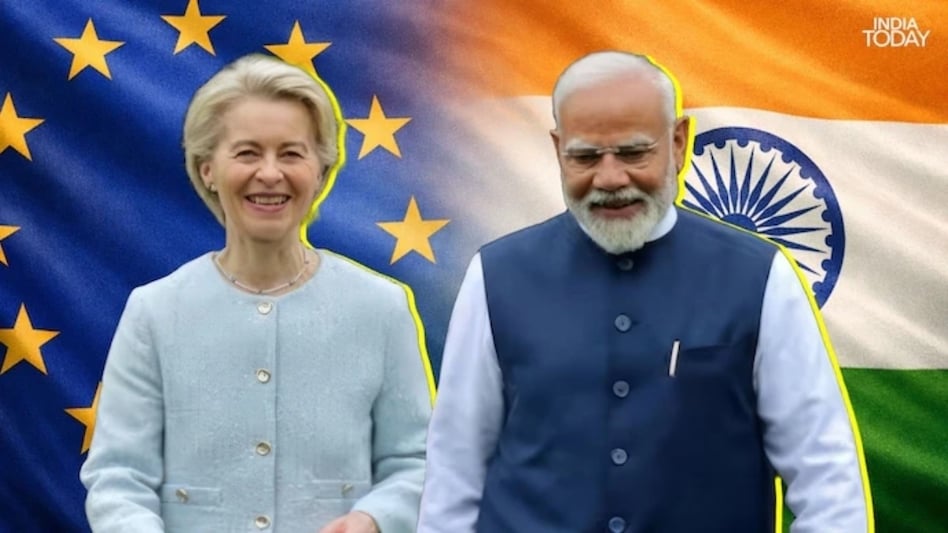
Stock market reacted positively to India’s free trade agreement with the European Union on Tuesday, as domestic industries such as textiles, pharmaceuticals, chemicals and electronics are seen as key beneficiaries of the deal. While auto stocks reacted negatively, analysts said concerns that luxury car imports could materially hurt domestic volumes were unwarranted.
DBS Bank economist Radhika Rao called the agreement a “landmark” deal, saying it may help counter a challenging global trade outlook. Textiles, pharmaceuticals, chemicals and electronics were expected to gain from the agreement, she said.

 BT India@100: Amitabh Kant says this one ‘neglected but important’ sector is the biggest driver of jobs
 India Inc’s $150 billion capex dwarfed by Microsoft-sized AI spend: Jayant Sinha flags investment gap
 90% EVs exported out of India are from Maruti Suzuki: MD & CEO Hisashi Takeuchi
 More homes to get piped gas? Centre unveils incentive scheme to boost domestic PNG connections
 From Devbhoomi to industrial destination: Uttarakhand’s manufacturing moment
 #IndiaAt100 : Adipen Bose Nandhiji On Conscious Capitalism- Can Profit & Purpose Coexist?
 #IndiaAt100 : Hisashi Takeuchi On Driving India’s Manufacturing Revolution
 #IndiaAt100 : Manufacturing For Viksit Bharat | Can Industry Power India’s $30-Trillion Dream?
 #IndiaAt100 : Tarun Garg On Hyundai & India’s Manufacturing Powerhouse Ambition
 #IndiaAt100 : CM Pushkar Singh Dhami On Uttarakhand’s Industrial Growth & India’s Next Leap
 Cupid, NTPC Green, NTPC, Raymond Realty, HAL shares: Key technical levels to watch
 Defence stock with Rs 2,654-crore order book hits record high; here's why
  GACM Technologies: FII holding jumps to 29%; penny stock in focus
 Puravankara shares rise 5% on fresh order win
  20 high-conviction ideas for up to 95% upside | stocks to buy
  Quote of the Day by Steve Jobs: ‘Computers themselves, and software yet to be developed, will revolutionize the way we learn'India Inc’s $150 billion capex dwarfed by Microsoft-sized AI spend: Jayant Sinha flags investment gap
 Iran vows devastating response as US warns Tehran's commercial allies: Who are its trading partners?
 iQOO Z11 launch: The new smartphone packing a 7,050mAh battery and curved display
 Beyond Bollywood glamour: Inside the lavish menu of Arpita Khan’s Mercii












