


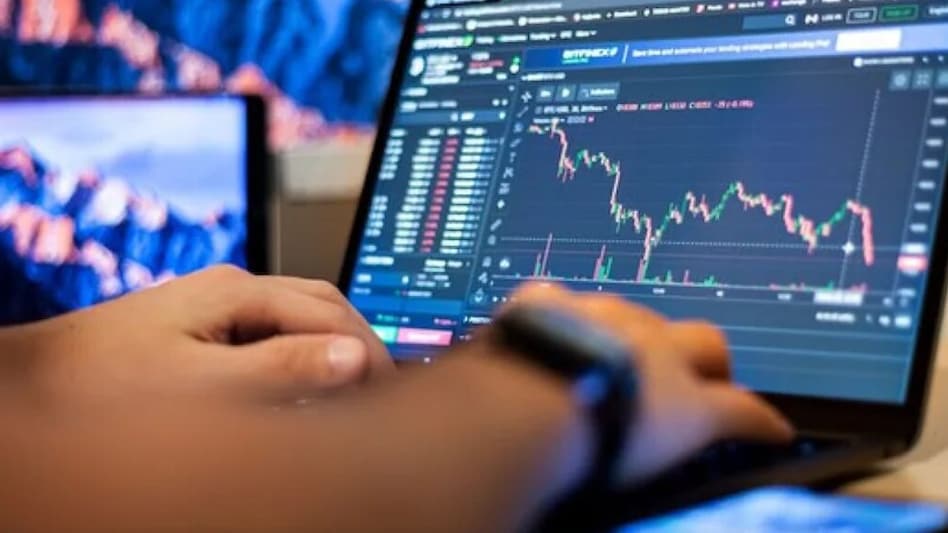
 Experts said a stock may rise 300 per cent, but if an investor fails to book profits and later watches it fall 80 per cent, the entire journey becomes meaningless.
Equity markets opened 2026 on a shaky note, with benchmark indices Sensex and Nifty witnessing sharp intraday swings amid persistent foreign fund outflows and global tariff-related uncertainties. On Wednesday (January 14), the BSE Sensex slipped 53.88 points to 83,573.11 in early trade, while the NSE Nifty fell 16.55 points to 25,719.25. Exchange data showed foreign institutional investors selling equities worth Rs 1,499.81 crore a day earlier, even as domestic institutions provided partial support with net purchases of Rs 1,181.78 crore.
Such volatile conditions often expose a hard truth about retail investing: most investors do not fail because they pick the wrong stocks — they fail because they do not know when to exit.

 RBI's forex swap scheme pulls in record $143.6 billion till Sep 18
  Bank strike next week: Five-day disruption may hit your salary credits
 NSE IPO subscribed 5.7 times as QIBs lead demand; shares to list on BSE on September 24
 Indian Oil, HPCL, BPCL shares rise as brent crude prices fall for fourth day
  Tata Sons power struggle: Who will pay for the next legal battle?
 Burqa Ban In Italy? Meloni Pushes New Rules On Face Coverings
 Tata Trusts-Tata Sons Row: Harish Salve Explains RBI Rules, Singhvi Flags Shareholder Rights
 Top Legal Eagles Flock To Tata Sons & Tata Trusts As Boardroom Clash Heads To Court
 Over Next Three Years Company Expects To Invest ₹15,000 Cr For Deepwater Exploration
 Tata Sons Listing Row: Shapoor Mistry Backs IPO As Noel Tata Pushes ₹25,000-Crore Plan
 NSE IPO subscribed 5.7 times as QIBs lead demand; shares to list on BSE on September 24
 Brokerage sees 96% upside potential in this smallcap stock
 Dr. Reddy’s, Lupin shares among buzzing stocks as pharma sector back in focus
  3 Warren Buffett quotes for Indian stock market investors today
 Sensex jumps 564 points, Nifty tops 23,400; will this upmove sustain?
 A lumpsum is not a paycheck: What Indians get wrong after retirement
 Who is Abhishek Manu Singhvi? The veteran lawyer at the centre of Tata Trusts' fight for control
 A look at Harish Salve's career as he advises Tata Sons Chairman
  JLR in talks with 8-9 banks to raise £1 billion amid Tata leadership uncertainty
 Why India’s young affluent buyers are shifting from apartments to land, luxury and lifestyle assets












