


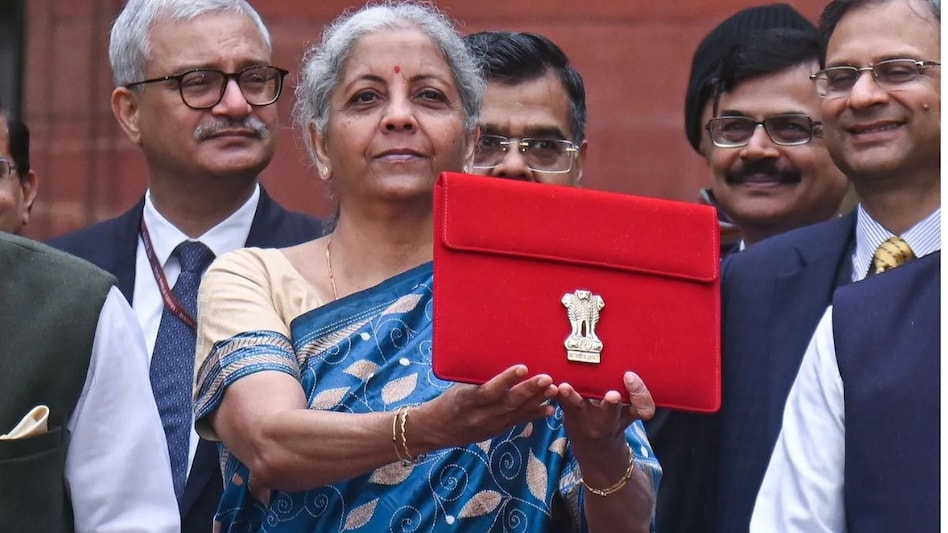
 Union Budget 2026: Growth vs Fiscal Discipline
With the Union Budget 2026-27 approaching, expectations are converging around one central theme: sustaining India’s growth momentum while maintaining fiscal discipline. Against a backdrop of global economic uncertainty, volatile capital flows and slowing growth in major economies, policymakers face the challenge of reinforcing confidence without compromising macroeconomic stability.
Economists, market participants and industry leaders are closely tracking how the government plans to align public spending, reforms and fiscal consolidation in the year ahead.

 India-Japan ties: What is the flurry of engagement signalling?
 No new strain of H1N1, virus has been in circulation: ICMR as swine flu cases cross 2,000 mark
 'Normal practice ahead of any VVIP visit': India responds to US envoy's 'no questions' remarks
 Rays of Belief IPO: Mom’s Belief operator to open issue on September 1; Check all key details
 Happiest Mind, Biocon, Apollo Micro among top stock to buy for short-term gains: Check price targets
 Daily Calls: Ask Your STOCK MARKET TODAY QUERIES | Market Update | Share Market News Today
 All About Debt Funds: Types Of Debt Funds & How To Invest | Mutual Fund Guide | Money Today
 “India Can Attract Global Space Talent Like A Magnet”: PM Modi To Startup CEOs
 CM Yogi Responds To Rahul Gandhi Over Manusmriti Remarks, India's Youth, And Heritage
 Skyways Logistics Growth Strategy: Air Cargo, Technology And India’s Manufacturing Boom
 Auto, auto ancillary stocks: Is it time to book profits? What Centrum's Nilesh Jain says
 This mid-cap metal stock zooms 15% on Rs 2,700 crore order announcement; do you own?
 RVNL shares a buy? Accumulate railway stock as valuations cool, says Kranthi Bathini
 Godrej Industries announces Rs 20,000 crore Haryana MoU; stock reacts
 Skyways Air IPO: Tech, global diversification to drive growth; debt reduction a key focus, says CMD
 Netflix’s 'Operation Safed Sagar' has a special tribute for Raju Srivastava. Here’s why
 ‘Rahman Dakait in Dhurandhar is nothing’: Akshaye Khanna wows fans as Shukracharya in 'Mahakali'
 Uttar Pradesh Is Getting a New Identity as India's Growth Engine: UP's Minister for Industries Nand Gopal Gupta
 IITs reshape engineering education with AI, data science & emerging tech courses. Take a look
 $1 now costs 2 million rial: Iran's currency hits historic low amid fresh US sanctions












