








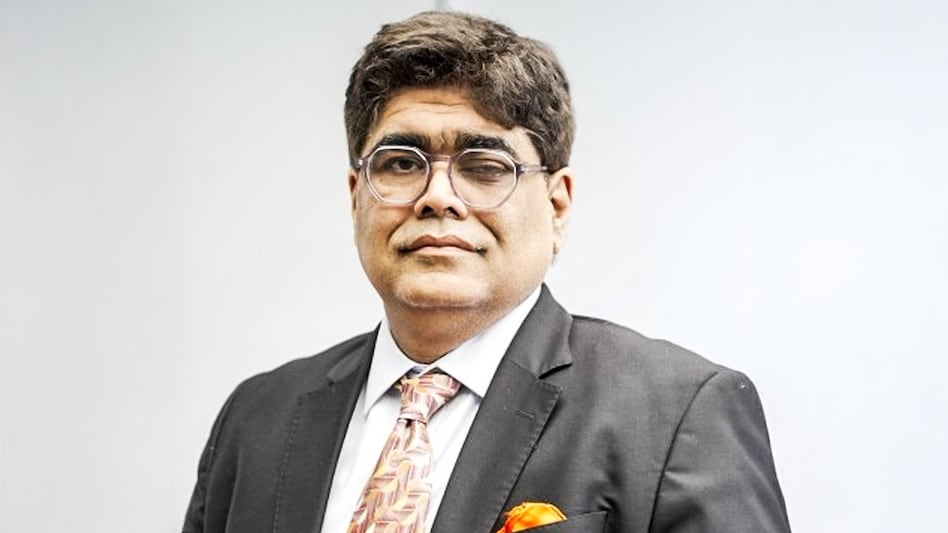
 The era of purely "managing disruption" is over, says Dinesh Arora, Partner and Advisory Leader, PwC IndiaThe era of purely "managing disruption" is over, says Dinesh Arora, Partner and Advisory Leader, PwC India
By Dinesh Arora, Partner and Advisory Leader, PwC India
Let’s be honest: We have heard an unending litany of words like “unprecedented”, “pivot” and “resilience” in the last five years. We’ve “pivoted” till we’re dizzy, and we’ve called so many things “unprecedented” that the word has lost all meaning.
In all my interactions with business leaders, the mood is shifting. The fatigue of constant crisis management is real. Leaders are done with merely reacting.
2026 marks the beginning of a new chapter. As technology cycles accelerate and global geopolitical shocks become a baseline condition rather than an anomaly, it is not sufficient to merely respond to shocks; we need to start underwriting the future.
The era of purely "managing disruption" is over. We are entering the age of “durability”.
Durability isn’t just a stronger version of resilience. Resilience is about bouncing back; durability is about not needing to bounce back in the first place. It is not about building walls to withstand a storm; it is about building windmills to harness it. For enterprise leaders in 2026, the question is no longer "How do we survive the next crisis?" but "How do we build a model that gets stronger because of it?"
The architecture of the durable enterprise
In 2026, a "future-ready" organisation looks fundamentally different from the digital transformation poster children of 2022. It’s messier, perhaps. But it’s infinitely more solid.
Operational agility: From "just-in-time" to "just-in-case"
For decades, we worshipped efficiency. Lean supply chains were the gold standards. However, the last 5 years have exposed the fragility of this model.The smartest leaders I know are decoupling "agility" from "fragility." They are building what I call“antifragile operations”. This means:
• Strategy as a compass, not a map: Organisations will still need their 5-year vision statements. In a noisy world, that long-term ‘North Star’ is often what keeps us honest. But leaders need to stop treating the path to that vision as a straight line. Dynamic, scenario-based navigation makes the route fluid towards our 5-year goals. We should constantly stress-test our own business models against potential geopolitical or technological shocks to find weak points before the market does.
• Sovereignty as a strategy: The plan to create a semiconductor fab ecosystem in India is a prime example of moving from “just-in-time” global dependence to “just-in-case” domestic capability. We are not just diversifying a supply chain; we are insulating India’s ecosystem from future geopolitical shocks. That is anti-fragility.
Institutional trust is the new currency
In a world flooded with deepfakes and algorithmic bias, trust is the scarcest and most valuable commodity. For India Inc., which is increasingly serving the world through Global Capability Centers (GCCs) and transnational exports, trust is the ultimate moat.
Governance in 2026 is no longer a back-office compliance function; it is a front-office competitive advantage.
• Institutionalising legacy: Future-ready leaders have started shifting gears. Large, family-owned consumer businesses are entering a decisive transition phase. As some of India’s most recognisable heritage brands bring in long-term institutional capital, it signals a shift from founder-led stewardship to professionally governed scale. The journey is no longer about preserving popularity—it is about building globally trusted institutions designed for continuity across generations.
• Selling trust, not just tech: Leading Indian IT and digital services firms are redefining their AI value proposition. Instead of competing purely on model sophistication, they are embedding explainability, governance, and responsible-use frameworks into their offerings. In doing so, they are responding to a clear client need: confidence in how AI decisions are made. In 2026, the product is not just intelligence—it is the integrity surrounding it.
• ESG as DNA: India’s large industrial and energy conglomerates are moving sustainability from narrative to infrastructure. Investments in large-scale green energy and clean manufacturing assets point to a strategic shift—treating sustainability as a long-term growth driver rather than a regulatory requirement. ESG is becoming embedded in capital allocation, operating models, and executive accountability.
The "adaptive" culture
Technology does not innovate; people do. The only asset on a balance sheet is a workforce that can unlearn and relearn at speed.
• The workforce of 2026 spans five distinct generations, each with a unique psychological contract. We see a younger cohort demanding “purpose and radical flexibility, colliding with an older cohort that often prioritizes “stability and structural clarity.” The durable leader will stop viewing this as a conflict, instead they will start balancing these priorities by marrying the digital intuition of the youth with the institutional wisdom of the veterans to forge a multi-generational alloy.
• The great reskilling: We are past the “Great Resignation” and are now in the “Great Reskilling”. TCS set the benchmark, not by firing, but by training over 3.5 lakh employees in Gen AI skills. They didn’t go to the market to buy a new workforce; they built a durable one from within.
• Psychological safety is non-negotiable. You cannot have innovation if people are terrified of being wrong. Durable cultures are places where "bad news travels fast” - where employees feel safe flagging risks early, preventing small cracks from becoming systemic failures.
• The leader’s job is not to be the smartest person in the room anymore. AI took that job. The leader’s job is to be the human anchor, become The Chief Interpretation Officer. The leader needs to help teams make sense of data and ensure that technology serves the human mission, not the other way around.
The leadership mandate for 2026
So, what does all this mean for business leaders?
Personal reinvention is the need of the hour. The command-and-control CEO has long become obsolete. In 2026, a successful leader needs to be a systems thinker- comfortable with ambiguity. They will rarely have 100% of the data, but they must still act with 100% conviction, while retaining the humility to course correct.
They also need to be a diplomat - As businesses navigate complex geopolitical landscapes, the ability to build bridges—between governments, communities, and diverse workforce demographics—is a core business skill.
The road ahead
India Inc. stands at a unique vantage point. We have the digital infrastructure. We have the demographic advantage. We have the hunger. But to turn all of this potential into global leadership, we must shift our gaze.
We must stop being surprised by chaos. We must stop treating stability as the norm and disruption as the exception. By embedding durability into our strategy and our culture, we do more than just endure the future. We define it.
Let 2026 be the year we stop reacting to the world and start building a world that can rely on us.
 NSE IPO may unlock mega gains for billionaire investors RK Damani, Premji
 India-US BTA: Harley Davidson bikes to get 0% duty, gradual tariff reduction on luxury cars
 India-US interim trade agreement: 'No GM modified product allowed, agri sector protected,' says Piyush Goyal
 'Decided to give 0% tariff on some cancer medications, neuro treatment': Piyush Goyal on what US got
 ‘How is this a win?’: Chidambaram slams India-US trade framework as opaque, US-tilted
 BT Golf 2025-26 Kochi, Kerala Awards Ceremony Marks A High-Energy, Successful Conclusion
 Golf Is An Addiction. We Eat And Sleep Golf!
 The Fairway Fixes Everything. Mindset, Life, Relationships
 BT Golf LIVE: Join AU Small Finance Bank Presents BT Golf 2025-26 For Its 4th Leg In Kochi, Kerala
 AI Will Change MBAs, Not Leadership: IMD President On India’s Global Education Rise
 RIL, SBI, Kotak Bank, Kalyan, HAL, BEML, BDL among stocks in focus next week; here’s whyNSE IPO may unlock mega gains for billionaire investors RK Damani, Premji
 SBI Q3 Results: Profit jumps 24% to Rs 21,028 crore; asset quality improves
 IDBI Bank stake sale: Kotak Mahindra Bank says ‘has not submitted a financial bid’
 BDL, Mazagon Dock, MRF, Hindustan Copper, RVNL, others to turn ex-dividend next week