


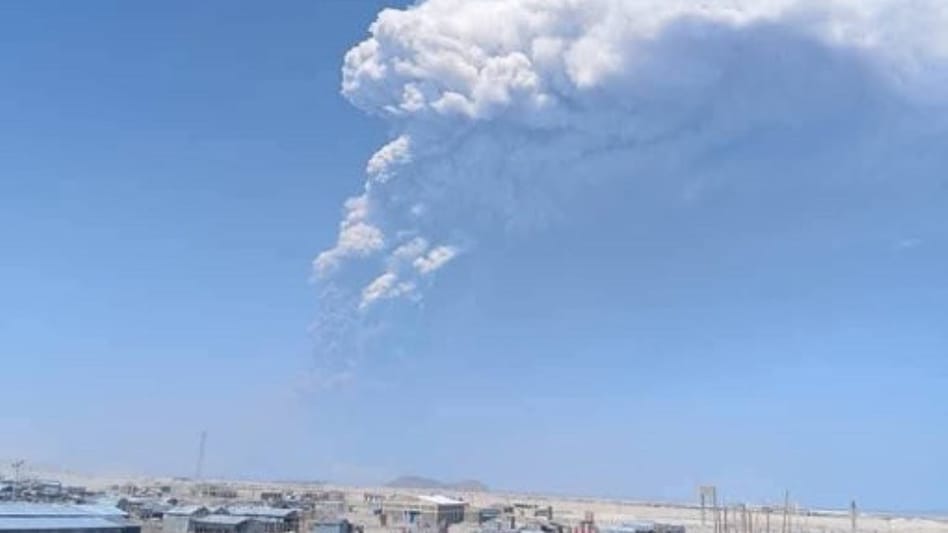
 Forecasts suggest the ash plume could reach Delhi and Jaipur, prompting close monitoring by airlines and air-traffic controllers.
A geological shock in the Danakil Desert — Hayli Gubbi, a little-known shield volcano in Ethiopia’s remote Afar region and part of the Erta Ale Range, erupted explosively on November 23, 2025, at approximately 08:30 UTC. The event marks its first recorded eruption in an estimated 10,000 years, a phenomenon scientists call one of the most extraordinary volcanic awakenings in the region’s history.
Satellite data and advisory from the Toulouse Volcanic Ash Advisory Center (VAAC) show that the eruption sent a massive ash column soaring between 10 km and 15 km into the atmosphere (around 33,000–49,000 feet). Simultaneously, a large plume of sulfur dioxide (SO₂) was released, a key marker of powerful volcanic activity.

 BT BIG STORY: No jobs, no security: The crisis facing India's educated youth
 BT Explainer: The companies behind the brands: Why product design could be India's next manufacturing opportunity
 Elon Musk ordered Starlink slowdown in Ukraine; why Kyiv's military drones suddenly lost connectivity
 Investing in US stocks from India: How the ₹10 lakh TCS threshold works
 Someone misused your PAN? How to check for fake transactions and tax liabilities
 Apple's New Smart Home Devices: HomeView, Apple TV 4K & HomePod mini 2 | Tech Today
 Starlink Vs India: Is Elon Musk Being Blocked? | Tech Today
 RBI Measures Boost Rupee | Is Further Depreciation Unlikely?
 More RBI Rate Hikes Ahead? PPFAS Mutual Fund CIO Shares His Outlook
 Retirement Planning: How a ₹10,000 Monthly SIP Can Grow to ₹1 Crore in 20 Years
 Sona BLW, Solar Industries, Oracle, Aurobindo Pharma, CG Power: Midcap performers of 2026, price targets and more
  Jio Platforms IPO: From 14th spot to telecom leader, how Jio transformed India’s digital landscape
 Tonbo vs Bonfiglioli vs Zetwerk vs Sahajanand IPO: Which issue offers best allotment odds; fresh GMP
  ‘It’s crazy that even in 2026…’: Nithin Kamath in disbelief over WhatsApp-driven stock manipulation
 Jio IPO: Overseas expansion to unlock new revenue streams through telecom technologyElon Musk ordered Starlink slowdown in Ukraine; why Kyiv's military drones suddenly lost connectivity
 Quote of the Day by Anant Ambani: 'My grandfather said, 'Dare to dream', so I dreamt and made it a reality'
 How India’s green hydrogen mission has left investors cautiousInvesting in US stocks from India: How the ₹10 lakh TCS threshold worksBT BIG STORY: No jobs, no security: The crisis facing India's educated youth












