


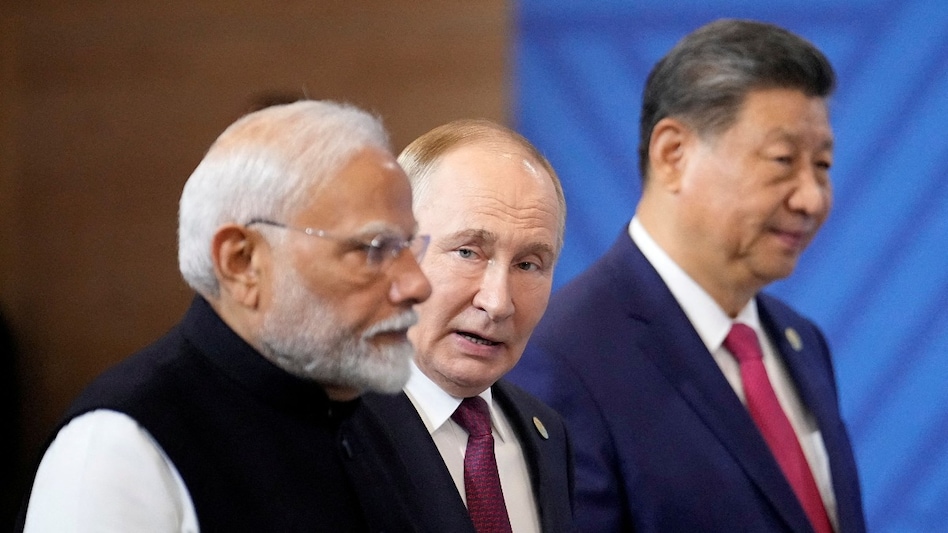
 India will have to make some hard decisions next year in terms of foreign policy, says Brahma Chellaney
India’s long-prided nonalignment policy has run its course, with the year 2025 exposing the fragility of these ties, said geostrategist Brahma Chellaney. He said for long India’s independent course in world affairs seemed effective, as its nonalignment ensured warm ties with rival powers.
In a column for Nikkei Asia, Chellaney said that a series of external shocks this year revealed India’s structural weaknesses in India’s foreign policy. The cumulative effect of these shocks was a broader loss of strategic room for maneuver, said Chellaney.

 Nvidia shares plunge after CEO Jensen Huang admits to affair, board launches spy probe
 PM Modi speaks with Zelenskyy, says India ready to help end Russia-Ukraine war
 HDFC Mutual Fund gets IRDAI nod to increase Star Health stake to 9.99%
 India's aviation boom faces its first reversal in a decade
 'Nothing but a smear campaign': China denies spy claims after Nvidia CEO Jensen Huang admits affair
 Exclusive | CM Yogi Adityanath Accuses SP Of Leaving UP With A ‘Law And Order Crisis’
 Who Is Alice Huang? The Woman At The Centre Of Jensen Huang-Nvidia Controversy
 Govt Slashes Prices Of 137 Cancer Drugs By Up To 96%: What Patients Need To Know?
 PSU Banks Set For Re-Rating? Deven Choksey Explains Two Key Triggers For Samvat 2083
 FIIs May Return To India: Which Sectors Could Attract Fresh Foreign Investor Buying Next?
 Nvidia shares plunge after CEO Jensen Huang admits to affair, board launches spy probe
 Honasa Q2: CLSA retains 'Hold' call, check target price post Q2 earnings
 NBCC shares up 19% since October 23; worth buying?
 Sansera Engineering shares rise up to 7%; Nomura, Goldman Sachs on future outlook
 Jubilant FoodWorks: CLSA cuts target price after Q2 results; stock tanks 5%
 Russell Brand sentenced to 10.5 years in jail; Judge calls him 'sexual predator'
 Indian Railways earns Rs 628 crore selling scrap, beats revenue target
 Delhi to get new river tourism attraction as Yamuna cruise to launch on Tuesday Exclusive | CM Yogi Adityanath Accuses SP Of Leaving UP With A ‘Law And Order Crisis’
 South Africa simplifies visa process for Indians ahead of ICC Cricket World Cup 2027












