


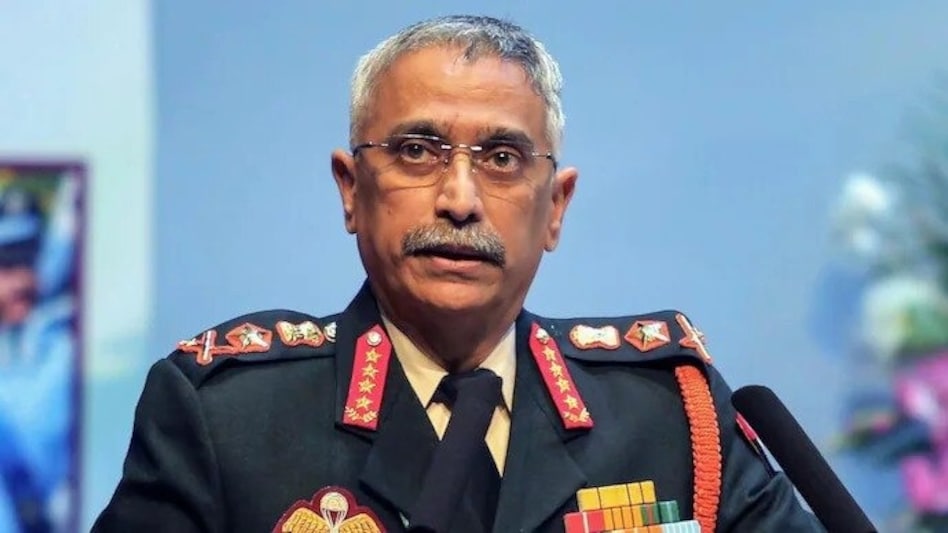
 Former Army Chief General MM Naravane
 Former Army Chief General MM Naravane has warned that while India-US defence cooperation has grown deeper and more structured over the last decade, recent developments-particularly President Donald Trump's 25% tariffs on Indian exports-raise serious questions about long-term reliability and strategic alignment.
In an opinion piece published in ThePrint on Monday, Naravane wrote, "India’s defence relationship with the US has been maturing over the last decade — from cautious engagement to structured partnerships, driven by shared strategic interest." He noted that the defence relationship has evolved far beyond its transactional origins and now plays a "pivotal role in the global geopolitical calculus."

 Mahindra takes battery-as-a-service to entire electric SUV line-up
 Closing Auction Session: Why the system expected to reduce volatility is still seeing occasional wild swings
 Reliance Industries denies Subhash Chandra’s media allegations
 Silver may be cheaper than gold as 2026 draws to a close: Report
 India paid 29% more for cooking gas after Hormuz strikes: Report
 CMF Buds Neo Review | Tech Gear | Business Today
 Gen Z Is Changing Politics? D.K. Shivakumar On Youth Power & Rahul Gandhi’s Outreach
 Babita Singh Reporting, Part-Timers, Bandar & More: 5 OTT Releases To Watch This Weekend
 Using AI To Write? You Could Be Caught! Anthropic's Invisible Watermark Explained
 Shah Rukh, Salman & Madhuri-Backed Pernia’s Pop-Up Shop Parent Eyes ₹680 Cr IPO
 Jio Platforms IPO gets SEBI nod: Rs 27,500 crore debt repayment plan, $100 billion valuation in focusClosing Auction Session: Why the system expected to reduce volatility is still seeing occasional wild swings
 RIL-backed penny stock hits 52-week low; firm clarifies on high trading volume
 Happiest Minds shares slip despite IT stocks surge; here's what is weighing on the stock
 BEL, Solar Industries shares remain Nuvama's top defence picks; here's what it said on BDL, Data Patterns, HAL
 Special FD rates in August 2026: DCB Bank, Indian Bank, Federal Bank and Union Bank offer higher returnsCMF Buds Neo Review | Tech Gear | Business Today
 Ramayana timeline explained: Why the epic’s story, manuscripts and artworks may belong to different eras
 After 2024 bleaching: Super El Niño likely to push coral reefs closer to the brink
 ITR-3 vs ITR-4: Which income tax return form should freelancers, traders and business owners use?












