


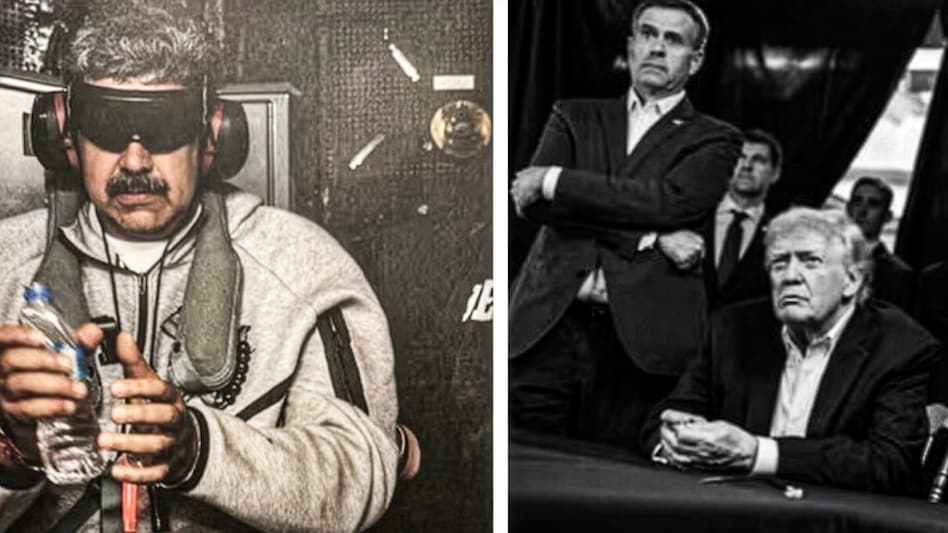
 Ex-foreign secretary’s advice to New Delhi amid Venezuela crisis
Former foreign secretary Nirupama Menon Rao on Monday cautioned against drawing sweeping strategic conclusions from the US capture of Venezuelan President Nicolas Maduro. She argued that the often-invoked Venezuela-Taiwan analogy is "overstated" and warned that the normalisation of regime change by force carries long-term risks for countries like India.
In a detailed assessment of the situation, Rao said Washington's action underlined an uncomfortable reality of global politics while also creating strategic dilemmas for middle powers that depend on sovereignty and non-intervention.

 'Every great airline is built over decades': Tata Sons Chairman says Air India's turnaround is a 5-10 yr mission
  Tata Motors flags ‘severe disruption’ at Sanand plant in Gujarat due to floods
 HDFC Bank penalises top officials, including CEO and CFO, in MSRDC case. Here’s why
 Only 26 of every 100 young Indian graduates have salaried jobs; just 4 enjoy basic employment benefits: Report
 Where are the jobs: Youth unemployment remains high; fewer jobs for those with higher education in India
 DCB Bank Management | Q1 Earnings, Loan Growth, Margins & Asset Quality Explained
 Infosys Fined In France: 70-Hour Work-week Debate Returns After €175,000 Labour Penalty
 I.T. Sector Outlook: Is the Worst Over for Indian I.T. Stocks After Long Underperformance?
 France And Spain Wildfires Threaten Cap Ferret Mansions And Bordeaux Wine Country
 Maruti Suzuki Eyes 25-30% SUV Growth, Says CNG Demand Has Overtaken Diesel
 Suzlon, Ambuja Cements, Radico Khaitan: Stocks to trade— Key levels, target, stop loss
 Top stocks in news: Meesho, IndiGo, Suzlon, Coal India, BEL, Tata Power, Adani Energy, TMPV
 Tata Power Q1 profit rises 11% to Rs 1,176 crore; revenue up 6%, capex tops Rs 5,300 crore
 HDFC Bank concludes internal review into MSRDC deposit arrangements; CEO, CFO among 3 fined Rs 1 lakh
 How Narayana Murthy's era, Vishal Sikka's stint and Salil Parekh's tenure differed; big task awaits next Infosys CEO
 Parliament set for first major debate of Monsoon Session on Anti-paper leak bill; Here's what the bill proposes
 8th Pay Commission: What if annual salary increments rise from 3% to 5%? Here's how basic pay could change
 Quote of the Day by Steve Jobs: ‘If you're gonna make connections which are innovative,you have to not have the same bag of experiences as everyone else does'Suzlon, Ambuja Cements, Radico Khaitan: Stocks to trade— Key levels, target, stop loss
 Retired, migrated or unemployed? Here's when your EPF account quietly stops earning interest










