


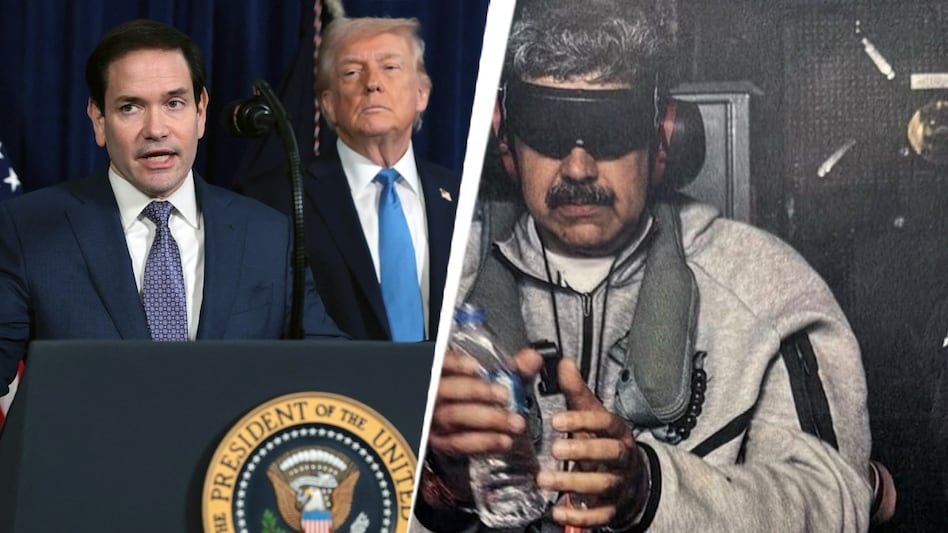
 US had offered Maduro an exit days before capture, says Rubio
The United States had offered Nicolas Maduro a chance to leave Venezuela as recently as a week and a half before his capture, US Secretary of State Marco Rubio revealed on Sunday. He rejected suggestions that the US is now at war with Venezuela. "We are at war against drug trafficking organisations and not a war against Venezuela," Rubio said in an interview with NBC News.
Asked who is effectively in charge of Venezuela and whether Washington is now running the country, Rubio said the US expects changes - immediately and over the long term - but said those changes are being driven by American national interests.

 GLP-1 drugs are under fresh scrutiny over rare condition; here's what's happening
 IRDAI’s insurance distribution reforms: What changes for insurers, brokers, customers
 SBI announces ATM charge waiver during bank strike; UPI, NEFT, RTGS services to continue
 This is not a tax, cess, surcharge...: FM Sitharaman explains what the new UPI MDR really means
 BT Big Story: The price tag of UPI: Will small shops go back to cash?
 How Is Alexa+ Different? Will It have Ads Even If You Pay? Exclusive Chat
 Demand Robust Across Segments | Production To Ramp Up, Exports To Expand: Vivek Srivatsa
 GST Council To Meet On October 7: Invoice Matching, ITC & UPI MDR Tax In Focus
 Tata Chip Plans Stay On Track Despite Boardroom Rift; Dholera Fab Investment Unaffected
 GLP-1 Drugs Face Eye Safety Concerns: Will Fresh Scrutiny Impact India's Growing Market?
 IPO rush: Four IPOs conclude today; check subscription status, other details of issues still open
 Meesho shares slip 7% as Nomura assigns 'reduce' call; here's what the brokerage says
  Sensex, Nifty extend losing streak to seventh week, longest since 2020: What's next?
 Suzlon in bear grip: Oversold signals emerge near 52-week low for the stock
  EIL shares jump 7% to hit record high; stock up nearly 62% in six months: What's driving the rise?
 BlackRock sees AI agents creating a new economy for stablecoins, blockchain and computeHow Is Alexa+ Different? Will It have Ads Even If You Pay? Exclusive Chat
 Who is Mandeep K Bhandari? Meet the new CBSE chairman with 25 years of administrative experience
 ‘A terrorist country is asking me...’: EAM Jaishankar hits back at Pakistani reporter at UN briefing
  Odisha Clears ₹22,634 Crore AI Project | SentraForge AI’s Big Infrastructure Bet












