








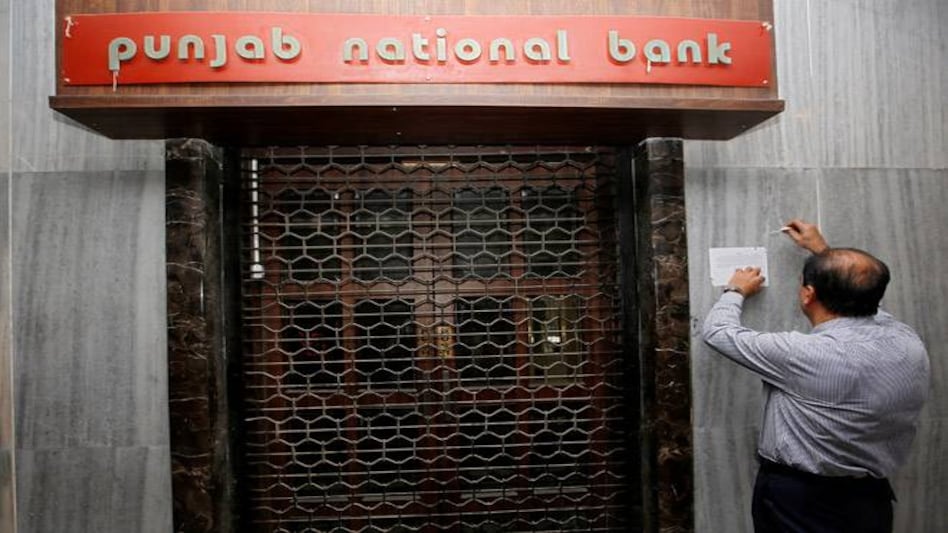
The Reserve Bank of India may put three state-run banks under prompt corrective action - a mechanism to take corrective measures so that the lenders are protected from going into financial crisis. Currently, the Central bank has put 11 out of 27 public sector banks or PSBs - which together account for three-fourth of the banking assets - under the PCA framework. Among the banks that could be put under the RBI's PCA framework are Punjab National Bank, Union Bank of India and Syndicate Bank.
The PCA framework is a mechanism to maintain sound financial health of the banks. The framework kicks in when a bank's three critical parameters - asset quality, return on assets and capital adequacy - fall below a threshold. Once placed under PCA, the banks are barred from distributing dividends, remitting profits and disbursing fresh loans. Banks are also stopped from expanding their branch networks and need to maintain higher provisions.
The critical parameters of fraud-hit Punjab National Bank reached PCA threshold levels after it was hit by billion dollar Nirav Modi scam. The New Delhi-based bank reported a net loss of Rs 12,282 crore in FY 2017-18 with gross non-performing assets (NPAs) at 18.38 per cent of advances at Rs 86,620 crore and capital adequacy ratio of 9.20 per cent as against the RBI threshold of 9 per cent. The return of assets is minus 1.60 per cent.
Mumbai-based Union Bank of India is another likely PCA candidate. For financial year 2017-18, it reported a net loss of Rs 5,247 crore, gross NPAs of Rs 49,369 crore, capital adequacy ratio of 11.50 per cent and return of assets of minus 1.07 per cent.
Earlier in March, rating agency ICRA, too, had cautioned that five more PSBs - Punjab National Bank, Union Bank of India, Canara Bank, Andhra Bank and Punjab and Sind Bank - may come under PCA in the near future. These banks had all posted NNPA ratios in the range of 6.3-7.8 per cent, which as per the revised PCA framework falls under the Risk Threshold 1 category.
Currently, the banks that are under PCA framework are: Dena Bank, Central Bank of India, Bank of Maharashtra, UCO Bank, IDBI Bank, Oriental Bank of Commerce, Indian Overseas Bank, Corporation Bank, Bank of India, Allahabad Bank and United Bank of India.
Under the PCA framework, the apex bank has discretionary powers under which it can direct the banks to stop lending. Recently, the RBI asked Dena Bank not to do fresh lending. It also asked Allahabad Bank not to raise costly deposits, invest in non-banking assets or lend to borrowers with high risk.
In the last few years, banks have been under huge pressure due to deteriorating asset quality, poor credit off-take and overleveraged companies. This hit PSBs more because of their high reliance on corporate lending and higher exposure to troubled sectors such as infrastructure, power, steel and textiles.
PSB bankers say that the RBI did not help and instead sought higher provisioning for NPAs. The measures included asset quality review under which the RBI asked banks to make provisioning for stressed accounts (not necessarily NPAs in their books) as if they were NPAs.
According to experts, 50 per cent provisioning for companies referred to the National Company Law Tribunal under the new Insolvency and Bankruptcy Code (IBC) also worsened the financial position of banks.
 MRF Q3 results: Net profit more than doubles to Rs 692 crore; stock jumps 9%
 Hit by digital fraud? RBI proposes Rs 25,000 compensation for small-value losses
 ‘I include myself’: Why Sridhar Vembu warns coders should prepare for life after AI
  Explained: How Budget 2026 data centre and GCC push could reshape office & land demand
 Mahindra to set up its largest integrated manufacturing facility in Nagpur, to exceed 5 lakh vehicles in annual production
 RBI Governor: MPC Decision On Interest Rates, Inflation & Economy
  U.S. - India Trade Deal Clarity: Tariffs Drop To 18%, Timeline Revealed – Next Announcement Soon
 Metropolis Q3FY26 Growth Led By Specialty, Wellness Diagnostics
 Piyush Goyal Explains Roadmap Of India–U.S. Trade Deal | What Happens Next?
 #Promo | World Governments Summit 2026 Dubai: India Today Exclusive Coverage
 RBI eases compliance for smaller NBFCs; Capitalmind's Deepak Shenoy calls move huge
 Godfrey Phillips, ITC shares surge up to 13%: What's fueling the jump and what lies ahead
 Data Patterns shares rise 9% on Q3 earnings, record high order book; check details MRF Q3 results: Net profit more than doubles to Rs 692 crore; stock jumps 9%
 Sensex, Nifty recover from day’s low after RBI policy outcome; ITC leads gainers