








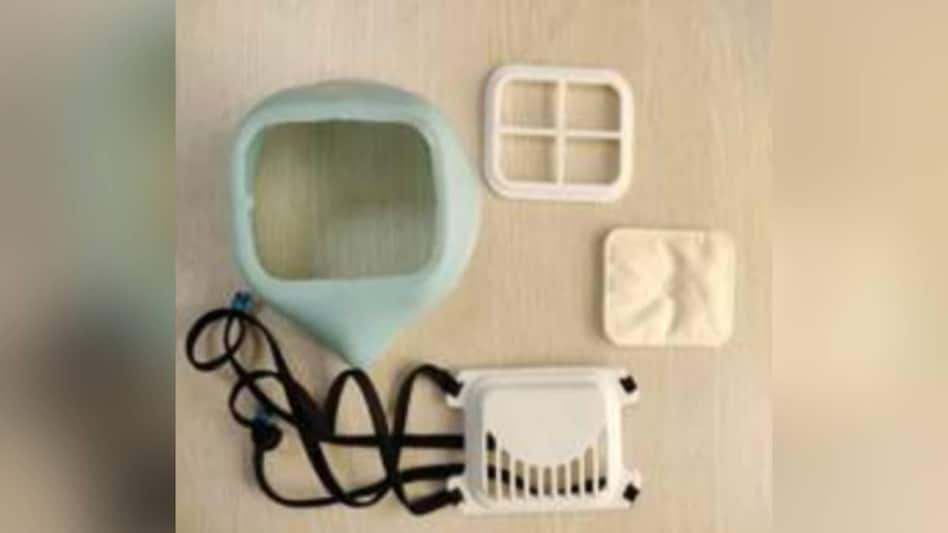
 N95 mask with recyclable, reusable qualities developed using 3D Printing
 N95 mask with recyclable, reusable qualities developed using 3D Printing
Researchers have developed a reusable, recyclable, washable, odourless, non-allergic, and anti-microbial N95 mask using 3D printing technology, stated the Ministry of Science & Technology on Monday. Depending on the use, the four-layer mask with a silicon outer layer is reported to have a shelf life of more than 5 years, it added.
According to the statement, the mask contains a 4-layer filtration system with a first-layer filter that is coated with nanoparticles on the outside. High-efficiency particulate absorption (HEPA) filters are placed in the second, 100 m filters in the third, and moisture-absorbent filters in the fourth layer of the product.
Apart from being used against infections like COVID-19, the mask can also be used by workers in different industries where they are exposed to high volumes of dust like cement factories, brick kilns, cotton factories, and pain industries.
The mask has been created in collaboration with Drs. Atul Thakur, Preeti Thakur, Lucky Krishnia, Prof. P. B. Sharma, Dinesh Kumar, a research scholar from Amity University Haryana (AUH), and Prof. Rakesh Srivastava from the University of Nebraska in the United States.
Additionally, the mask may also be adjusted to meet other requirements by altering the filter configuration in accordance with the environment in which it will be worn, and this can aid in preventing serious lung conditions like silicosis. A trademark and a patent have already been filed for the mask called Nano Breath.
Furthermore, according to the official press release, the work on the product was completed using a Zetasizer Nano ZS, which enables high-temperature thermal analysis for ceramic materials and catalysis applications, a facility made possible by the "Fund for Improvement of Science & Technology Infrastructure" (FIST) project of the Department of Science & Technology.
Also read: Pakistan mandates masks on domestic flights as COVID numbers rise
Also read: At what point is a disease deemed to be a global threat? Here's the answer
 India-US interim trade agreement: 'No GM modified product allowed, agri sector protected,' says Piyush Goyal
 'Decided to give 0% tariff on some cancer medications, neuro treatment': Piyush Goyal on what US got
 Cyberattack impact on Tata Motors PV earnings crosses Rs 3,200 crore; losses still mounting
 India-US interim trade pact: 'Boeing, Airbus looking at India as largest OEM partner,' says Piyush Goyal
 US trade deal to boost Indian aerospace manufacturing
  Golf & Life: Handling Every High And Low
 It’s Time More Women Picked Up The Club. Golf Welcomes Women At Every Stage Of Life.
 RBI Says Trade Deals With EU, US & Others Strengthen India’s External Sector Outlook
 Jeffrey Sachs Praises Modi On India-US Trade Deal: “Trump Blinked, India Must Not Depend On U.S.”
 Agra’s ₹127 Cr Housing Project In Ruins: Flats For Poor Rot Before Occupation
 RIL, SBI, Kotak Bank, Kalyan, HAL, BEML, BDL among stocks in focus next week; here’s why
 NSE IPO may unlock mega gains for billionaire investors RK Damani, Premji
 SBI Q3 Results: Profit jumps 24% to Rs 21,028 crore; asset quality improves
 IDBI Bank stake sale: Kotak Mahindra Bank says ‘has not submitted a financial bid’
 BDL, Mazagon Dock, MRF, Hindustan Copper, RVNL, others to turn ex-dividend next week